After China refutes it, US releases new details of alleged nuclear testing in 2020
Feb 18, 2026
Washington DC [US], February 18 : The United States government has released fresh intelligence to buttress its allegation that China had conducted "illegal" underground nuclear testing in 2020 near Lop Nur, several US media reported on Wednesday. Further, a senior State Department official has said that the US would resume its nuclear tests to match the Chinese actions.
This comes amidst Beijing's stating that it has scrupulously observed an international accord banning all nuclear detonations.
A senior State Department official said that a seismic monitoring station in Kazakhstan had detected a 2.75 magnitude event on June 22, 2020. The US has accused China of conducting a clandestine low-yield nuclear test at that time.
Both China and the US are signatories to the Comprehensive Nuclear-Test-Ban Treaty (CTBT), but have not ratified it; therefore, it's not legally in force.
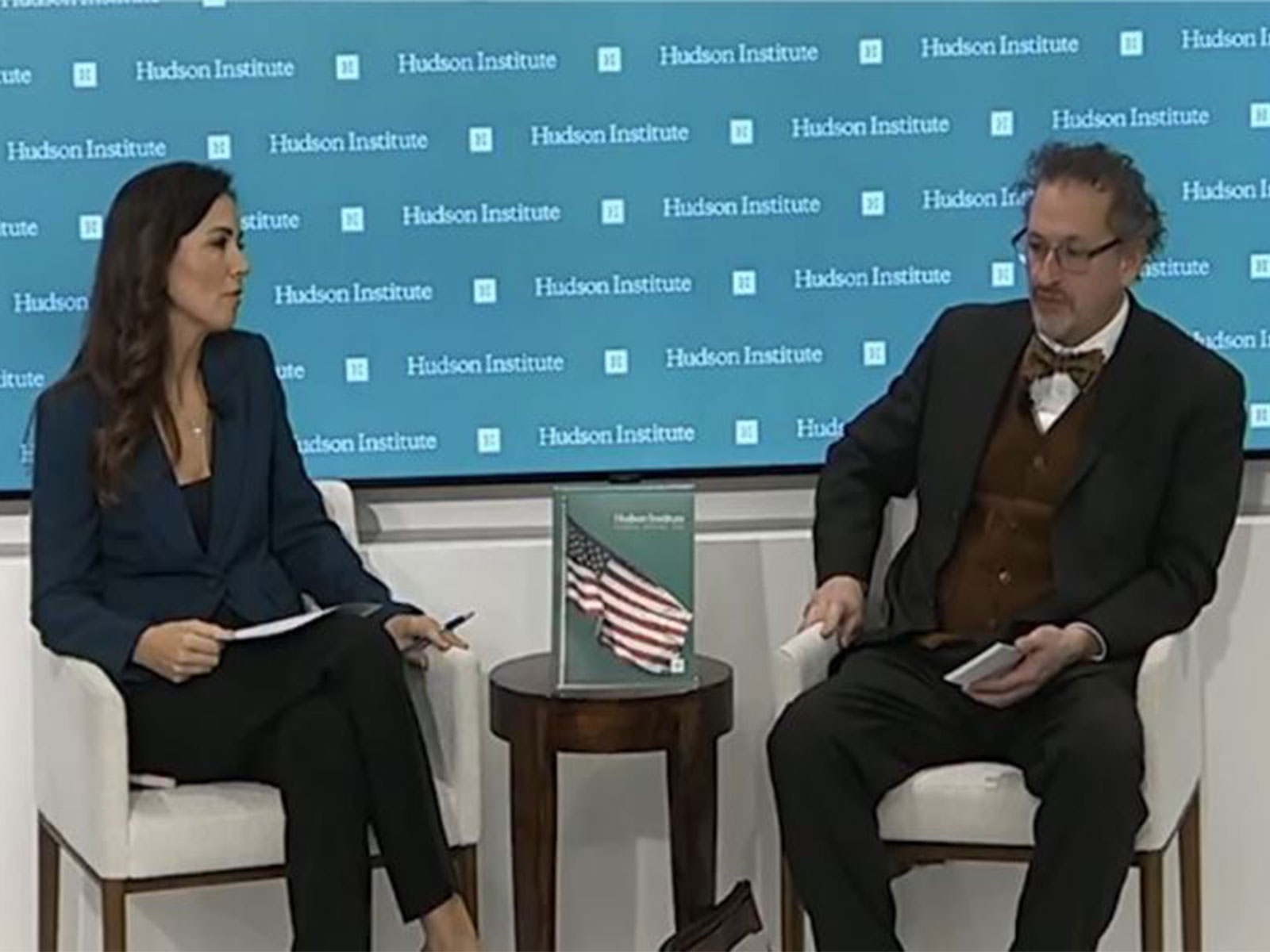
Christopher Yeaw, US Assistant Secretary for arms control and non-proliferation at the State Department detailed that a tiny 2.75 magnitude earthquake detected by a remote seismic station in Kazakhstan on June 22, 2020. The US official said that the quake, infact originated around 450 miles away at China's main nuclear test site, known as Lop Nur.
"There is very little possibility that it is anything other than an explosion, a singular explosion....It is quite consistent with what you would expect from a nuclear explosive test," Yeaw said at an event hosted by the Washington DC-based think tank Hudson Institute. The institute has posted the conversation on its X platform
Yeaw further said, "If adversaries conduct nuclear tests but the US does not, America is putting itself at an intolerable disadvantage. The Trump administration will seek to level the playing field."
The United States Undersecretary for Arms Control and International Security Thomas DiNanno said in a statement posted on X that, "Denials by China only make it worse. We look forward to dialogue that will advance President Trump's vision for a world with fewer nuclear weapons. For now, we cannot accept nuclear tests by other states that place us at an intolerable disadvantage."
China had rejected the allegations outright, calling them "outright lies" and accused Washington of using them as justification to restart nuclear testing.
Previously this month on February 6, DiNanno, speaking at the UN Conference on Disarmament in Geneva, accused China of conducting nuclear weapons tests that achieved supercritical yields, including one test on June 22, 2020.
DiNanno mentioned that China has used "decoupling" to reduce the detectability of its nuclear tests.
The Comprehensive Nuclear-Test-Ban Treaty Organization (CTBTO) in a statement on February 6, confirmed the station detected "two very small seismic events" spaced 12 seconds apart that day, but said the data were too weak to confidently determine the cause.
"Regarding reports of possible nuclear tests with yields in the hundreds of tonnes, on 22 June 2020, the CTBTO's IMS did not detect any event consistent with the characteristics of a nuclear weapon test explosion at that time. Subsequent, more detailed analyses have not altered that determination,"
Washington-based think tank, The Centre for Strategic and International Studies, said in a report on February 13, that satellite imagery it studied of the Lop Nur site did not provide any conclusive findings to support or disprove US allegations about China's test.
This comes as the New Strategic Arms Reduction Treaty (Start), expired on February 5 and US Donald Trump has refused Moscow's offer to extend the treaty for another year as he argued for a "better agreement" that includes China.
Executive Director of the American Arms Control Association Daryl Kimball emphasized that any US resumption of testing would set off a chain reaction of nuclear testing by other nuclear-armed states.
The United States should begin negotiations with Russia and China aimed at strengthening confidence-building measures in order to prevent the resumption of nuclear testing, Kimball said in an interview with TASS.