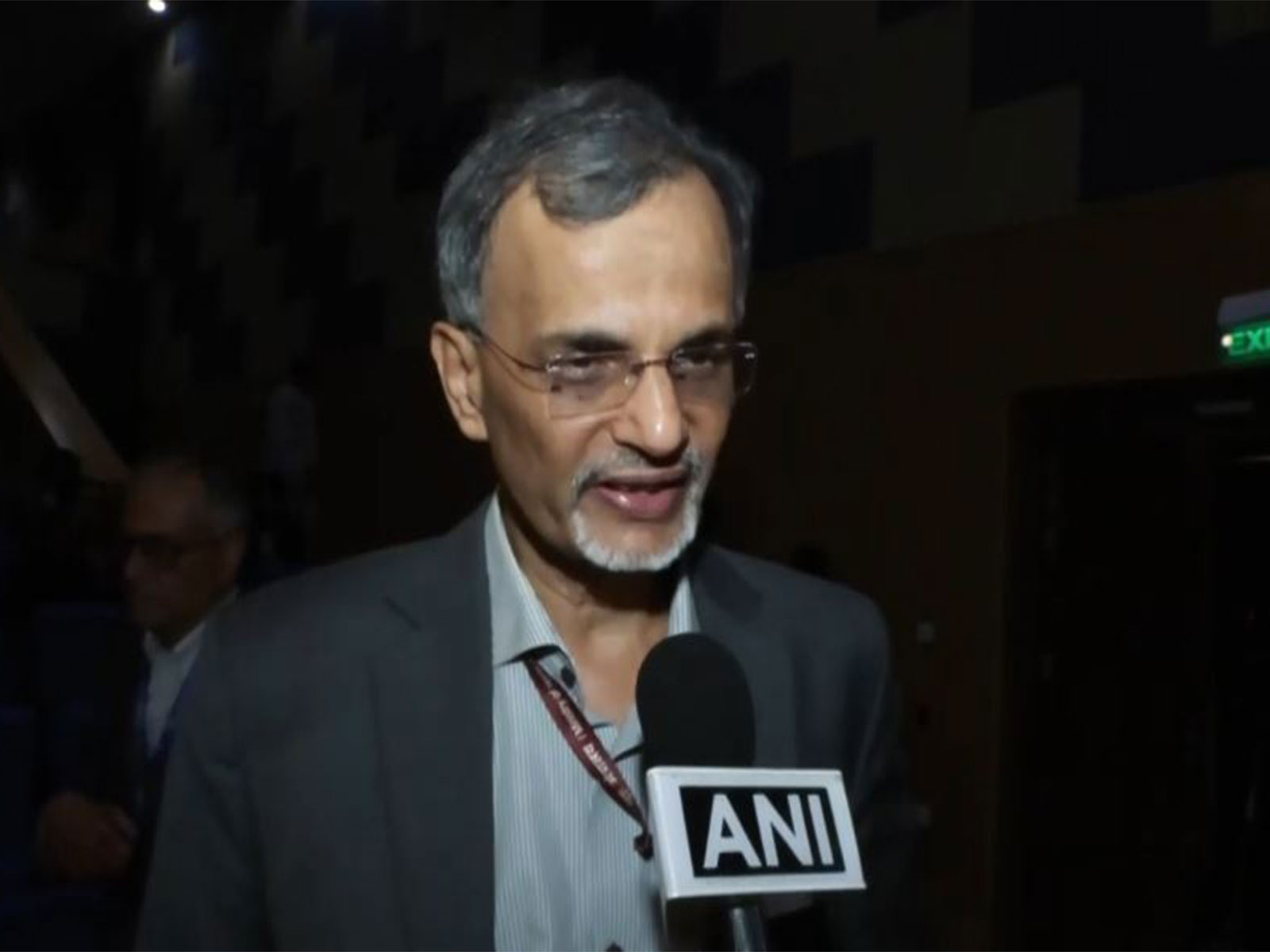
AI outcome won't be accidental: CEA Nageswaran warns tech transformation must align with mass employability
Feb 16, 2026
New Delhi [India], February 16 : Asserting that the impact of emerging technologies on India's future will be determined by deliberate policy choices, Chief Economic Advisor (CEA) V Anantha Nageswaran on Monday stated that the outcome of artificial intelligence will not be "accidental" and must be strictly aligned with mass employability.
At the India AI Impact Summit 2026 during a session on 'Employability in the AI Age: Preparing for the Jobs of Tomorrow,' the CEA who joined virtually, highlighted that Artificial Intelligence presents a critical juncture for the economic trajectory. "With foresight, institutional discipline, and relentless execution, India can become the first large society to demonstrate true human abundance. Artificial intelligence can either reinforce this vision or undermine it -- the outcome will not be accidental," he said.
Nageswaran noted that this transformation "will not happen by drift" and demands political will and strong state capacity. "Most importantly, it requires a clear national commitment to aligning technological adoption with mass employability. This is not the task of government alone; it must be a Team India effort, bringing together policymakers, industry, educators, and society at large," he said.
Contextualising this shift within the nation's broader economic path, the CEA stated that India's demographic dividend is both a "promise and a warning," calling for urgent structural reforms to prevent a historic opportunity from becoming a "long-term liability." He emphasised that while millions of jobs are created annually, a significant skill gap persists.
"Every year of delay compounds the pressure and narrows our options. While millions of jobs are created annually, only a small proportion of our young workforce is absorbed into productive employment due to gaps in skills and training. This is not a cyclical challenge -- it is a structural vulnerability," Nageswaran stated.
To mitigate this vulnerability, he urged a decisive shift in policy focus. "Addressing it requires urgent investment in large-scale skilling, strengthening foundational education, scaling high-quality training programmes, and removing regulatory bottlenecks. If we fail to act decisively, we risk turning a historic opportunity into a long-term liability," he warned.
Stressing the urgency of the current window of opportunity, the CEA clarified that this is not merely a debate about the future of work, but a "decision about the future of growth, social stability, and cohesion." He stated, "It has to be a Team India effort, including the private sector and academics, as well as policy windows. The window is open still, but it is not indefinite for India... We must act, and act now."
He identified the starting point for this roadmap as a fundamental overhaul of the learning ecosystem. "The first step begins with reforming our education, and with teaching and imparting foundational skills. That is where the path to co-creating prosperity with AI and employability in the age of AI begins," he said.
Expressing hope for the ongoing sessions at the Summit, the CEA said, "I miss being there in person, but I hope this speech does trigger some truthful, concrete, and immediate action -- immediate action at all levels of society."
This call for immediate, implementable outcomes is reflected in the broader objectives of the India-AI Impact Summit 2026, which represents the first worldwide AI gathering to take place in the Global South.
It follows earlier forums, including the UK AI Safety Summit, the AI Seoul Summit, the France AI Action Summit, and the Global AI Summit on Africa. The emphasis of the New Delhi meet is on shifting from rhetoric and broad commitments toward tangible collaboration, defined objectives, and implementable outcomes in global AI governance.
The summit that will go on till February 20 seeks to advance the use of AI in ways that drive inclusive economic growth, social development, and innovation that serves people while safeguarding the planet. At the same time, it acknowledges concerns such as workforce disruption, algorithmic bias, and increasing energy demands, highlighting the need for concrete, measurable steps to address both AI's opportunities and its risks.