"Alters rights-based character of MGNREGA": Tamil Nadu CM opposes VB-G RAM-G Bill, cites "financial burden" on states
Dec 18, 2025
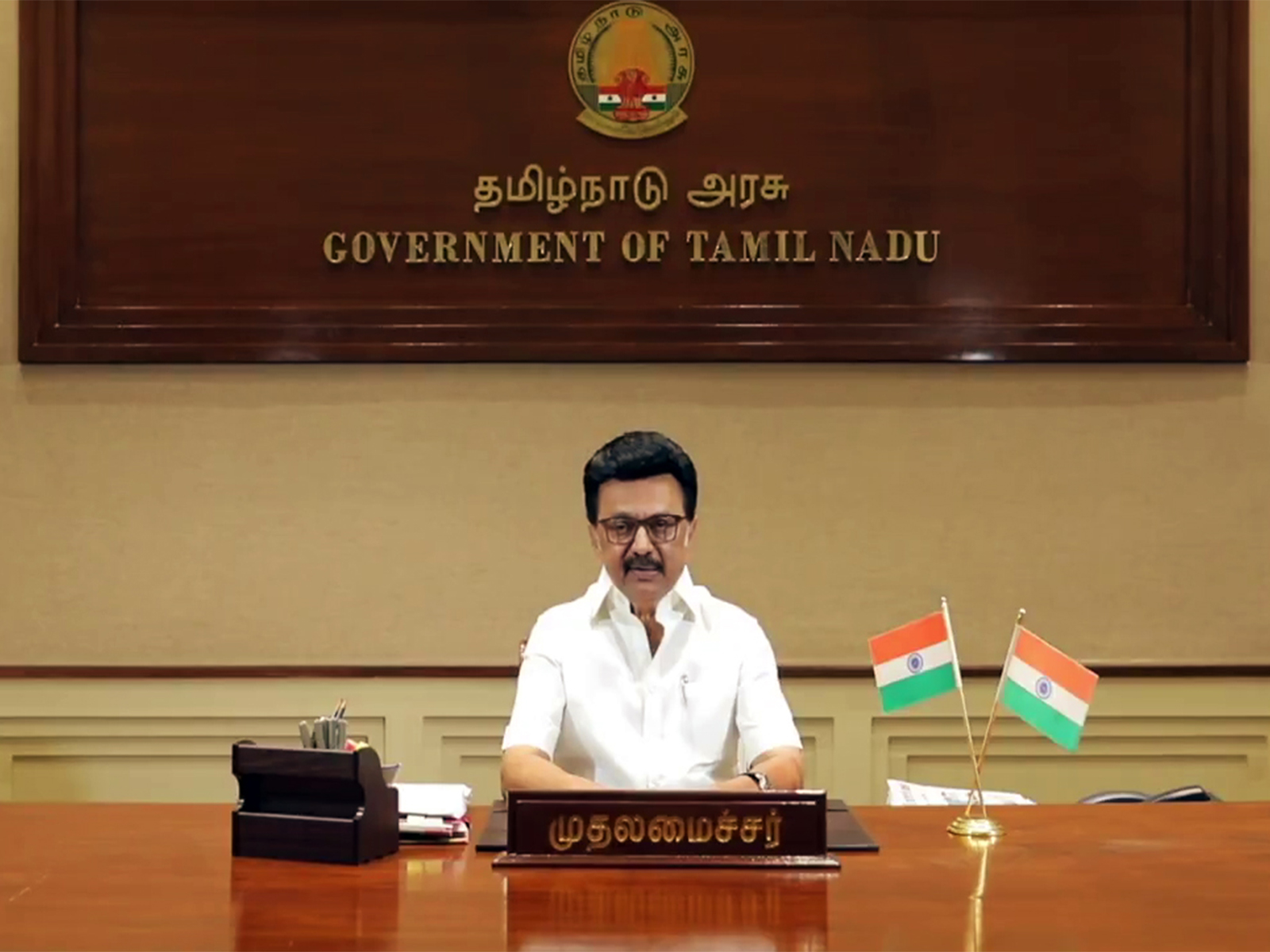
Chennai (Tamil Nadu) [India], December 18 : Tamil Nadu Chief Minister MK Stalin on Thursday raised a strong objection to the Viksit Bharat-Guarantee for Rozgar and Ajeevika Mission (Gramin) Bill, 2025, which replaces MGNREGA, saying that it will put "severe financial burden on states" under the 60:40 fund-sharing pattern.
In a letter to Prime Minister Narendra Modi, the Tamil Nadu Chief Minister said the the changes "alter the fundamental rights-based character of MGNREGA, making it a centrally controlled, budget-capped programme."
"I am writing to express the deep concern and strong objection of the Government of Tamil Nadu to the Viksit Bharat - Guarantee for Rozgar and Ajeevika Mission (Gramin) (VB-G RAM G) Bill, 2025, introduced in the Lok Sabha, which seeks to repeal and replace the Mahatma Gandhi National Rural Employment Guarantee Act, 2005 (MGNREGA). The MGNREGA, enacted in 2005, has been a cornerstone of rural livelihood security in India, providing a rights-based, demand-driven guarantee of employment to millions of rural households."
"This has been crucial for the rural poor, especially economically weaker sections, including SC/ST communities, in a State with longer non-rainy periods, a lack of perennial rivers for irrigation, and high dependency on such wage employment. While the proposed Bill increases the guaranteed employment to 125 days per year - a welcome step that could benefit rural workers - the other provisions fundamentally undermine the scheme's core principles, impose severe financial burdens on States, and erode federalism. These changes will adversely affect States' finances and the livelihoods of millions of poor rural labourers across the country," he added.
He said the Bill empowers the Union Government to fix State-wise normative allocations based on parameters prescribed centrally.
"This caps expenditure and requires States to bear any excess costs, departing from MGNREGA's demand-driven nature. In Tamil Nadu, where demand is high due to climatic and geographical factors, such fixation (potentially based on population without considering local needs) will reduce person-days and wages, causing hardship to rural workers."
"Under MGNREGA, the Union Government bears 100 per cent of unskilled wage costs and administrative expenses, with 75:25 sharing for materials. The new 60:40 funding pattern (wages, materials, and administration) will impose a tremendous additional burden on States, many of which are already facing fiscal constraints," the letter added.
He also criticised the 60-day pause to the scheme during peak agricultural seasons and excessive centralisation.
"Mandating no work for up to 60 days district-wise may disrupt continuous livelihood support, especially in regions where agricultural cycles vary. Excessive centralisation: Provisions allowing the Centre to notify implementation areas and integrate plans with national stacks reduce decentralised planning by Gram Panchayats and undermine grassroots democracy. Removal of Mahatma Gandhi's name: Renaming the scheme erases the link to Gandhiji's vision of Gram Swaraj and decentralisation, which MGNREGA embodied," he said.
"These changes alter the fundamental rights-based character of MGNREGA, making it a centrally controlled, budget-capped programme. As noted in recent analyses, including popular news media, the Bill reduces States' developmental space and fails to nourish diffused grassroots democracy. The proposed legislation will jeopardise the livelihoods of crores of rural poor, particularly in performing States like Tamil Nadu, and strain inter-governmental relations," he added.
Stalin urged the Union Government not to implement the VB-G RAM G Bill, 2025.
"Instead, retain and strengthen MGNREGA by incorporating the increase to 125 days (and other positive features like avoiding clashes with agricultural seasons) through amendments, after wide consultations with States," he said.
West Bengal Chief Minister Mamata Banerjee on Thursday announced that the Karmashree scheme of the state government will be named after Mahatma Gandhi as a response to the Centre's VB-G RAM-G Bill replacing MGNREGA.
Speaking at the Business and Industry Conclave at the Dhono Dhanyo Auditorium, Mamata Banerjee called the changing of the name of India's flagship rural employment scheme a matter of "deep shame."
"We have also started the Karmashree project, as MNREGA funds have also been stopped. Removal of Gandhiji's name fills me with deep shame. They are forgetting the father of the nation. We have decided to rename our Karmashree scheme after Mahatma Gandhi," she said.
"If you don't know how to respect Mahatma Gandhi, then we certainly know how to honour him and others like Netaji, Rabindranath Tagore and others," she added.
The Bill guarantees 125 days of wage employment per rural household in each financial year to such rural households whose adult members volunteer to undertake unskilled manual work, contributing to income security beyond the earlier 100-day entitlement, with an aggregated 60-day no-work period to ensure the availability of agricultural labour during peak sowing and harvesting season.
The Bill also introduces a 60:40 fund-sharing ratio between the Centre and the states.