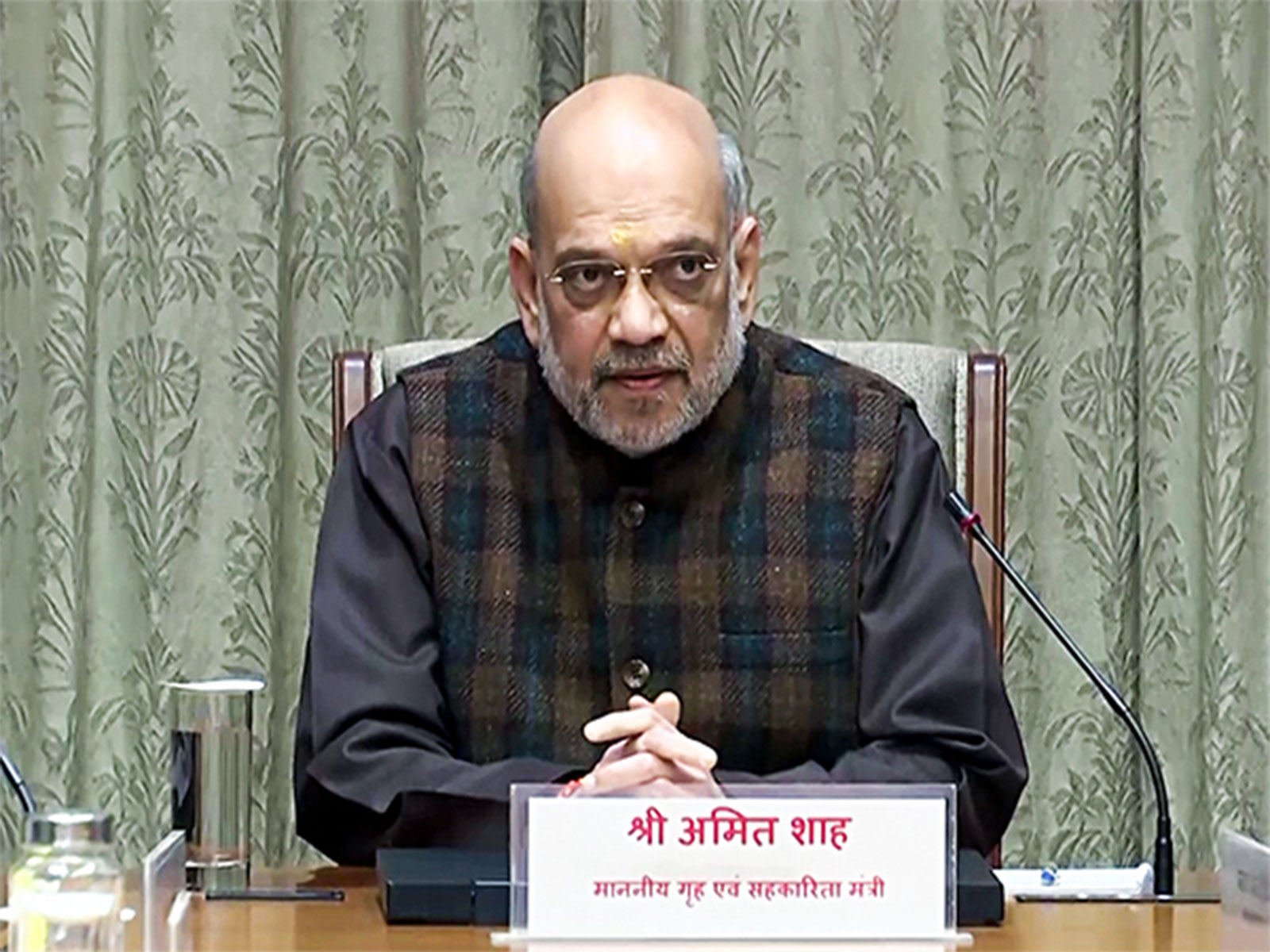
Amit Shah lays foundation stone for state-of-art bio-containment facility "Bio Safety Level-4" lab
Jan 13, 2026
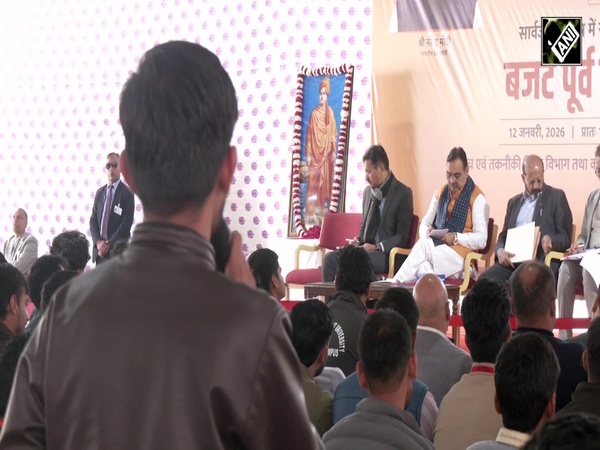
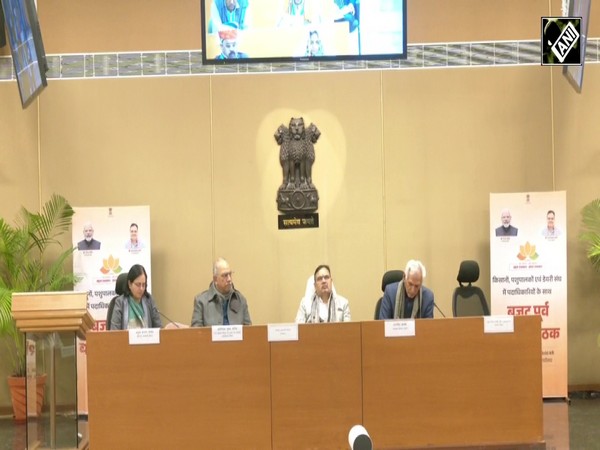
Gandhinagar (Gujarat) [India], January 13 : Union Home Minister Amit Shah laid the foundation stone of Gujarat's first state-of-the-art Bio-Containment Facility "Bio Safety Level-4" lab as well as the "Animal Bio-Safety Level" facility on Tuesday in Gandhinagar, in the presence of Chief Minister Bhupendra Patel. On this occasion, the Minister for Science and Technology, Arjun Modhwadia, was also present.
During this ceremony, the Department of Biotechnology, Government of India, granted a Letter of Intent (LoI) to the Gujarat Science and Technology Department to designate the "Bio Safety Level-4" facility of the Gujarat Biotechnology Research Centre (GBRC) as the 'National Centre for High Containment Pathogen Research Facility' under the Government of India's "BioE3 Policy".
The Union Home Minister stated that a new era has begun in Gujarat for the development of India's health security and biosafety sector. After Pune, this is only the second such high-level lab in the country; however, due to the state government's special initiative, it will become the country's first state government-operated BSL-4 lab, to be constructed at a cost of Rs. 362 crore. In the future, this lab will prove to be India's impregnable security shield and a strong fortress of bio-facilities to combat deadly viruses.
Reiterating Prime Minister Narendra Modi's vision that 'science and technology should be the foundation pillar of national development', he said, "This international-standard lab will open many avenues of opportunity for researchers and youth. Especially, this lab will accelerate the "One Health Mission" initiated by the Prime Minister to prevent diseases transmitted from animals to humans." In the face of recent challenges such as Chandipura and Lumpy Skin Disease in Gujarat, a research-based, permanent security arrangement was essential."
Presenting figures reflecting the revolutionary transformation in India's biotechnology sector, he said, "unprecedented progress has been made in the last 11 years". India's bio-economy, which stood at 10 billion dollars in 2014, has grown to over 166 billion dollars by 2024. Given that research is the 'soul of innovation', and thanks to the infrastructure provided by the central government, Indian scientists today are conducting world-class research in a highly secure environment.
Highlighting growth in the startup and investment sectors, he noted that in 2014, there were fewer than 500 startups in this field; today, there are more than 10,000. Similarly, the number of incubators has increased from 6 to 95, and incubation space has expanded from 60,000 square feet to 9 lakh square feet. Notably, private investment funding has increased from Rs. 10 crore to Rs. 7,000 crore, and the number of patent filings has risen from 125 to over 1,300, indicating that India's youth are now becoming 'job givers' rather than 'job seekers'.
He stated that under the Government of India's "BioE3 Policy", there is a resolve to take the country to greater heights in the biotechnology sector. India today is indigenously manufacturing vaccines for serious diseases such as COVID-19 and cervical cancer. He called upon students and researchers, stating that the responsibility of ensuring India's health security now rests on their shoulders. This lab will enable many positive transformations in the health sector in the coming years.
He stated that under the Prime Minister's leadership, India is moving forward by integrating 'development' and 'heritage'. During the COVID-19 pandemic, Indian scientists developed vaccines quickly, safeguarding 140 crore citizens and helping the world, based on the approach of making science and technology a foundational pillar of national development.
With this lab, Indian scientists will no longer need to rely on foreign countries for sample testing, thereby fulfilling the 'Atmanirbhar Bharat' objective in the health sector. He expressed confidence that by 2027, India will also be among the world's leading nations in the semiconductor and biotechnology sectors.
He expressed concern about the 'silent disaster' of antimicrobial resistance (AMR) driven by antibiotic misuse and urged students and researchers to protect the next generation through research. He called upon students studying in the biotech sector to make the most of national facilities to develop pharmaceutical formulations and vaccines that benefit human life and help achieve the goal of 'Viksit Bharat' by 2047. This facility will emerge as a protective shield not only for Gujarat but for the entire country.
As the country moves towards 'Viksit Bharat' under the guidance of the Prime Minister, science, such as biotechnology, will provide us with security, while heritage, such as the Somnath Swabhiman Parva, will give us a proud identity. India today is building the edifice of modern science on the foundation of culture. This new biotech research will take the country's healthcare system to new heights.
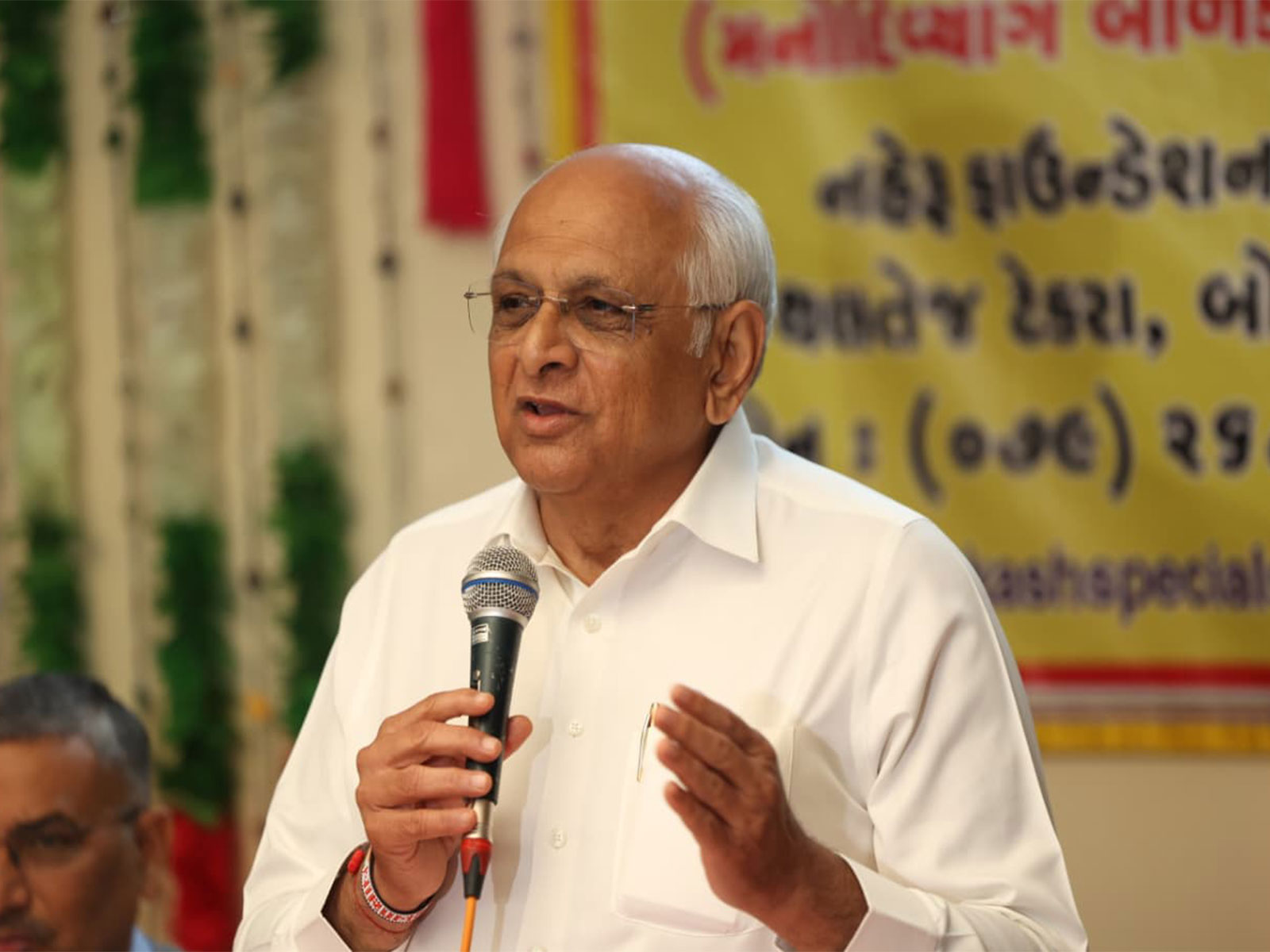
Chief Minister Bhupendra Patel described this project, which will enhance the country's preparedness against potential pandemics, as an important initiative within Prime Minister Narendra Modi's vision for healthcare and modern infrastructure development.
He said, "The Prime Minister is a visionary leader who thinks ahead of time, and it is due to such vision that by operationalising the GBRC, the goal of self-reliance has been achieved so that diagnosis and research of serious health sector challenges such as viral outbreaks, genetic infections, and pandemics need not depend on external institutions".
The Chief Minister expressed confidence that, with the operationalisation of the BSL-4 lab, research on high-risk viruses will be possible within the state, enabling timely, accurate, and reliable diagnosis and further strengthening and equipping the healthcare system.
He stated that GBRC is not only a research institution but also a nodal centre of the state's biotech capacity, adding that research conducted at the BSL-4 lab will directly translate into diagnostics, treatments, and public health policies through translational research. He stated that this BSL-4 facility will prove to be a milestone in realising the Prime Minister's resolve of Viksit Bharat @ 2047 through a healthy, secure, and self-reliant India.
While delivering the welcome address, Science and Technology Minister Arjun Modhwadia stated that, just as Mahatma Gandhi and Sardar Patel transformed India's history and geography, Prime Minister Narendra Modi and Union Home Minister Amit Shah have worked to shape the destiny of modern India and Gujarat.
Stating that Gujarat's first and the country's most important research facility will prove decisive in addressing global health challenges, the Minister said 'Gujarat State Biotechnology Mission' (GSBTM) was established based on the vision of the then Chief Minister and present Prime Minister.
As a result of that vision, Gujarat is now the first state in Asia to have a dedicated biotech university. The research facility whose foundation stone was laid today is Gujarat's first such research facility designated by the Government of India."
This event was attended by Gandhinagar Mayor Miraben Patel, Members of Parliament: Hasmukh Patel, Hari Patel, Mayank Nayak; Members of the Legislative Assembly: Ritaben Patel and Alpesh Thakor, Secretary of Biotechnology, Government of India; Rajesh Gokhale, Secretary of the Science and Technology Department; P Bharati, Gandhinagar District Collector; Mehul Dave, along with various dignitaries, state government officials and staff, and citizens.