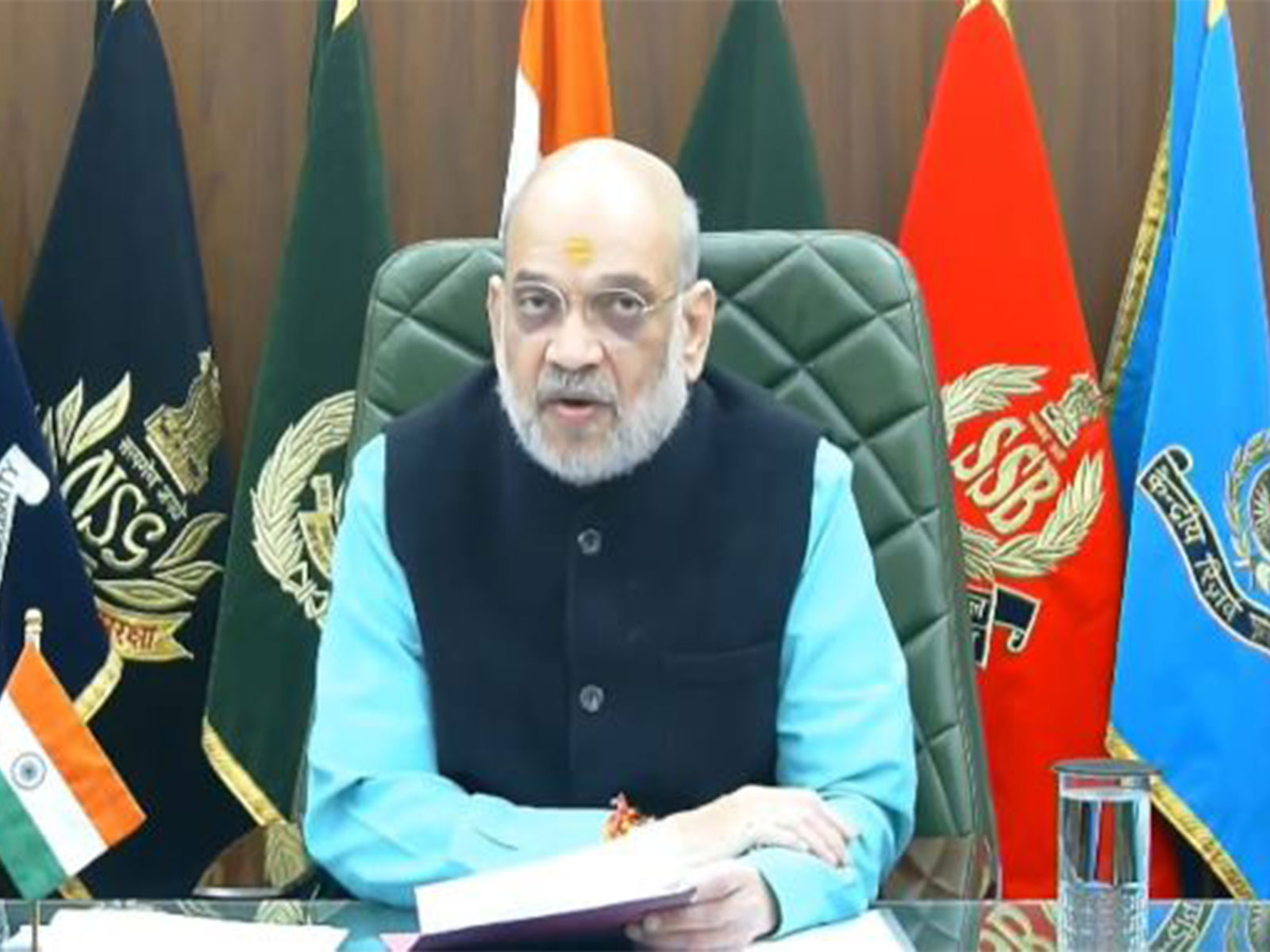
Amit Shah sets March 31 deadline for anti-drug roadmaps, announces 3-year national mission for 'Drug-Free India'
Jan 09, 2026
New Delhi [India] January 9 Union Home Minister Amit Shah on Friday directed all central and state government departments to prepare a clear roadmap by March 31, 2026, in line with their respective responsibilities to combat the growing drug menace in the country.
He also called for the establishment of a robust monitoring mechanism to ensure focused and time-bound action.
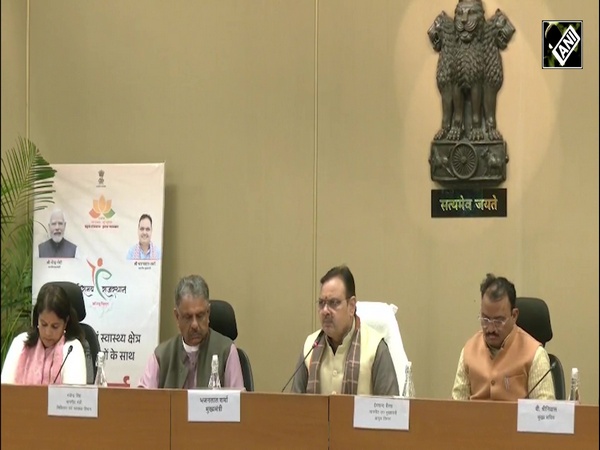
Shah made the direction while chairing the 9th apex-level meeting of the Narco-Coordination Centre (NCORD) in New Delhi.
As per the Ministry of Home Affairs (MHA), the Home Minister announced that "from March 31, 2026, a three-year collective nationwide campaign would be launched against drug abuse."
"Under this campaign, the working methodology of all pillars involved in the fight against drugs will be clearly defined, targets will be fixed, and regular time-bound reviews will be conducted," the MHA said, quoting Shah.
The Home Minister emphasised that over the next three years, India must fight the drug menace on all fronts to realise the goal of a 'Drug-Free India' and safeguard the nation's youth from substance abuse.
He instructed "all departments of the government of India to prepare roadmaps extending up to 2029, along with mechanisms for periodic review of their implementation."
Shah underlined that the drug problem is closely linked to narco-terrorism rather than being merely a law-and-order issue, describing it as a conspiracy aimed at destroying future generations.
He noted that the physical and mental health of youth, their productivity, and rising social discontent are directly connected to drug abuse.
During the occasion, Shah also inaugurated the Narcotics Control Bureau (NCB) office in Amritsar.
The NCORD meeting, organised by the NCB in hybrid mode, was attended by senior officials from central ministries, state governments, and drug law enforcement agencies.
Highlighting the role of Forensic Science Laboratories (FSLs), Shah said they are crucial in the fight against drugs and urged states to accelerate the destruction of seized narcotics, where progress has been slow.
Shah also appealed to the Directors General of Police of all states to draw up state-specific roadmaps and ensure the timely disposal of confiscated drugs.
The NCORD mechanism, established in 2016, operates through a four-tier structure-apex, executive, state, and district-level committees strengthen coordination among the Centre, states, and key stakeholders in tackling the drug menace in a comprehensive manner.