Aortic Aneurysm: The Silent Killer We Must Detect Early
Feb 20, 2026
PNN
New Delhi [India], February 20: Aortic aneurysm is one of the most dangerous yet least understood vascular diseases. It develops silently, without early symptoms, and often reveals itself only when it becomes life-threatening.
In simple terms, it occurs when the aorta -- the main artery carrying blood from the heart -- becomes weak and begins to bulge outward. Constant blood pressure on this weakened wall gradually increases the risk of rupture, which can cause massive internal bleeding and sudden death.
What makes this condition especially dangerous is its silent progression. Most individuals feel completely normal while the disease develops slowly over years. There is usually no pain, no discomfort, and no visible warning sign. This is why an aortic aneurysm is rightly known as a "silent killer. It is more commonly seen in men between 50 and 80 years of age although women are not completely safe either. Patients already suffering from coronary artery disease are at an even hiaher risk. Studies suggest that nearly 4 percent of such patients may develop an aortic aneurysm."
Who Should Be Alert
Certain groups face a higher risk:
- Smokers
- Individuals with high blood pressure
- People above 50 years of age
- Patients with heart disease
- Those with a family history of vascular disorders
However, risk is not limited to these groups alone. The absence of symptoms does not mean the absence of disease
The Danger of Sudden Rupture
When an aneurysm ruptures, the situation becomes immediately critical. Severe chest, back, or abdominal pain, sudden collapse, breathlessness, and loss of consciousness may occur within minutes. Without rapid medical intervention, survival becomes extremely difficult.
This reality makes early detection far more important than emergency treatment. Planned care saves lives; delayed diagnosis costs them.
The Role of Screening
Screening is the most powerful tool against this silent disease.
A simple ultrasound or scan can identify an aneurysm long before it becomes dangerous.
Screening is especially important for:
- People above 60 years
- Smokers
- High blood pressure patients
- Heart disease patients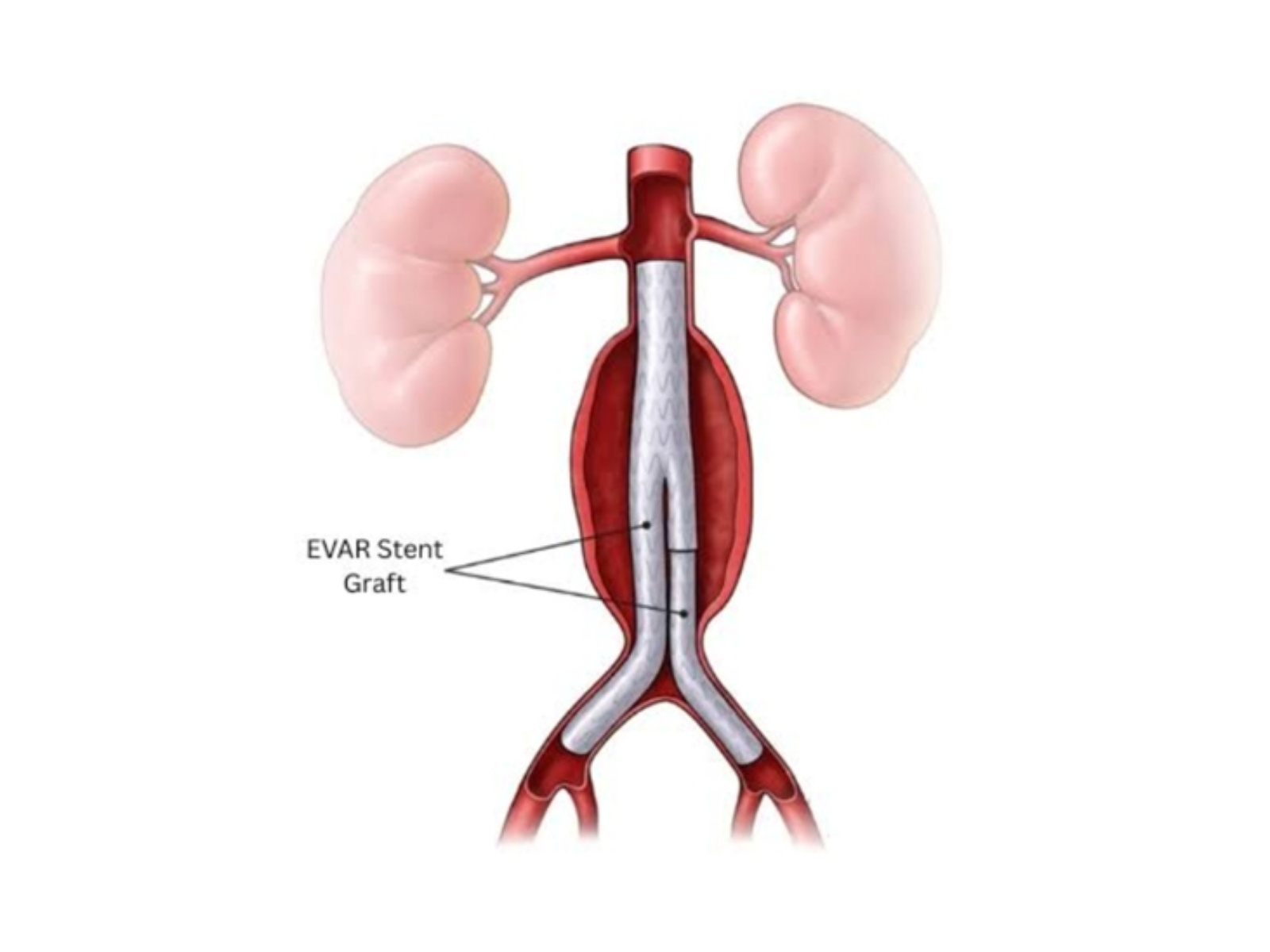
Early diagnosis allows doctors to monitor the condition, plan timely intervention, and prevent catastrophic rupture.
Modern Treatment: How EVAR Has Transformed Care
Advances in medical science have completely changed the way aortic aneurysms are treated. Today, many patients no longer require high-risk open-chest or open-abdominal surgery.
One of the most advanced techniques is EVAR (Endovascular Aortic Repair) -- a minimally invasive procedure in which a stent-graft is placed inside the weakened portion of the aorta through a small incision in the groin. This internal support reinforces the artery from within, prevents rupture, and restores safe blood flow.
Unlike traditional surgery, EVAR:
- Avoids large surgical cuts
- Reduces blood loss and surgical trauma
- Minimizes complications
- Shortens hospital stay
- Enables faster recovery
- Allows elderly and high-risk patients to receive safe treatment
Most importantly, EVAR converts a life-threatening disease into a planned, controlled, and treatable condition -- when detected early.
(ADVERTORIAL DISCLAIMER: The above press release has been provided by PNN. ANI will not be responsible in any way for the content of the same.)