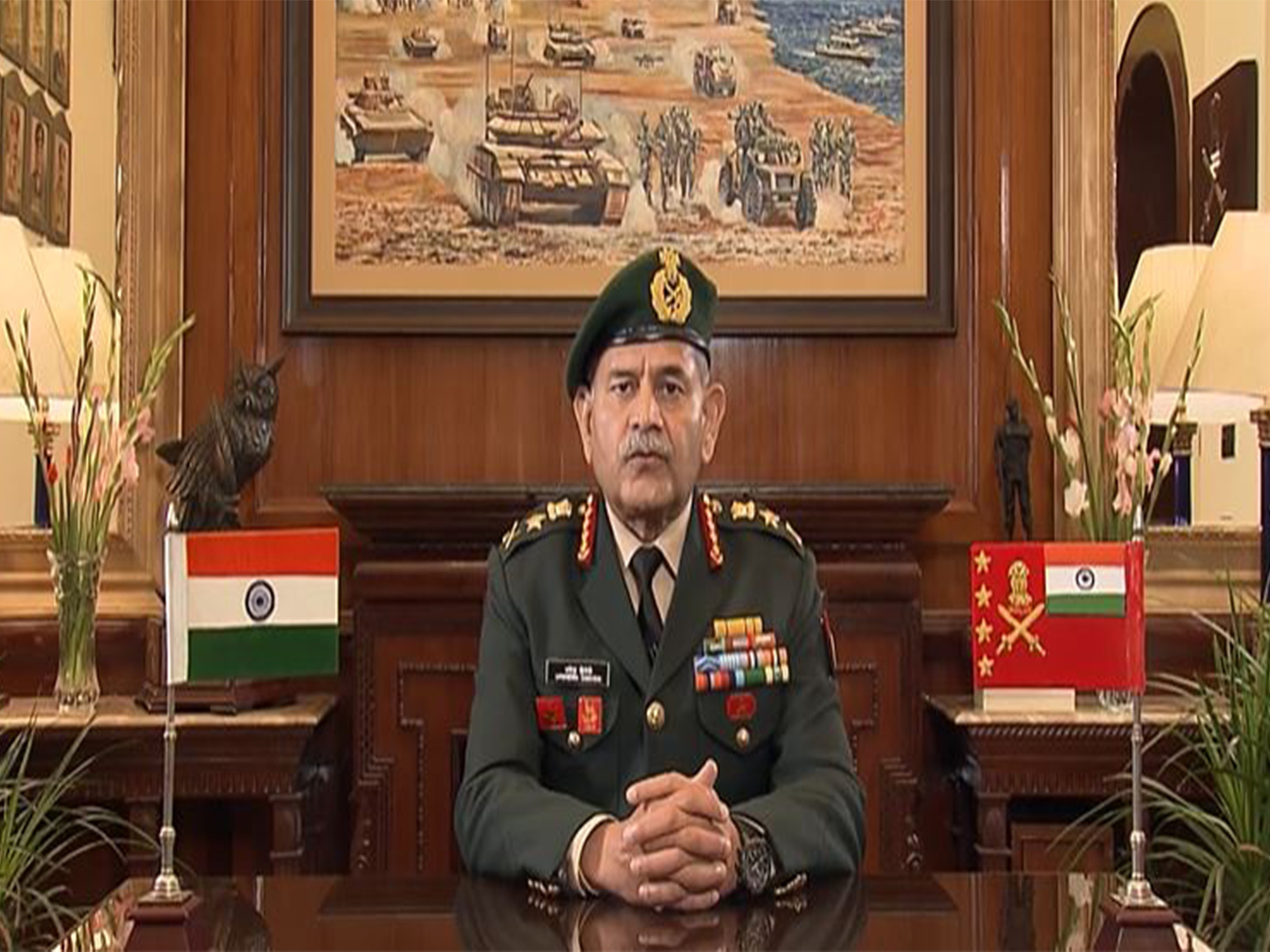
"Army undergoing structural, doctrinal reforms guided by jointness, atma nirbharta, innovation": COAS Gen Upendra Dwivedi on eve of Army Day
Jan 14, 2026
New Delhi [India], January 14 : Chief of Army Staff, General Upendra Dwivedi, on Wednesday said that the Indian Army is undergoing "structural and doctrinal reforms", guided by jointness, 'atma nirbharta' (self-reliance) and innovation.
In his address on the eve of the Army Day, General Upendra Dwivedi said that the Indian Army designated 2026 as the 'Year of networking and data centricity' to build a "connected, responsive and digitally empowered force."
Chief of Army Staff (COAS) General Dwivedi also paid tribute to the soldiers who laid their lives for the country and commended the efforts of the armed forces during Operation Sindoor.
In his message to the nation, he said, "We solemnly remember and pay tributes to our bravehearts who made the supreme sacrifice in the service of the nation. Their courage, devotion and legacy continue to guide us. I commend the collective resolve and gallant performance of all ranks in Operation Sindoor. We also extend our appreciation to our fellow citizens for their unwavering support to the Indian Army, especially during critical operations. It is a testament to the strength of our integrated national will. A true example of whole of nation resolve."
India launched Operation Sindoor on May 7, 2025, as a response to the April 22 Pahalgam terror attack in which 26 individuals were killed in the name of religion by Pakistan-backed terrorists in Kashmir. During Operation Sindoor, India eliminated nine terror camps, killing over 100 terrorists in cross-border strikes, the Ministry of Defence said.
As the Indian Army designated 2025 as the 'Year of Defence Reforms', the COAS stated, "As we step deeper into the decade of transformation, the Indian Army is undergoing structural and doctrinal reforms, guided by the principles of jointness, 'atma nirbharta' (self-reliance) and innovation. Our capability development roadmap is aligned with the years of reforms initiated by the Ministry of Defence. This year, that is 2026, has been designated as the year of networking and data centricity, reflecting our commitment to building a connected, responsive and digitally empowered force."
Looking back at 2025, General Dwivedi recalled Indian Army efforts in disaster relief operations in the country and also Operation Brahma and Operation Sagar Bandhu in the neighbouring countries.
He said, "Beyond the battlefield, the Indian Army plays a pivotal role in nation-building too. Whether it is border area integration, road infrastructure development, skilling and education, or supporting local economies. Our contribution to the Viksit Bharat journey is enduring and evolving. Our humanitarian resistance and disaster relief have made the army a trusted first responder. From Mana and Dharali in Uttarakhand to the flood-hit areas of Jammu, our formations have stood by citizens during their toughest times."
"Our regional commitment was reflected in timely humanitarian missions such as Operation Brahma in response to the Myanmar earthquake and Operation Sagar Bandhu during the cyclone crisis in Sri Lanka. Globally, the Indian Army continues to uphold its reputation as a force for peace through deployment under United Nations Peacekeeping Missions. Our soldiers are ambassadors of India's values, displaying not just strength but compassion in troubled regions worldwide. We are also engaging in smart diplomacy through our outreach, training partnerships and military diplomacy that strengthen regional stability and India's leadership role. The United Nations Contributing Countries Chiefs' Conclave this year was a testament to this endeavour," he said.
In October 2025, India hosted the United Nations Troop Contributing Countries (UNTCC) Chiefs Conclave for the first time.
Every year, January 15 is observed as 'Army Day' to commemorate the occasion when General (later Field Marshal) KM Cariappa assumed command of the Indian Army from General FRR Bucher, the last British Commander-in-Chief, in 1949 and became the first Indian Commander-in-Chief of Independent India.