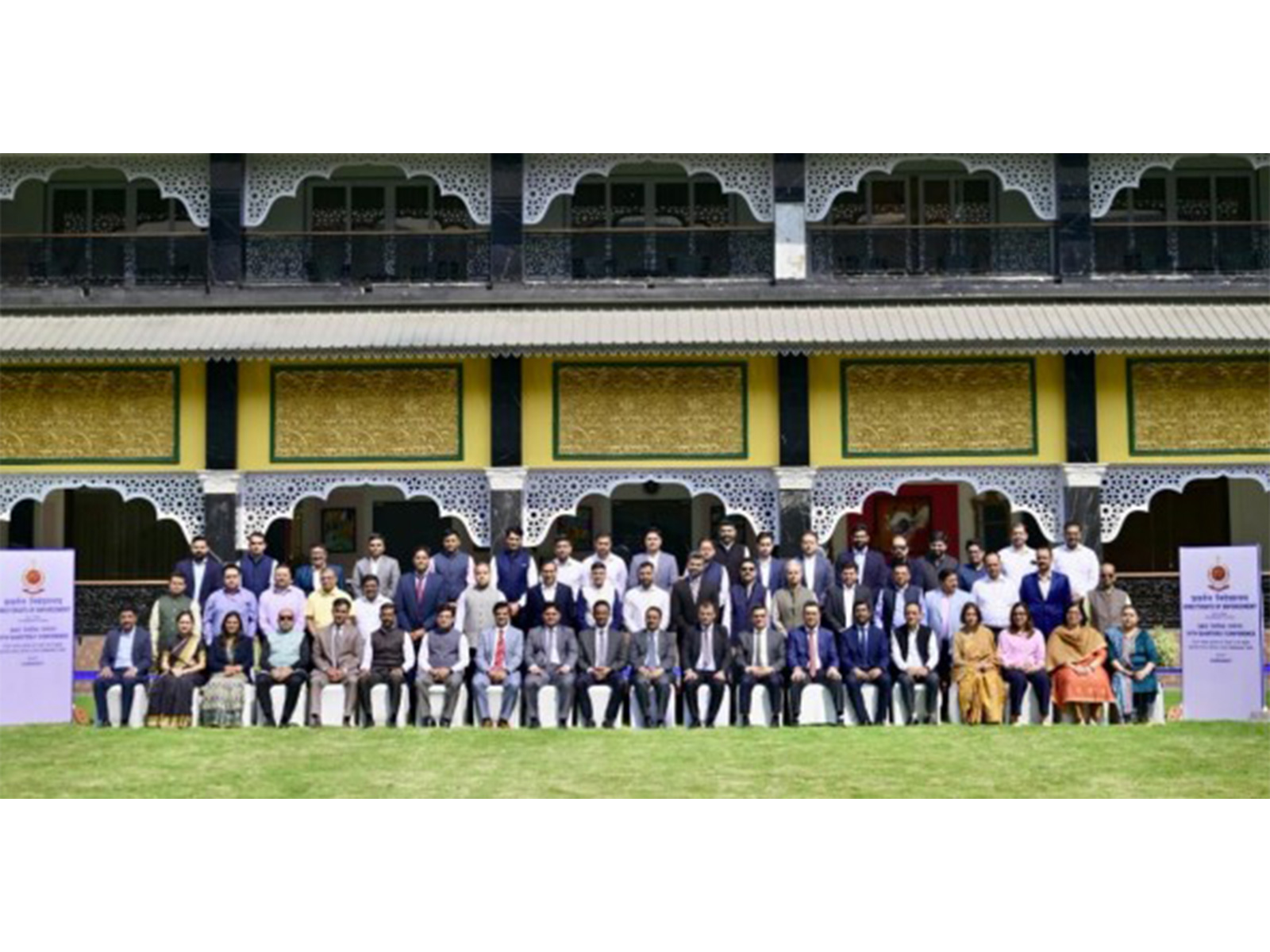
Assam: 34th Quarterly Conference of Zonal Officers (QCZO) of Enforcement Directorate held in Guwahati
Feb 22, 2026
Guwahati (Assam) [India], February 22 : The Directorate of Enforcement (ED) successfully conducted its 34th Quarterly Conference of Zonal Officers (QCZO) from February 19 to 21 in Guwahati, Assam.
The three-day conference was chaired by the Director, ED, and attended by all Special Directors, Additional Directors, Joint Directors, Deputy and Assistant Legal Advisors, and other senior officers from Headquarters and field formations, according to an official release.
The decision to hold the present conference in the North Eastern Region reflects the Directorate's recognition of the strategic and operational importance of the region. In the last two to three years, the Directorate has significantly expanded its footprint in the North East, opening six new offices and establishing a presence in almost all States of the region, with efforts underway to operationalise an office at Aizawl as well.
The Directorate aspires to establish its own dedicated office premises across all Zones and Sub-Zones in the country, and sustained efforts are being made in this direction to strengthen infrastructure and long-term institutional capacity. The North Eastern Region has also witnessed commendable enforcement work in the past year, particularly in cases relating to cybercrimes and drug trafficking, which pose heightened risks due to the region's proximity to the Myanmar and Bangladesh borders, the release stated.
Consistent with the Directorate's broader objective of fast-tracking and 2 effectively concluding investigations across regions, which has been discussed in the earlier conferences as well, the deliberations at Guwahati carry both operational and strategic significance.
The previous QCZOs were held in Srinagar, Jammu & Kashmir and Kevadia, Gujarat, each reflecting this ongoing emphasis on strengthening investigations and institutional resilience. The decision to hold the 32nd QCZO in Srinagar on September 12-13, 2025, was taken primarily to restore confidence in the security environment of the Union Territory after the terrorist attack at Pahalgam a few months earlier.
The successful completion of the conference demonstrated that Jammu & Kashmir remains a safe, vibrant and forward-looking venue for national and international level deliberations. The 33rd QCZO at Kevadia, Gujarat, held on December 5-6, 2025, placed strong emphasis on fast-tracking investigations and concluding cases efficiently through enhanced use of technology. The sessions focused on optimum utilisation of national and international databases, forensic tools, artificial intelligence, OSINT techniques and digital resources to strengthen evidence collection, improve analytical capabilities, and expedite complex financial crime investigations.
The 34th QCZO assumes particular importance as it is the last quarterly conference before the close of the financial year, and therefore, the discussions stressed that the focus must be on meaningful achievement of targets, logical conclusion of 3 investigations, timely filing of prosecution complaints, and ensuring that attachments and penalties are legally sustainable and effectively realised.
A key theme of the conference, according to the release, was data integrity and consolidation. The discussions underscored the need for accurate, reconciled, and real-time data entry on the ED's internal case management system. Zonal Heads were directed to ensure that statistics relating to ECIRs, attachments, prosecution complaints, confirmations, and penalties are internally reconciled before the close of the financial year, so that the Directorate's annual performance reflects credible and verifiable figures.
The conference also reviewed the progress in closure of ECIRs and the status of attached properties under the Prevention of Money Laundering Act (PMLA). Emphasis was laid on expediting pending investigations, filing of prosecution complaints in appropriate cases, and strengthening follow-up in matters of confirmation, possession, and restitution of attached properties, the release added.
The conference also emphasised that with significant statutory powers available under PMLA comes a corresponding responsibility to exercise them with caution, fairness and accountability. It was advised that officers must remain mindful of the impact of enforcement actions and ensure that summons and other statutory notices are issued judiciously, based on clear necessity and proper application of mind.
The target of filing 500 Prosecution Complaints in the current financial year was reiterated, and all field formations were urged to make concerted efforts to achieve the same, while also preparing for an enhanced target in the next financial year. The need for this enhanced target is to proactively conclude long-pending investigations and to systematically reduce the lifecycle of new investigations to a reasonable timeframe of one to two years, except in exceptionally complex cases.
Zones were advised to identify mature cases fit for filing of final Prosecution Complaints and to minimise avoidable delays. The importance of identifying significant new cases was also emphasised to ensure that the Directorate remains responsive to evolving patterns of economic crime, the release further noted.
Special focus areas identified during the conference included the following priority areas, each requiring a focused and coordinated approach across Zones.
All zonal heads were directed to intensify efforts in tracing and securing proceeds of crime parked abroad, particularly in jurisdictions such as Dubai and Singapore. Greater use of international cooperation channels, financial intelligence inputs, and analysis of cross-border fund flows was emphasised to identify layering structures and beneficial ownership behind offshore assets.
The conference highlighted the need to closely examine cases involving manipulation of trade invoices, undervaluation of imports, and other trade-based money laundering techniques. Officers were advised to coordinate with customs and other relevant agencies to detect illicit capital outflows disguised as legitimate trade transactions to identify proceeds of crime related to various types of predicate offences.
Instances of potential collusion between corporate debtors, resolution professionals, members of the Committee of Creditors, and other stakeholders were flagged as areas requiring scrutiny. It was emphasized that cases where the IBC framework is misused to defeat attachment proceedings or to legitimize proceeds of crime must be carefully examined and addressed.
Given the sharp rise in digital arrest scams and other forms of cyber-enabled financial fraud, Zones were encouraged to prioritize investigation of such cases, especially those involving organized syndicates, cross-border elements, and large-scale victimization. The importance of digital forensics and financial trail analysis was reiterated. • Illegal Betting and Online Gaming Platforms: The proliferation of illegal betting applications and unregulated online gaming platforms was identified as a growing challenge. Officers were advised to focus on dismantling financial networks behind such platforms, including payment gateways, mule accounts, and offshore operators.
Recognizing the nexus between narcotics trafficking and money laundering, and highlighting the vision of the Government for 'Nasha Mukt Bharat', Zones were directed to target the financial backbone of drug syndicates. Identification of hawala channels, cash couriers, and cross-border remittance routes linked to drug proceeds was stressed as a priority.
Cases involving artificial inflation of stock prices, circular trading, and use of shell entities to launder proceeds through the securities market were flagged as high-risk areas. Officers were encouraged to undertake detailed financial and forensic analysis to detect such sophisticated schemes.
The conference also underscored the need to remain vigilant regarding foreign funding channels that may be used for unlawful narrative building, destabilising activities, or other anti-national purposes. Field formations were advised to 5 closely examine suspicious cross-border financial flows for such activities and, wherever legally sustainable, register appropriate cases to address such threats within the statutory framework, the release noted.
The importance of international cooperation and development of institutional soft power was also highlighted, with emphasis on ED being a reliable, professional and proactive partner for foreign counterpart agencies. Officers were encouraged to make full use of formal channels of cooperation, including Mutual Legal Assistance Treaty (MLAT) requests, Letters Rogatory, and extradition processes routed through designated Central Authorities.
Timely drafting, close follow-up and coordination with various agencies were emphasised to ensure effective collection of overseas evidence and restraint of assets located abroad.
At the same time, the Directorate's growing engagement through informal and multilateral platforms was underlined. Officers were advised to leverage mechanisms such as Interpol channels using BHARTAPOL, including issuance of Colour Notices, including Purple Notices where appropriate, financial intelligence exchange through the Egmont framework, and asset tracing cooperation through networks like ARIN-AP and the GlobE Network.
The value of building direct professional relationships with foreign enforcement counterparts was highlighted, as early informal engagement often facilitates quicker intelligence sharing and ultimately a smooth transition to formal requests, thereby strengthening ED's effectiveness in handling cross-border money laundering and asset recovery cases.
During the conference, all Zonal Offices made detailed presentations on their performance, key investigations, challenges faced, and best practices adopted. A comprehensive review of statistics was undertaken, and it was decided that the Deputy Directors of functional units should be made responsible for data accuracy and that weekly reviews be conducted to ensure reconciliation of statistics by 31.03.2026, the release noted.
The sessions reflected diverse regional crime trends and operational realities. Several Zones reported increased focus on cyber frauds, digital arrest scams, drug trafficking-linked money laundering, crypto asset tracing, land and mining scams, corruption and bank fraud cases. Notable achievements included large-scale property attachments, dismantling of drug syndicates, freezing of crypto wallets, restitution of properties to victims, and strategic disposal of high-maintenance assets.
Zones also highlighted enhanced use of intelligence platforms such as NATGRID and FINNET, greater recourse to international cooperation mechanisms and efforts to diversify case typologies in line with emerging risks. At the same time, challenges such as delays in sanction for prosecution, non-cooperation by state police in some states, limited manpower, logistical constraints in remote regions, lack of digitised land records, pendency in committal of cases, and valuation issues relating to volatile digital assets were discussed.
Regional Special Directors provided concluding remarks emphasising inter-zonal coordination, improved statistical conversion from ECIR to PC, rationalisation of EDOTS reporting formats, greater supervisory oversight, and enhanced focus on attachment possession and restitution. Issues relating to sanction for prosecution, applicability of legal provisions, expansion of dedicated PMLA courts, and resolution of legacy FERA matters were also deliberated.
The detailed analytical discussions following each presentation enabled cross-learning across Zones and reinforced uniform standards in investigation, prosecution, asset management, adjudication, and data governance across the Directorate.
A detailed presentation was also made by the Special Director (Adjudication) on the status of FERA and FEMA matters across Zones. The session reviewed key statistics and reiterated the commitment made in the previous QCZO to complete adjudication of all pending FERA cases by 31 March 2026, along with compilation of zone-wise data on matters pending before lower courts, High Courts and the Supreme Court for appropriate mitigation measures.
The Adjudication Section has undertaken a comprehensive survey of legacy FERA cases and now has a clear assessment of their nature, quantum and procedural status. The presentation also outlined proposed amendments to withdrawal guidelines and the legal framework governing transitional provisions between FERA and FEMA, including the saving clause and limitation aspects under FEMA. The need for allowing for compounding 7 of FEMA offences as much as possible when such applications are filed by the parties to avoid unnecessary litigation and to avoid hardships caused due to technical civil violations was also discussed.
The Director, ED, directed that inputs from zones on the proposed withdrawal guidelines be furnished expeditiously and emphasised that adjudication clean-up must be completed by 31 March, with necessary coordination with the Department of Revenue regarding counsel fees and strengthening of adjudicatory infrastructure.
On the third day, the conference featured thematic presentations by other national agencies to strengthen inter-agency coordination and deepen institutional understanding in areas of overlapping jurisdiction.
Officers from the Insolvency and Bankruptcy Board of India provided an overview of the Insolvency and Bankruptcy Code, 2016, explaining the CIRP process from NCLT admission to approval of resolution plans. Key provisions relevant to ED's functioning, including the moratorium under Section 14, ineligibility under Section 29A, conditional protection under Section 32A, and avoidance transactions, were highlighted. IBBI also informed that data relating to avoidance transactions is being shared with enforcement agencies to prevent misuse of the insolvency framework.
FIU-IND presented recent improvements in the dissemination of priority STRs and operational analyses, along with increased intelligence requests from law enforcement agencies. The FINNET 2.0 platform was explained in detail as an integrated system linking banking, capital markets, NPCI platforms, e-wallets and virtual digital asset data. India's active engagement with the Egmont Group for international intelligence exchange was also highlighted.
The Indian Cyber Crime Coordination Centre (I4C) presented emerging trends in cyber-enabled financial crime, particularly digital arrest scams and organised online frauds. The session emphasised the importance of real-time intelligence sharing, technological capability building, and coordinated response mechanisms among enforcement agencies. The increasing convergence between cybercrime and money laundering was underlined, necessitating stronger analytical tools and closer collaboration between ED and cybercrime units.
The Narcotics Control Bureau (NCB) presented the narcotics risk landscape in the North Eastern Region, including case studies of recent seizures, typologies of drugs being trafficked, and commonly used smuggling routes, particularly in border areas. The session emphasised that effective disruption of drug trafficking 8 networks requires parallel financial investigations to identify and dismantle the proceeds of crime and hawala channels. The importance of coordinated action between ED and NCB in targeting the financial backbone of narcotics syndicates was strongly underscored.
The final session focused on administration and infrastructure matters. The Directorate of Enforcement is pursuing consolidation and strengthening of its infrastructure through enhanced capital utilisation, land acquisition and development of office premises across its Zones and Sub-Zones. Several proposals for the purchase of land and ready-built buildings have been processed, and during FY 2025-26, significant progress has been made through hiring of new office premises, long-term lease acquisitions, construction initiatives, renewable energy installations and land procurement in locations including Shillong, Dehradun, Raipur, Chennai and Hyderabad.
This reflects a sustained and upward trend in the expansion of infrastructure over the past two to three years, aligned with the Directorate's objective of long-term institutional capacity building.
The conference concluded with a reaffirmation of ED's commitment to uphold the statutory framework relating to money laundering, foreign exchange violations, and other serious economic offences. The deliberations at Guwahati are expected to strengthen inter-zonal coordination, enhance data discipline, sharpen investigative priorities, and ensure a robust and accountable closure of the financial year.