BNP braces for transition of power from Begum Zia to Taqriue Rahman ahead of February polls
Dec 30, 2025
Dhaka [Bangladesh], December 30 : The passing of Bangaldesh's first woman Prime Minister Begum Khaleed Zia puts the spotlight firmly on her son Tarique Rahman who returned to the country last week after living in exile for the past 17 years. Rahman who has already declared his candidature for the general elections schedules for February next year, is widely seen as a prime ministerial candidate.
Begum Khaleda Zia died in the early morning today while she was undergoing treatment at Evercare Hospital in Dhaka at the age of 80.
Accoring to a BNP statement on Facebook, Zia died at around 6 am (local time), shortly after the Fajr prayer.
"Khaleda Zia passed away at around 6:00 am, just after Fajr prayer," the BNP statement read.
"We pray for the eternal peace of her soul and ask everyone to pray for her departed soul," it added.
Zia was admitted to the capital Dhaka's Evercare Hospital on November 23 with a lung infection. The former Prime Minister has been suffering from various physical ailments, including heart disease, diabetes, arthritis, liver cirrhosis, and kidney complications, for a long time and earlier this month, she was sent to London for advanced medical treatment for her ailments.
Her death comes days after the recent return of her son, Tarique Rahman, who left the country after being arrested in 2007-08 and later settled in London following his release.
After the removal of Sheikh Hasina's government last year, he was acquitted in several cases filed during the Awami League period, clearing the way for his return.
Tarique's arrival in Bangladesh was seen as a major shift in the politics of the country, which is currently under an interim government under Chief Adviser and Nobel Laureate Muhammad Yunus.
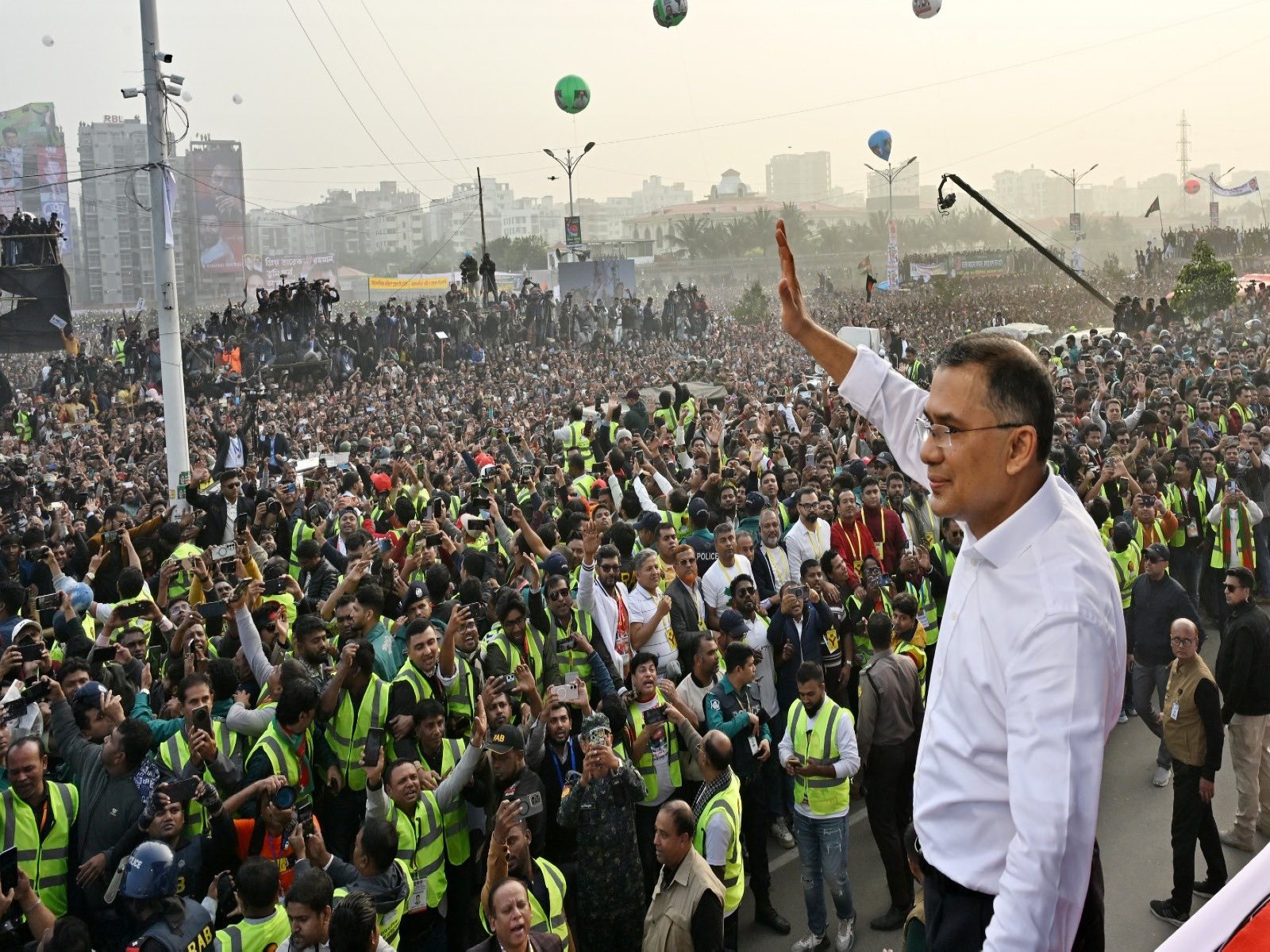
The welcome and the grand reception that the BNP leader received, following his arrival with a large wave of supporters as well as other senior party members, can be seen as a major political event ahead of the upcoming elections.
And now with Zia's death, the party is expected to turn to Rahman to take the helm as Bangladesh enters a decisive phase of its political future.
Earlier, it was expected that the National Citizen Party (NCP), formed in the aftermath of the uprising by student leaders leading the movement, could be an important contender in the upcoming national polls.
But their recent alliance with the Islamic conservative party Jamaat-e-Islami, particularly on a seat-sharing basis, has created a divide among some of the student leaders who had categorically rejected the alliance, with some leaving the party to fight the election independently.
One of the prominent NCP leaders, Tasneem Jara, announced that she is rejecting the party's candidacy and will run independently in the upcoming national elections.
"My dream was to enter parliament through the platform of a political party and serve the people of my constituency and the country. However, due to the current realities, I have decided not to contest the election as a candidate of any specific party or alliance," Jara wrote in a Facebook post.
Meanwhile, Samanta Sharmin, another senior leader of the NCP, has issued a statement opposing the NCP's alliance with Jamaat-e-Islami, describing the Islamist party as "not a reliable ally".
"Bangladesh Jamaat-e-Islami is not a reliable ally. I believe that entering into any cooperation or understanding with Jamaat-e-Islami--given its political position and ideology--would force the NCP to pay a heavy price," Sharmin said in a statement.
Despite NCP Convener Nahid Islam stating that the alliance is "strictly electoral", disagreement still prevailed in the party.
Taken together, the return of Tarique Rahman, the leadership vacuum created by Khaleda Zia's death, and growing fragmentation among other political forces could significantly tilt the balance in favour of the BNP ahead of the February 2026 polls.
With the party expected to formally rally behind Rahman as the prime ministerial face, these developments may position him as the frontrunner in an election that could define Bangladesh's post-uprising political trajectory.