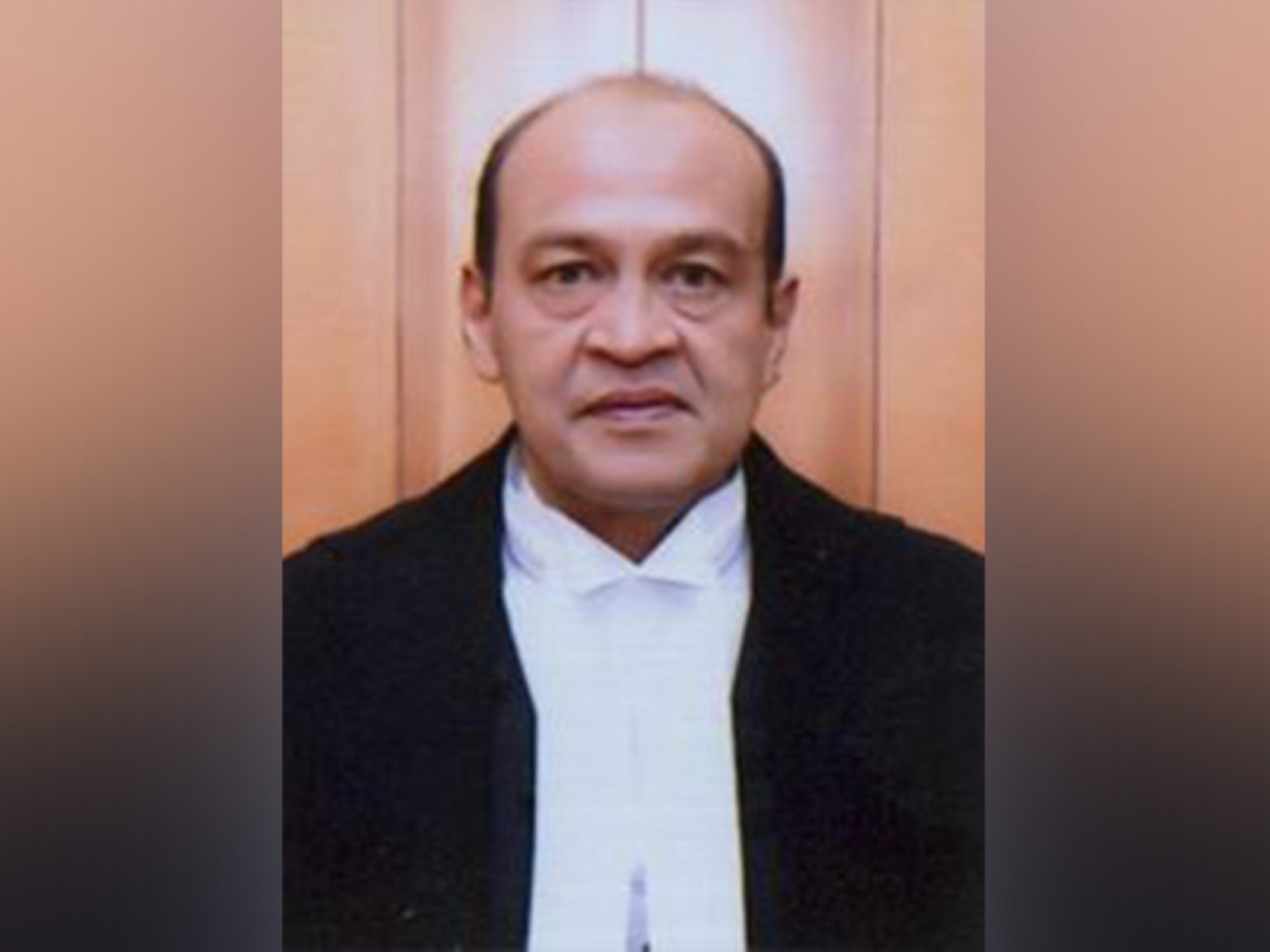
Burnt-Cash Recovery Case: What is Justice Yashwant Varma challenging now?
Dec 16, 2025
New Delhi [India], December 16 : Two weeks after the three-member Joint Inquiry Committee issued notice to Justice Yashwant Varma seeking his response to corruption charges that have triggered removal proceedings in the Parliament, the Allahabad High Court judge has moved the Supreme Court challenging the legality of the Committee by contending that the same was constituted unilaterally by the Speaker of the Lok Sabha, allegedly without consultation with the Chairman of the Rajya Sabha.
Justice Varma has argued that the Speaker's (of Lok Sabha) decision to unilaterally constitute the Committee under Section 3(2) of the Judges (Inquiry) Act, 1968, violates both the said Act and Article 14 of the Constitution.
The High Court judge has contended that despite notices of motion for his removal being given in both Houses of Parliament on the same day under Section 3(1) of the Act, the Speaker proceeded to constitute the Committee without awaiting admission of the motion by the Chairman of the Rajya Sabha and without the mandatory joint consultation envisaged under the first proviso to Section 3(2) of the Act.
"The Hon'ble Speaker has acted in clear derogation of the proviso to Section .3(2) of the Judges (Inquiry), Act, 1968, by unilaterally constituting a Committee on August 12, 2025 after admitting a motion given before the Lok Sabha on July 21, 2025, as on the very same day a separate motion was given in the Rajya Sabha which had not been admitted", the plea reads.
Justice Varma has contended that Section 3 of the Judges (Inquiry) Act prescribes a mandatory procedure for initiating removal proceedings, recognising three distinct scenarios depending on whether motions are moved in one House alone, in both Houses on different dates, or in both Houses on the same date. It is argued that where motions are moved in both Houses on the same day, as it was in the instant case, then no inquiry committee can be constituted unless both motions are admitted and the Committee is constituted jointly by the Speaker of the Lok Sabha and the Chairman of the Rajya Sabha.
According to Justice Varma's plea, these twin requirements of admission and consultation in both the Houses are foundational and jurisdictional in nature, and any action taken in violation of them is void.
The petition underlines that the said proviso is designed to avoid contradictory decisions, parallel proceedings and institutional conflict between the two Houses of Parliament on matters concerning the removal of judges.
Additionally, Justice Varma has pointed out that since a vacancy had arisen in the office of the Vice President, who functions ex officio as the Chairman of the Rajya Sabha, on the same day (July 21) on which the motion was given in both Houses, the statutory requirement of joint consultation and constitution of the Committee was legally impossible.
The said vacancy in the office of the Chairman of Rajya Sabha had arisen due to the sudden resignation of former Vice President Jagdeep Dhankhar from his post for health reasons on July 21.
Justice Varma's instant plea is the second attempt by the former Delhi High Court judge after his initial plea challenging the in-house procedure set in motion by the former CJl Sanjiv Khanna on the ground that it lacked legal sanctity and amounted to an extra-constitutional mechanism was dismissed by the Supreme Court. In his instant and second plea, however, Justice Varma is challenging his removal proceedings in Parliament, which were triggered after the former CJIs' recommendation but by a complete independent prerogative of Parliament itself.
The Court heard arguments today by Senior Advocate Mukul Rohatgi appearing on behalf of Justice Varma. After hearing the senior lawyer briefly, a bench of Justices Dipankar Datta and Augustine George Masih issued notices to the Chief Secretaries of both the Houses of Parliament seeking a response to Justice Varma's plea.
The Court will hear the case next on January 7, just four days ahead of the date on which the Joint Inquiry Committee is expecting Justice Varma's response, in his defence to the charges of corruption.
The case pertains to the recovery of unaccounted and partially burnt cash from the official residence of Justice Varma, then a sitting judge of the Delhi High Court. Following the internal inquiry, the former CJI Sanjiv Khanna had forwarded a recommendation to the President and the Prime Minister of India to initiate the procedure for his removal.