"Can reach any limit": Kalpana Chawla's mother encourages youth to aim high
Jan 21, 2026
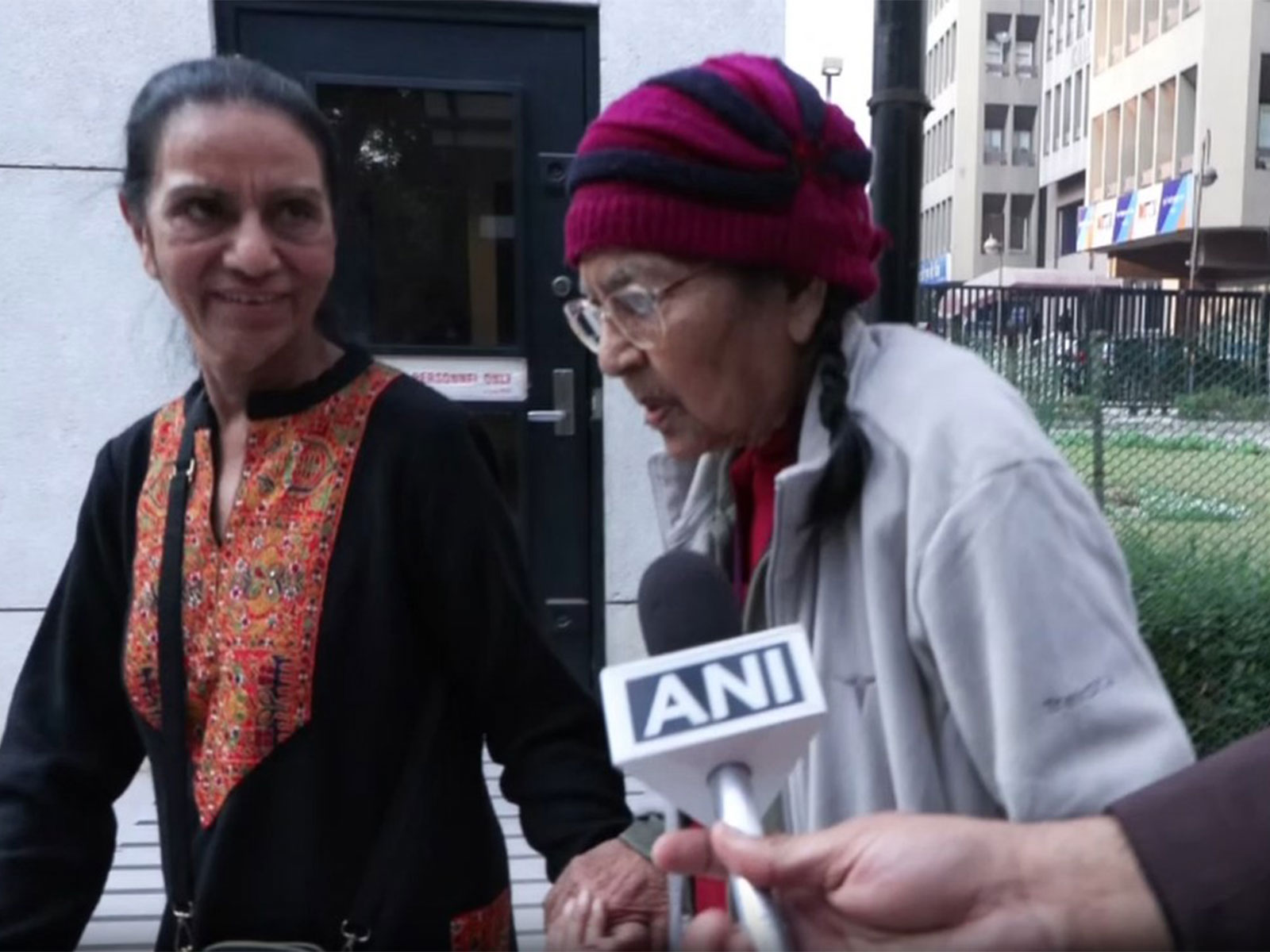
New Delhi [India], January 21 : Sanjogta Kharbanda, the mother of late NASA (National Aeronautics and Space Administration) astronaut Kalpana Chawla, urged parents to motivate and guide the younger generation to aim high in life, asserting that with determination and encouragement, "they can reach any limit."
Speaking to ANI after meeting NASA astronaut Sunita Williams on Tuesday, Kharbanda emphasised the role of parents in shaping the aspirations of children. "We should teach our children that they can reach any limit in life," she said.
Kalpana Chawla, remembered as the first Indian-born woman to travel to space, continues to inspire millions across the world through her remarkable journey and achievements. Born in Haryana, Chawla moved to the United States to pursue higher education and earned her master's degree in aerospace engineering from the University of Texas in 1984, followed by a doctorate from the University of Colorado in 1988.
She began her professional career at NASA's Ames Research Centre in California, where she conducted research in fluid dynamics.
After becoming a naturalised U.S. citizen, Chawla applied to NASA's astronaut programme and was selected as part of NASA's 15th group of astronaut candidates, known as "The Flying Escargot."
In 1997, she made her first spaceflight aboard Space Shuttle Columbia on mission STS-87, a 15-day mission dedicated to scientific research as part of the United States Microgravity Payload-4. Her second mission, STS-107, came to a tragic end on February 1, 2003, following 16 days of conducting science onboard the space shuttle Columbia. A small piece of foam that struck the orbiter's left wing during launch created a hole that went undetected during the mission.
Upon Columbia's return to Earth, hot plasma entered the wing, tearing it apart, and the resulting loss of control led to the vehicle disintegrating and the death of the crew.
Meanwhile, NASA astronaut Sunita Williams, whom Kharbanda recently met, has retired after 27 years of service, effective December 27, 2025. Williams has had a distinguished career, completing three missions aboard the International Space Station and logging a total of 608 days in space, the second-highest cumulative time by a NASA astronaut.
Williams has also completed nine spacewalks, totalling 62 hours and 6 minutes, the most by a woman and the fourth-highest overall. She was also the first person to run a marathon in space. Her most recent mission included commanding Expedition 72 after launching aboard Boeing's Starliner in June 2024 and returning to Earth in March 2025 as part of NASA's SpaceX Crew-9 mission.
NASA Administrator Jared Isaacman praised Williams' contributions, stating that her leadership and achievements have laid the foundation for future missions to the Moon and Mars, inspiring generations to push the boundaries of what is possible.
"Suni Williams has been a trailblazer in human spaceflight, shaping the future of exploration through her leadership aboard the space station and paving the way for commercial missions to low Earth orbit," said NASA Administrator Jared Isaacman. "Her work advancing science and technology has laid the foundation for Artemis missions to the Moon and advancing toward Mars, and her extraordinary achievements will continue to inspire generations to dream big and push the boundaries of what's possible. Congratulations on your well-deserved retirement, and thank you for your service to NASA and our nation," NASA said in a statement.
"Suni is incredibly sharp, and an all-around great friend and colleague," said Scott Tingle, chief of the Astronaut Office at NASA Johnson. "She's inspired so many people, including myself and other astronauts in the corps. We're all going to miss her greatly and wish her nothing but the best."
Beyond her spaceflight experience, Williams held numerous roles throughout her NASA career. In 2002, she served as a NEEMO (NASA Extreme Environments Mission Operations) crew member, spending nine days living and working in an underwater habitat. After her first flight, she served as deputy chief of NASA's Astronaut Office.
She later was the Director of Operations in Star City, Russia, following her second mission to the space station. Most recently, she helped establish a helicopter training platform to prepare astronauts for future Moon landings, as per the statement.