China benefits from Trump's clumsy antics
Feb 24, 2026
Hong Kong, February 24 : With US President Donald Trump continuing to upset the global apple cart and clumsily stepping on the toes of erstwhile allies, China is reaping benefits and hefting its own influence.
As Canadian Prime Minister Mark Carney said at the World Economic Forum in Davos in January: "It seems that every day we're reminded that we live in an era of great-power rivalry - that the rules-based order is fading, that the strong can do what they can, and the weak must suffer what they must."
The Canadian leader continued, "For decades, countries like Canada prospered under what we called the rules-based international order. We joined its institutions, we praised its principles, and we benefited from its predictability. And because of that, we could pursue values-based foreign policies under its protection."
However, he acknowledged this order was built on false premises, that the strongest would always flaunt the rules.
He described the world as being "in the midst of a rupture, not a transition". He added, "Allies [of hegemons] will diversify to hedge against uncertainty. They'll buy insurance, increase options in order to rebuild sovereignty, sovereignty that was once grounded in rules but will increasingly be anchored in the ability to withstand pressure."
He said Canada was recalibrating its relationships. However, its diversification includes a new strategic relationship inked with China in mid-January. Whilst Carney painted it as an act of pragmatism, it shows the headway China is achieving in offering itself as a viable alternative to the USA.
Indeed, as the world reels from Trump's erratic behaviour, China is presenting its credentials as a reliable and consistent global partner. Of course, such a narrative creates sharp dissonance when its real behaviour is analysed.
Take China's continual coercion of Taiwan, its Orwellian treatment of its own citizens, its weaponisation of trade, massive military modernisation, its illegal maritime claims, a tightly controlled media and internet, and its trampling of human rights, for example. China might pretend to be a responsible partner, but it is simply trying to make the rest of the world in its own dystopian image.
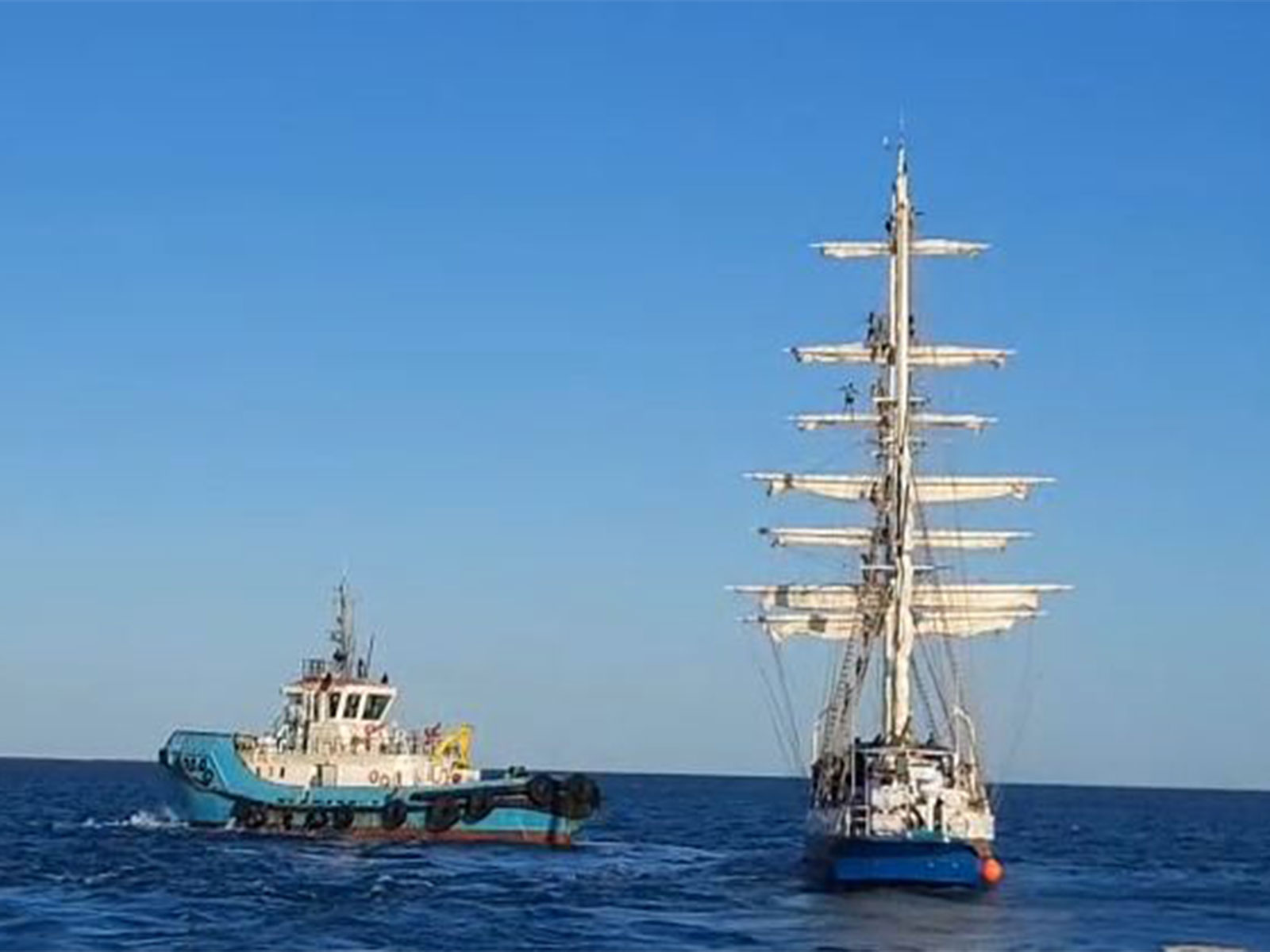
As an example, the China Coast Guard (CCG) revealed it conducted 550,000 vessel sorties and 6,000 aircraft sorties to "carry out missions protecting China's maritime rights" in the past five years. In other words, this supposed law enforcement and maritime safety agency is concentrating its efforts on illegal maritime territorial claims in places like the South China Sea and East China Sea. Indeed, this figure included 134 patrols around the Diaoyu Islands, otherwise known as Japan's Senkaku Islands, last year alone.
Zhang Jianming, the CCG's chief, said the coast guard, "in accordance with relevant laws, regulations and rules, prevented and handled infringements and provocations by relevant countries, effectively deterred Taiwan independence separatist activities, and resolutely safeguarded China's territorial sovereignty and maritime rights and interests".
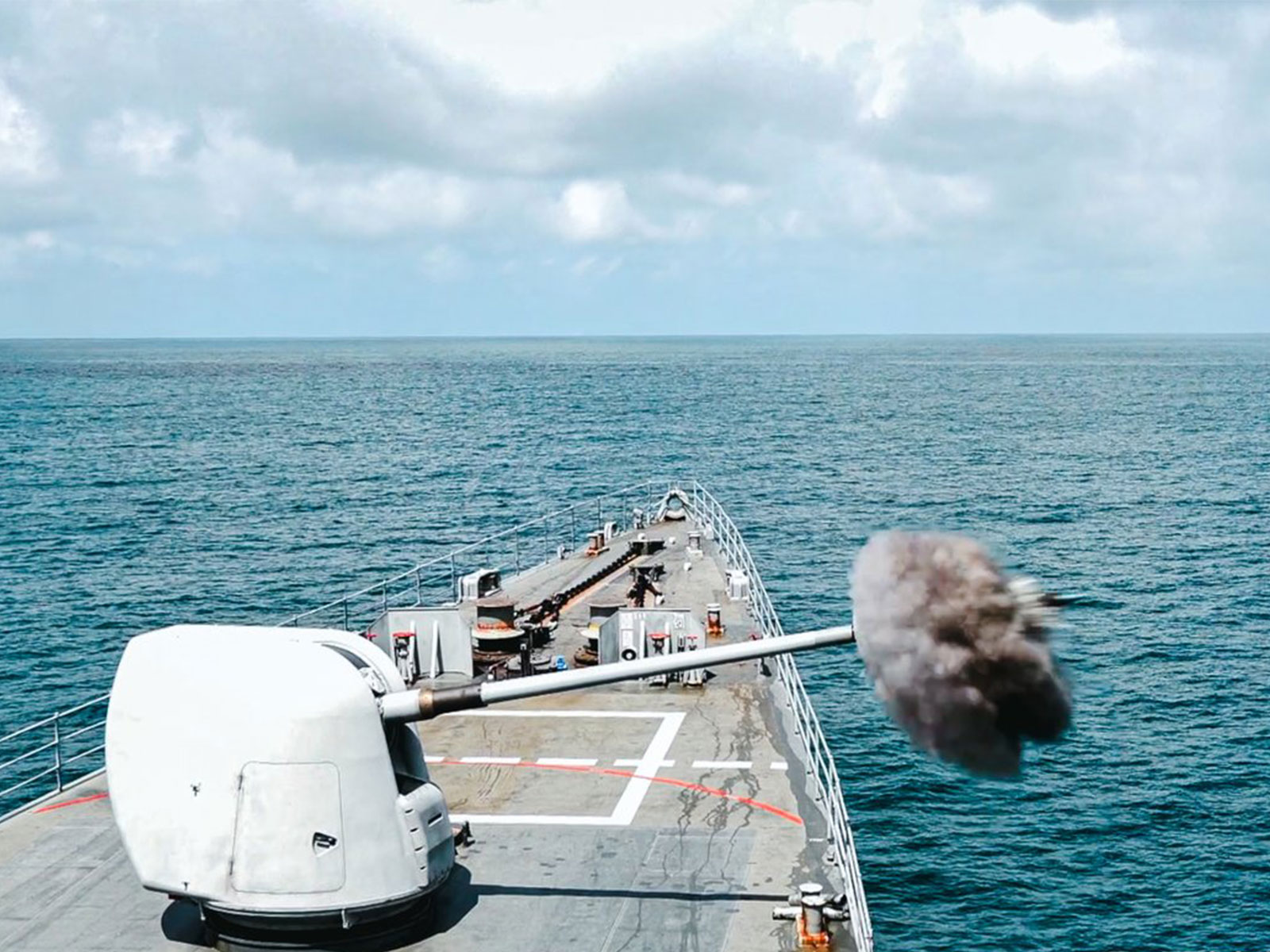
However, Zhang failed to reference a coast guard corvette that collided with a Chinese destroyer whilst harassing a Philippine vessel last August. These bullying actions are typical of China's navy and coast guard against anyone smaller than itself.
Of course, the greatest target of Chinese venom and coercion is Taiwan, whose greatest crime is avoiding being governed by an autocratic and vindictive regime. Yet Taiwan must be concerned as Trump prepares to visit Beijing from 31 March to 2 April, for he will doubtlessly be wooed by Chairman Xi Jinping's grandiose exhibitions of pomp and ceremony.
Already, there is concern about the language Trump is using about Taiwan. Just as Trump often repeats Vladimir Putin's talking points almost verbatim, so Trump is not being sufficiently careful in the language he uses with China.
Ryan Hass, Director of the Brookings Institution's John L. Thornton China Centre, explained, "America's narrative on Taiwan is drifting in a dangerous direction."
Whilst the substance of US-Taiwan ties is strong - such as a major new trade deal, large-scale Taiwanese investment in US technology ecosystems, Taipei's integration in Pax Silica and major arms sales - Hass said "the risk is around the drift in US narrative on Taiwan".
Hass's comments were occasioned by Trump telling reporters aboard Air Force One on 16 February that he was negotiating Taiwanese arms sales with Beijing. Trump said, "I'm talking to him [Xi] about it. We had a good conversation, and we'll make a determination pretty soon." The USA is planning US$20 billion in arms sales to Taiwan, with a US$11.1 billion package already announced last December.
Beijing has tried to corral the USA into consulting with itself over such arms sales. All American presidents until now have firmly refused to go there, but Trump's ill-advised comments about consulting Xi are putting that long-held stance in question.
Hass lamented, "Regardless of what Trump decides, Trump has gifted Xi a win by setting a new precedent." After Trump and Xi talked on 4 February, a Chinese readout quoted Xi as saying, "The US must handle the issue of arms sales to Taiwan with
prudence."
Ro Khanna, a US representative from California, described Trump's comments on future arms sales to Taiwan as "alarming" and a "blatant violation of US policy and the Six Assurances". The second of those Six Assurances states that the USA will not consult with China on arms sales to Taiwan.
US Senator Andy Kim concurred, saying, "This isn't just an admission, it's a disturbing abandonment of our Taiwan policy, which has been key to stability for decades." Kim further warned that American once-non-negotiable commitments to Taiwan are now "in doubt". "Even if he decides to move forward with these sales, we're in dangerous territory now," Kim warned.
Hass pointed out: "A narrative is emerging in Washington: 'Taiwan is a single point of failure.' 'Better to reduce dependence fast.' This view of Taiwan as a liability rather than as a partner/enabler risks pushing strategy and policy in directions that could undermine deterrence and stability."
It is likely that Trump will not announce any further arms sales to Taiwan until after he returns from Beijing. Taiwan is fearful that it will become a bargaining chip in trade negotiations between Trump and Xi. China's negotiating hand was also strengthened after the US Supreme Court ruled that Trump's trade tariffs are illegal and unauthorised. Tariffs are the big stick Trump wields to get others to bend to his wishes, but if it turns out they are illegal, he will lose that power. It puts China in a stronger position vis-a-vis the USA in their upcoming meetings.
Khanna also lamented Trump, "It shows he is more eager to make bad deals with America's strategic competitors than to strengthen ties with longstanding friends like Taiwan."
Another cause of concern is new information coming to light from the US government about China's vigorous activity in the realm of nuclear weapons. The New START treaty between Russia and the USA expired on 5 February, and China has vociferously refused American calls for it to be included in a new trilateral arms control treaty.
China has painted itself as a reluctant, peace-loving nuclear state that abides by a "no first use" policy of nuclear weapons. However, it is conducting the world's fastest nuclear arsenal build-up. According to the Pentagon, the People's Liberation Army Rocket Force had a nuclear-warhead stockpile "in the low 600s" as of late 2024, and it predicted China would reach more than 1,000 warheads by 2030.
The problem is that China refuses to acknowledge its massive investment in nuclear weapons - including three giant fields of missiles siloes deep in its interior, and a range of new ballistic missile types for ground, air and submarine launch.
Worse than that, it appears China may have conducted a low-yield nuclear test on 22 June 2020. This accusation was levelled by Thomas DiNanno, US Undersecretary of State for Arms Control and International Security, at the Conference on Disarmament in Geneva on 6 February. He alleged, "Today, I can reveal that the US government is aware that China has conducted nuclear explosive tests, including preparing for tests with designated yields in the hundreds of tons. The PLA sought to conceal testing by obfuscating the nuclear explosions, because it recognised these tests violate test ban commitments."
He continued, "China has used decoupling - a method to decrease the effectiveness of seismic monitoring - to hide its activities from the world. China conducted one such yield-producing nuclear test on June 22nd of 2020." The purported test occurred despite Beijing claiming a moratorium on such activities and being a signatory to the Comprehensive Nuclear Test Ban Treaty.
Evidence of the test finally came from US Assistant Secretary of State Christopher Yeaw at an event at the Hudson Institute think-tank on 17 February. He said a remote seismic station in Kazakhstan measured a 2.75-magnitude "explosion" 720km away at Lop Nor, China's nuclear test site, on 22 June 2020. He said the data was incompatible with anything other than a nuclear test, i.e., it could not be attributed to mining or an earthquake.
China is believed to have performed a dramatic expansion of the Lop Nur nuclear test site between 2020 and 2024. Plus, DiNanno said, "China's entire nuclear arsenal has no limits, no transparency, no declarations and no controls."
In response, China accused the USA of viciously lying. "This is political manipulation aimed at pursuing nuclear hegemony and evading its own nuclear disarmament responsibilities," a spokesperson at the Chinese Embassy in Washington said. "China firmly opposes such narratives. US allegations about China conducting a nuclear test are entirely unfounded."
Nonetheless, if US claims prove accurate, it could indicate Beijing is developing a new generation of nuclear weapons. US intelligence sources suggest this includes new weapons capable of delivering multiple, miniaturised nuclear warheads from a single missile. China has never developed or fielded low-yield, tactical nuclear devices before, but its testing and development could include low-yield nuclear warheads in the tens of kilotons range for the likes of hypersonic missiles.
Indeed, sources in the US intelligence community are accusing China of trying to develop the world's most advanced nuclear arsenal so it can become a peer of Russia and the USA. Washington DC was already aware of such a proclivity, for its 2022 National Defense Strategy asserted that China's improved nuclear arsenal could provide "new options before and during a crisis or conflict to leverage nuclear weapons for coercive purposes, including military provocations against US allies and partners in the region".
New nuclear weapons carried by hypersonic missiles, with a Chinese threat to detonate near a carrier strike group, for instance, could dissuade the US military from intervening in any PLA invasion of Taiwan.
Raji Rajagopalan, a resident senior fellow at the Australian Strategic Policy Institute, remarked, "China's nuclear expansion and modernisation could lead to an accelerated and unbridled nuclear arms race, particularly since Chinese President Xi Jinping refuses to participate in meaningful dialogue and abide by agreements on such issues.
This would have implications that go beyond the US-China competition: it would affect global stability; undermine international non-proliferation norms and efforts; and harm the prospects of future arms control agreements."
Returning to Carney's Davos speech, he concluded: "We know the old order is not coming back. We shouldn't mourn it. Nostalgia is not a strategy, but we believe that from the fracture we can build something bigger, better, stronger, more just. This is the task of the middle powers, the countries that have the most to lose from a world of fortresses and the most to gain from genuine cooperation."
Many countries will agree with such a sentiment, but they will also throw in their lot with "fortress" China. Trump's behaviour - such as his threat to invade Greenland - is a boon for Xi. It could be said that Beijing is simply following Napoleon's maxim of "never interrupt your adversary when he's making a mistake".
Ironically, with its boilerplate statements about upholding peace, stability and international law, China sounds almost convincing.