China deploys heavy security in Lhasa during Tibetan Ganden Ngamchoe Festival
Dec 17, 2025
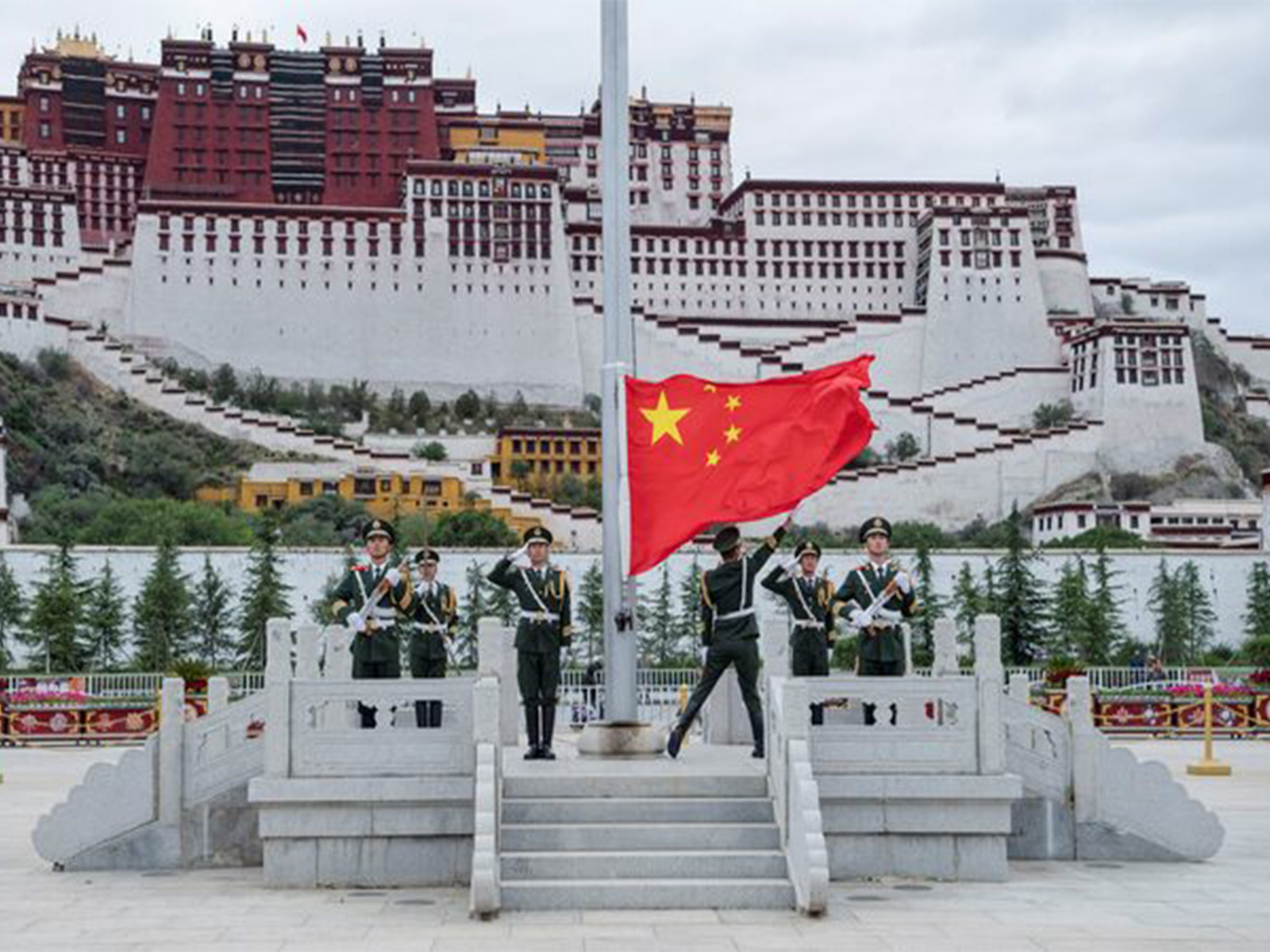
Dharamshala (Himachal Pradesh) [India], December 17 : Chinese officials have allegedly sent a significant number of police and paramilitary personnel to Lhasa on Sunday for the annual Ganden Ngamchoe festival, an important religious event that honours the parinirvana of Je Tsongkhapa, the founder of the Gelug tradition of Tibetan Buddhism, Phayul reported.
Ganden Ngamchoe, celebrated on the 25th day of the 10th month according to the Tibetan lunar calendar, is typically observed by lighting butter lamps, walking around monasteries and praying at significant religious locations, particularly at the Jokhang Temple in Lhasa, Phayul noted.
However, images and videos shared by a Tibetan user on X depicted an atmosphere of heightened tension around the Jokhang Temple during this year's event. "This should be a sacred and peaceful day for faith. Instead, the Chinese Communist Party has transformed it into a day filled with tension and anxiety," the post stated.
According to the account, the Jokhang Temple was encircled by military and police forces positioned in "three tiers," underscoring what the netizen described as the authorities' increasing dependence on coercive tactics to stifle religious expression under the guise of ensuring stability.
Access points to these places were reportedly heavily monitored, with multiple layers of checkpoints established along main roads and narrow alleyways. At these checkpoints, police frequently inspected identification cards, questioned individuals about their purposes and limited entry once a certain crowd size was reached.
In certain areas, temporary inspection booths were set up, while patrols consistently moved through the surrounding neighbourhoods, the Phayul report said.
According to analysts and human rights observers, one of the main objectives of the extensive security presence was to prevent large religious gatherings. Historically, Tibetan festivals have provided opportunities for collective religious expression and cultural recognition, which Chinese authorities have long viewed with suspicion.
During Ganden Ngamchoe, police reportedly actively discouraged Tibetans from gathering in large groups. Devotees wishing to light butter lamps or pray collectively were often instructed to move along quickly or disperse.
In some instances, access to monasteries was temporarily restricted, allowing entry only in small numbers or within rigidly controlled time frames, Phayul reported.
While officials have asserted that such measures are necessary for crowd management and public safety, observers contend that the restrictions extend far beyond standard security concerns and are aimed at reducing the public visibility of Tibetan religious practices.
Observers also note that the heightened security presence during Ganden Ngamchoe is not an isolated incident but part of a broader Chinese strategy to impose strict control over Tibet's religious institutions and cultural identity.
Similar measures are frequently reported during other significant religious occasions, anniversaries linked to Tibetan history and politically sensitive periods, Phayul reported.