CII collaborates with MeitY for conference on democratizing AI for economic growth, social good
Feb 18, 2026
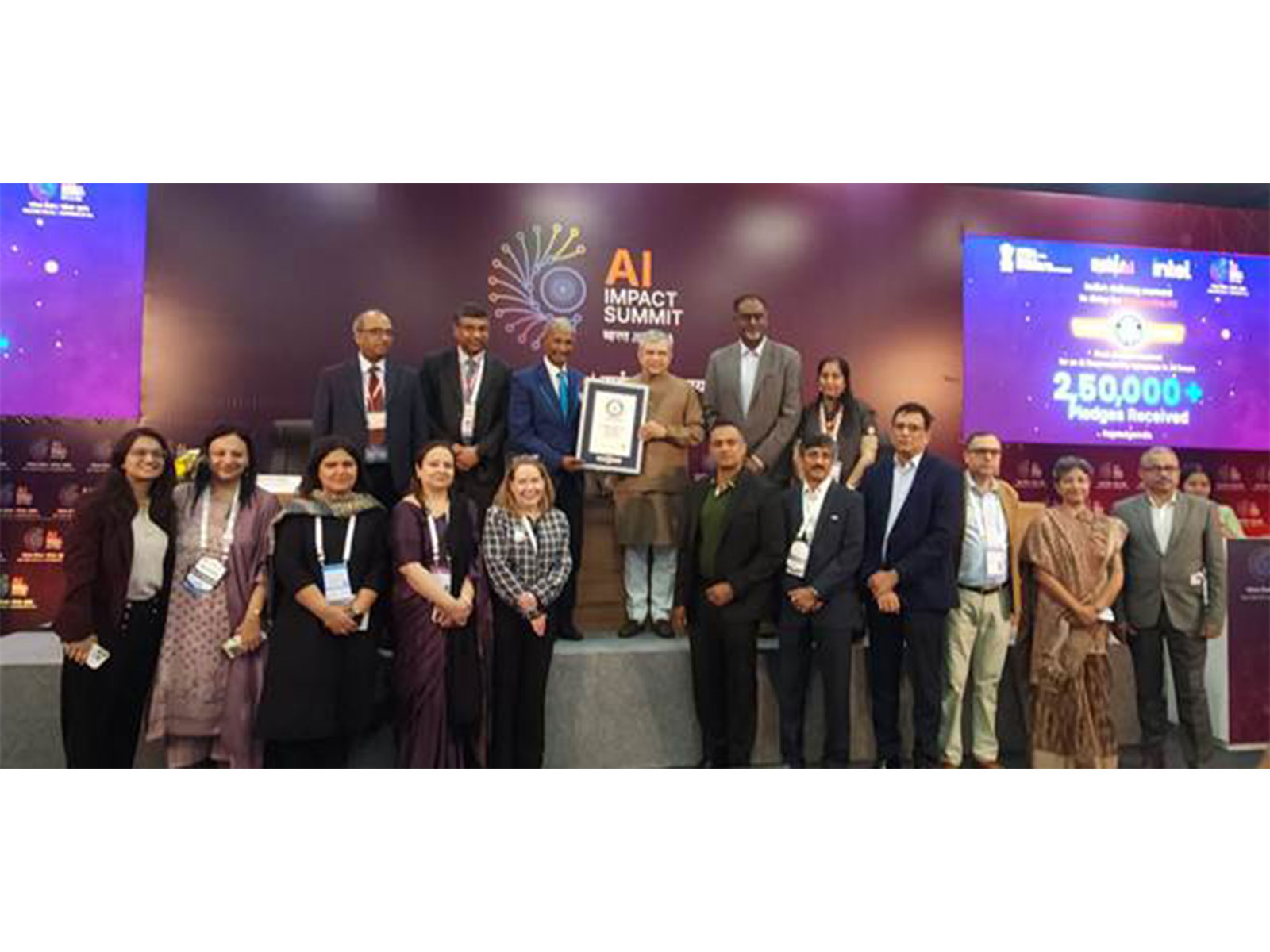
New Delhi [India], February 18 : Confederation of Indian Industry (CII), in collaboration with the Ministry of Electronics and Information Technology (MeitY) and IndiaAI Mission (MeitY), organised the Conference on Democratizing AI Resources for Economic Growth and Social Good (Securing the Future: Cyber Defence for an AI-driven world).
With AI rapidly integrating into critical sectors from governance and finance to healthcare and manufacturing, ensuring robust cyber defence mechanisms is essential to protect national assets and public trust.
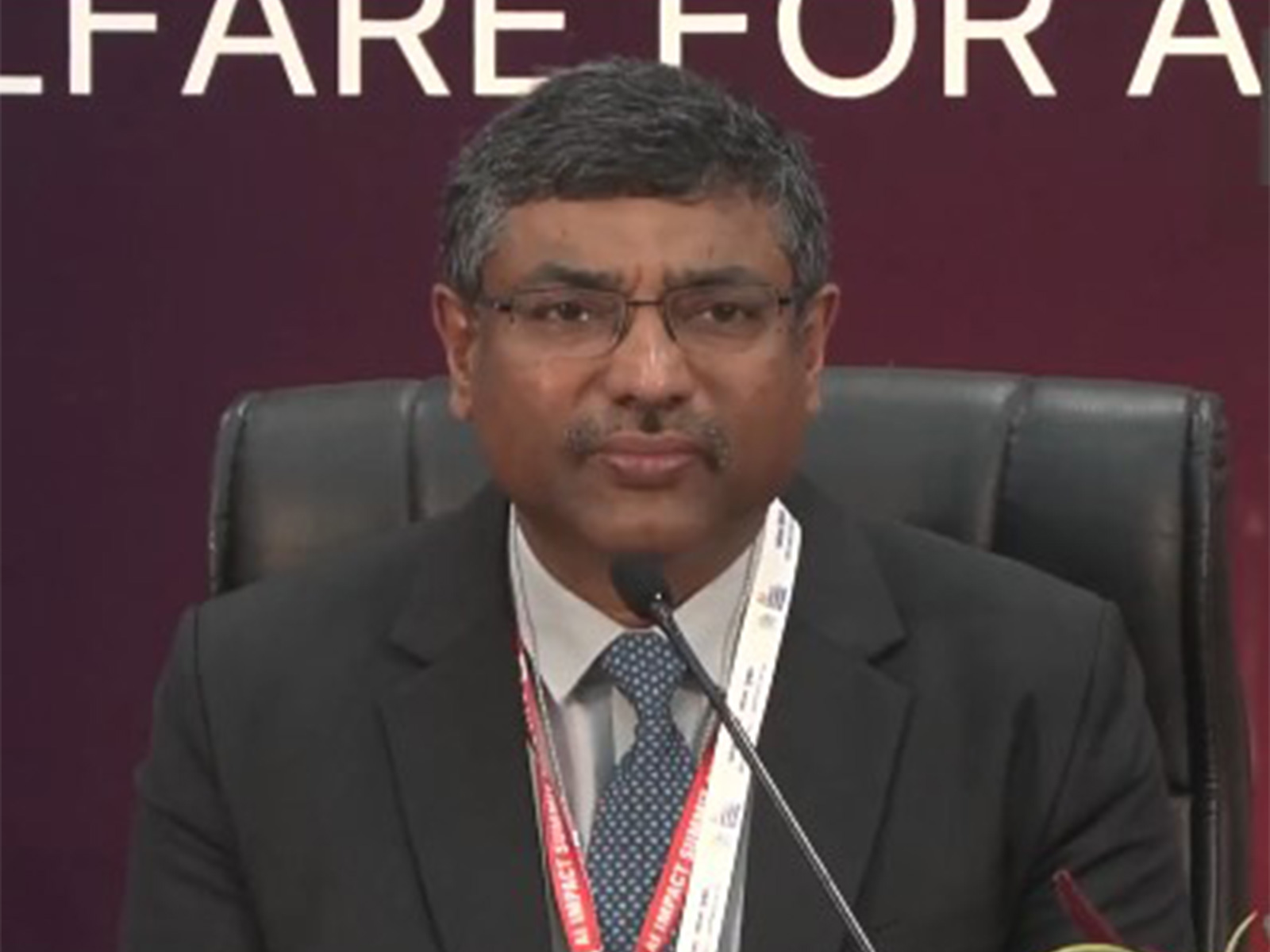
In his opening remarks, Amit Sinha Roy, Principal Advisor - Digital, at the Confederation of Indian Industry, emphasised that as India accelerates its AI adoption, cybersecurity must be embedded at the core of every AI system. The address called for a shift from reactive cybersecurity practices to predictive, intelligence-driven security frameworks that protect data, algorithms, models, and digital infrastructure.
A strong message was delivered on making AI security inclusive and scalable, particularly for MSMEs and startups, ensuring that security is not limited to large enterprises. The speaker highlighted the importance of public-private collaboration, regulatory balance, and shared threat intelligence to strengthen India's AI ecosystem.
"India-AI Impact summit 2026, being hosted by India, is the first Global AI summit hosted in the Global South and is anchored by the three foundational Sutras of People, Planet, and Progress, which is more than a dialogue; it is a blueprint for inclusive growth. We recognise that AI acts as a kinetic enabler for economic growth, transforming static data into a high-velocity engine for Viksit Bharat," said Abhishek Singh, Additional Secretary & CEO, India AI Mission, MeitY, Govt. of India
The key takeaway was that India must build AI systems that are secure by design, resilient by architecture, and trusted by citizens. By doing so, the country can position itself as a global leader not only in scaling AI innovation but in securing it responsibly.
Gulshan Rai, former Director General CERT-In & former National Cybersecurity Coordinator, Govt of India, emphasised that AI is now deeply embedded in everyday life and economic growth, with significant global and Indian investment momentum. He noted that India is not lagging behind and is strategically focusing on agentic AI, which poses more complex and distinct security challenges than generative AI.
The address underscored that AI security must be tailored to the specific type of AI being deployed, particularly agentic systems that interact directly with operating systems and infrastructure. Key concerns raised included outdated software environments, lack of structured testing facilities, insufficient access to real datasets for validation, unstructured data ecosystems, and limited infrastructure for AI security testing and certification.
The speaker called for stronger collaboration between government and industry to build testing infrastructure, improve data access frameworks, enhance secure-by-design development, and upgrade SOC and monitoring architectures for an AI-driven environment. The central takeaway: AI security requires a fundamental rethinking of systems architecture, testing capabilities, and national-level preparedness to build a resilient and future-ready ecosystem.
G Narendra Nath, Joint Secretary, NSCS, Government of India, in his address, emphasised that AI adoption is no longer optional, as it has become a horizontal technology across all sectors. The key priority now is to ensure robust security for AI systems, building on existing cybersecurity frameworks while addressing AI-specific risks.
He highlighted unique AI challenges, including the integration of control and user planes, prompt-based manipulation, data provenance concerns, third-party AI vendor risks, and the difficulty of distinguishing system malfunctions from malicious attacks. The need for structured assessment frameworks, transparency in AI model training, and privacy-preserving technologies was strongly underlined.
He also noted that regulatory and standards-based efforts are already evolving across sectors, and encouraged industry to actively incorporate AI security, auditability, and accountability requirements into contracts and governance mechanisms. The key takeaway: alongside policy evolution, practical implementation, technical assessment, and AI-enabled cybersecurity operations must advance simultaneously to build a resilient AI ecosystem.
Pavan Duggal, Advocate, Supreme Court of India, emphasised that India currently lacks a dedicated cybersecurity law and an AI-specific legal framework, creating significant regulatory gaps in an AI-driven era. He highlighted that existing laws, including the Information Technology Act, 2000, were never designed to address AI-related risks, accountability, or machine autonomy.
The address called for urgent legal reforms, including a dedicated AI resilience framework, clearer liability and accountability standards for AI companies, and stronger regulatory enforcement mechanisms. The speaker stressed that self-regulation is no longer sufficient, especially as AI-powered cybercrime becomes more organised and commercially driven.
The key takeaway was a clear policy call to action: India must move beyond traditional legal approaches and establish enforceable, transparent, and accountable AI governance mechanisms to ensure cyber resilience, protect stakeholders, and position itself as a responsible global leader in AI regulation.
Neehar Pathare, MD, CEO & CIO, 63SATS, Cybertech, highlighted that AI-powered cyber threats are evolving faster than traditional defences, with rising deepfake fraud, AI-generated malware, and generative attacks reshaping the threat landscape. A major gap exists between AI-enabled attacks and the limited adoption of AI-driven defenses due to budget, talent, and regulatory challenges.
The key takeaway was that organisations must urgently adopt AI-based security frameworks and implement strong AI governance before deployment, as the next major breach could stem from an ungoverned AI system rather than a traditional hacker.
The following session of the Summit witnessed participation from a distinguished lineup of eminent speakers, including Jitendra Mohan Bhardwaj, Group CISO, Business Head - Cyber Security, Tata Advanced Systems Limited; Vaibhav Koul, Managing Director - Cybersecurity, Privacy and Incident Response, Protiviti; Anirban Mukherji, Founder & CEO, miniOrange; S Dipin Nair, Chief Information Security Officer & Head IT, Anadrone System Pvt Ltd.