CPRG hosts "Nagari - Future Cities Conclave"; RSS's Sunil Ambekar as chief guest
Dec 02, 2025
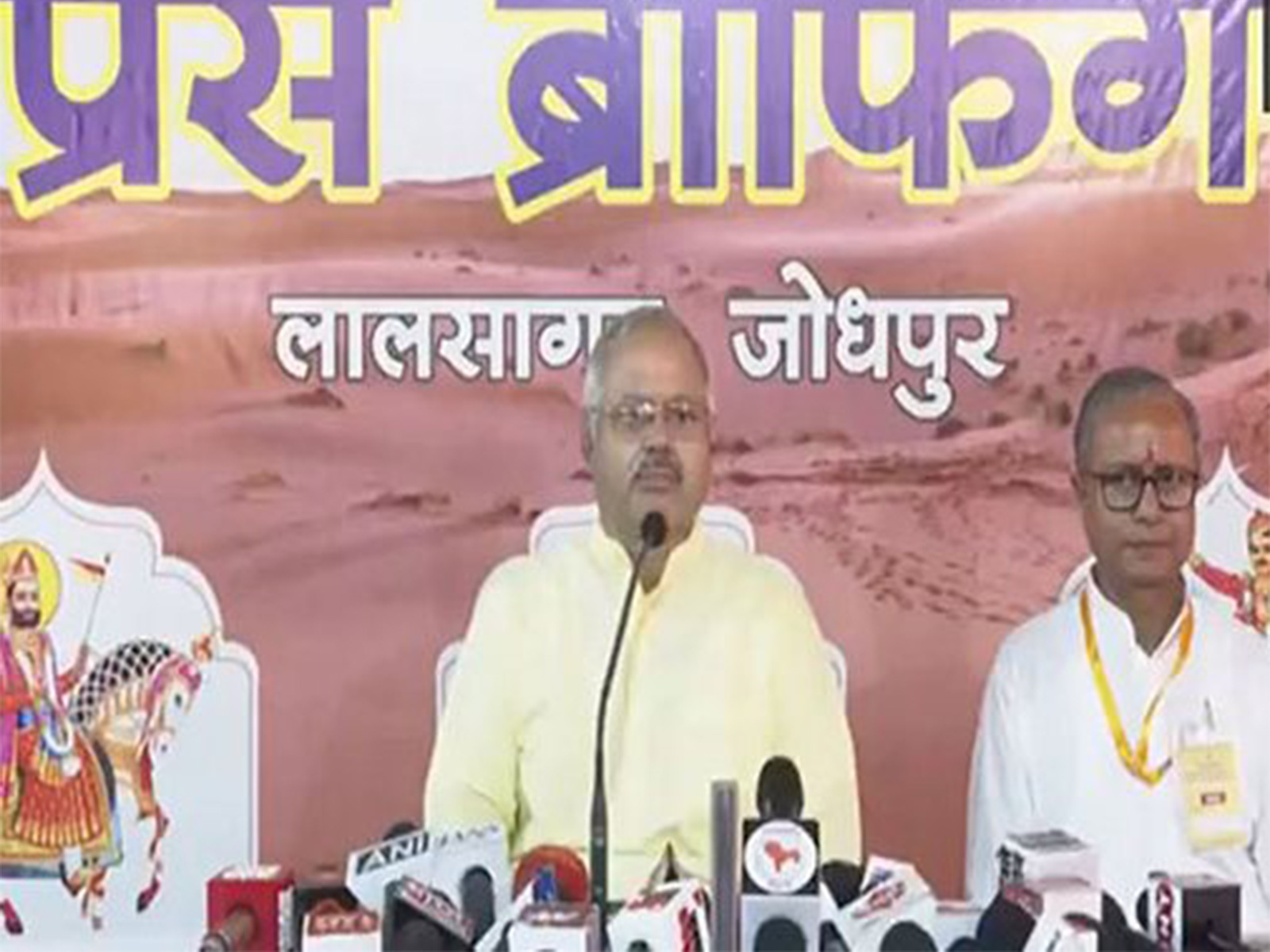
New Delhi [India], December 2 : The Nagari - Future Cities Conclave, organised by the Centre of Policy Research and Governance (CPRG) in collaboration with the National Stock Exchange (NSE), concluded on Monday after a full day of discussions on accelerating India's urban transformation. Sunil Ambekar, Akhil Bhartiya Prachar Pramukh of the RSS, was the chief guest for the conclave.
The Conclave brought together senior policymakers, administrators, economists, and urban experts to reflect on how Indian cities can become more resilient, sustainable, and people-centric in the decades ahead.
As Chief Guest, Sunil Ambekar, Akhil Bhartiya Prachar Pramukh, RSS, emphasised the deep link between livelihood and habitat. He underscored the importance of placing habitat at the centre of urban planning and discussed not only the economic but also the social and human dimensions of city development.
He urged the audience to reconsider fundamental aspects of India's urban structure to meet the needs of future generations.
Addressing the gathering, Mangal Prabhat Lodha, Cabinet Minister for Skill Development, Employment and Entrepreneurship (MSDE), Government of Maharashtra, said, "Urban planning shapes the way people live their everyday lives. India's homes and neighbourhoods are full of ideas and enterprise, and our cities must be designed to support this energy. Ensuring safe and walkable access to workplaces is also essential for expanding opportunities for women."
Sharing his perspective on India's urban future, Sanjeev Sanyal, Member, Economic Advisory Council to the Prime Minister (PM-EAC), said, "India has an opportunity to reimagine the character and growth of its cities. Developments like the Bandra Kurla Complex show what is possible, but the next step is to embrace more diverse, locally rooted design. Cities work best when they are designed around the needs and movement of people."
Ashish Kumar Chauhan, Managing Director, NSE, spoke about how cities evolve through shifts in infrastructure, technology, and governance, and reflected on the growing role of artificial intelligence in urban management.
The Conclave featured four high-level thematic discussions on different dimensions of India's urban transformation, including structural aspects and their impact on jobs and the economy. Local challenges and indigenous solutions, green infrastructure, climate resilience, and future-ready growth, cost, convenience, AI, and automation.
Together, these sessions offered a 'comprehensive and grounded' view of the choices, opportunities, and trade-offs involved in shaping India's next-generation cities.
Speaking on the significance of the Conclave, Dr Ramanand, Director, CPRG, said, "Cities are where India's social, economic and climate futures meet. The Nagari Conclave was an effort to think decades ahead and imagine what strong, people-centred urban development should look like. CPRG will continue to advance this long-term vision through collaborative and purposeful policy work."
He also emphasised that urban policy must integrate social and environmental considerations and called for a more comprehensive approach to policymaking across multiple government arms.
The Conclave reaffirmed the need for sustained collaboration between government, industry, civil society, and research institutions to build cities that are adaptive, innovative, and responsive to citizens' needs.
According to CPRG, they will continue to host such platforms to advance India's long-term urban vision and support ongoing work on governance, technology adoption, and city futures.