Crediting Khelo India initiative, ice skating royalty Vishwaraj Jadeja says India not far from hosting its first-ever Asian Winter Games
Jan 27, 2026
Leh (Ladakh) [India], January 27 : Renowned Indian Ice skater Vishwaraj Rajen Jadeja overheard a conversation his coach, Wim Nieuwenhuizen, was having with someone in the Netherlands. That gentleman asked Wim, in Dutch, if Jadeja was talented, as per a release.
Wim replied, "No, he is not, but is a Rajput. They don't give up no matter what."
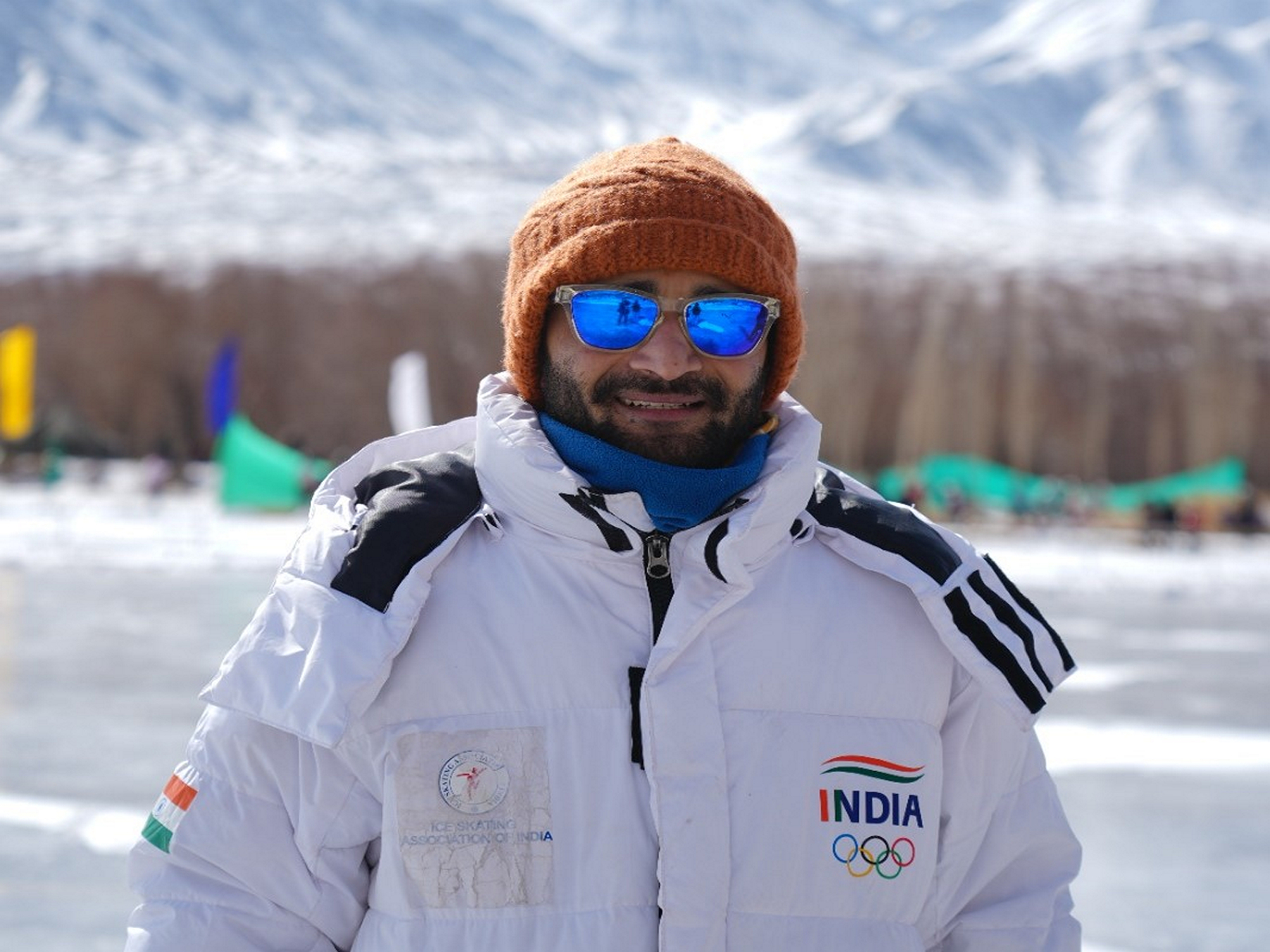
And that's exactly what Jadeja has done over the last 18 years he has spent in ice skating. Vishwaraj Jadeja has not given up! He has royal roots and comes from the Dhrol family -- back in the day, a small kingdom in the Jam Nagar district of Gujarat. His palace is now a school for women, where they pay a nominal fee. Practically, free education as part of the family's empowerment initiative!
But just because Jadeja has royal roots does not mean he grew up rich. Royalty was formally abolished in India in 1971, and the government withdrew a very large part of their privileges. Jadeja was born 14 years later.
Despite a modest upbringing, Jadeja, now 40, never made money more important than anything else. He embraced his grandfather's advice to a tee: "Money comes and goes. Pursue some sport and excel at that. These things stay with you forever."
Jadeja moved to Europe in the late noughties (2000-09) to seek a career in ice skating. Today, he is the most decorated ice skater in the country. Over the years, he has set multiple Indian records. Among his top accomplishments, he is unofficially the only person to have ice-skated 5 kilometres at an altitude of 4500m on Tso Moriri Lake.
This happened in 2019. A year later, he won three silver medals and a bronze at the Winter World Masters Games in Austria. Last year at the Asian Winter Games in Harbin (China), Jadeja led India in a team event, which finished fifth.
This past Sunday, which was the last day of the long-track ice-skating event of the 2026 Khelo India Games at Gupukh's Pond in Leh (Ladakh), Jadeja finished eighth in the men's 1000m.
"I never participated before because we didn't have safe ice tracks. But this one is good so I decided to have a go," said Jadeja before finishing in the top-10. In his own words, he wasn't exactly there to win, he was there to show how far he, India and ice skating had come together.
Jadeja is an optimistic man and believes if the authorities in India get a little more serious about certain things, the country can host the Asian Winter Games in the next 10-12 years.
"Some of the infrastructure has been built in the last few years, particularly after the concept of Khelo India came into being. We now have two Olympic-sized artificial ice rinks in India, in Leh and Dehradun, for short-track ice skating and ice hockey. There are good skiing places too. We just need a few long-track ice skating surfaces, and I think we are good to go."
"With the right infrastructure in place, we can produce an Olympian real quick and once that happens, we will be considered serious in the international arena. Also, we need to focus on the coach-athlete welfare. Ice skating is an elite sport and our athletes and coaches need to be given a lot of support, from the government and the corporates. I understand that in India, the government has other major pressing issues but I believe despite that we are not far from where we should be in ice skating," he said.
Jadeja had an accident in 2017 and was going through a really low phase when a musician friend of his advised him to go to Leh (Ladakh) and try to find himself again. He did that and has been in love with Leh (Ladakh) ever since.
"I think Leh (Ladakh) should be the permanent venue for the Khelo India Winter Games. It's a wonderful place. With the infrastructure improving everywhere here, why not?" he enthused.
Finally, Jadeja thanked the Khelo India banner for providing the push ice skating and winter sports at large badly needed. "Thanks to Khelo India, the media coverage has improved. Yes, more coverage is required but previously there was practically none. The push for infrastructure has increased and there is much more awareness on where exactly we stand and what all we need to do," he concluded.