Delhi court grants bail to telecom official in SIM sale scam, rejects CBI's custody plea
Jan 10, 2026
New Delhi [India], January 10 : Holding that further incarceration would serve no useful purpose as all material evidence is already in the custody of the investigating agency, a Delhi court has granted bail to Binu Vidhyadharan, an area sales manager of a telecom company, in a SIM sale scam case being probed by the Central Bureau of Investigation (CBI).
The court dismissed the CBI's plea seeking his judicial custody for 14 days and directed his release on bail upon furnishing a personal bond of Rs 5 lakh with one surety of the like amount, subject to stringent conditions.
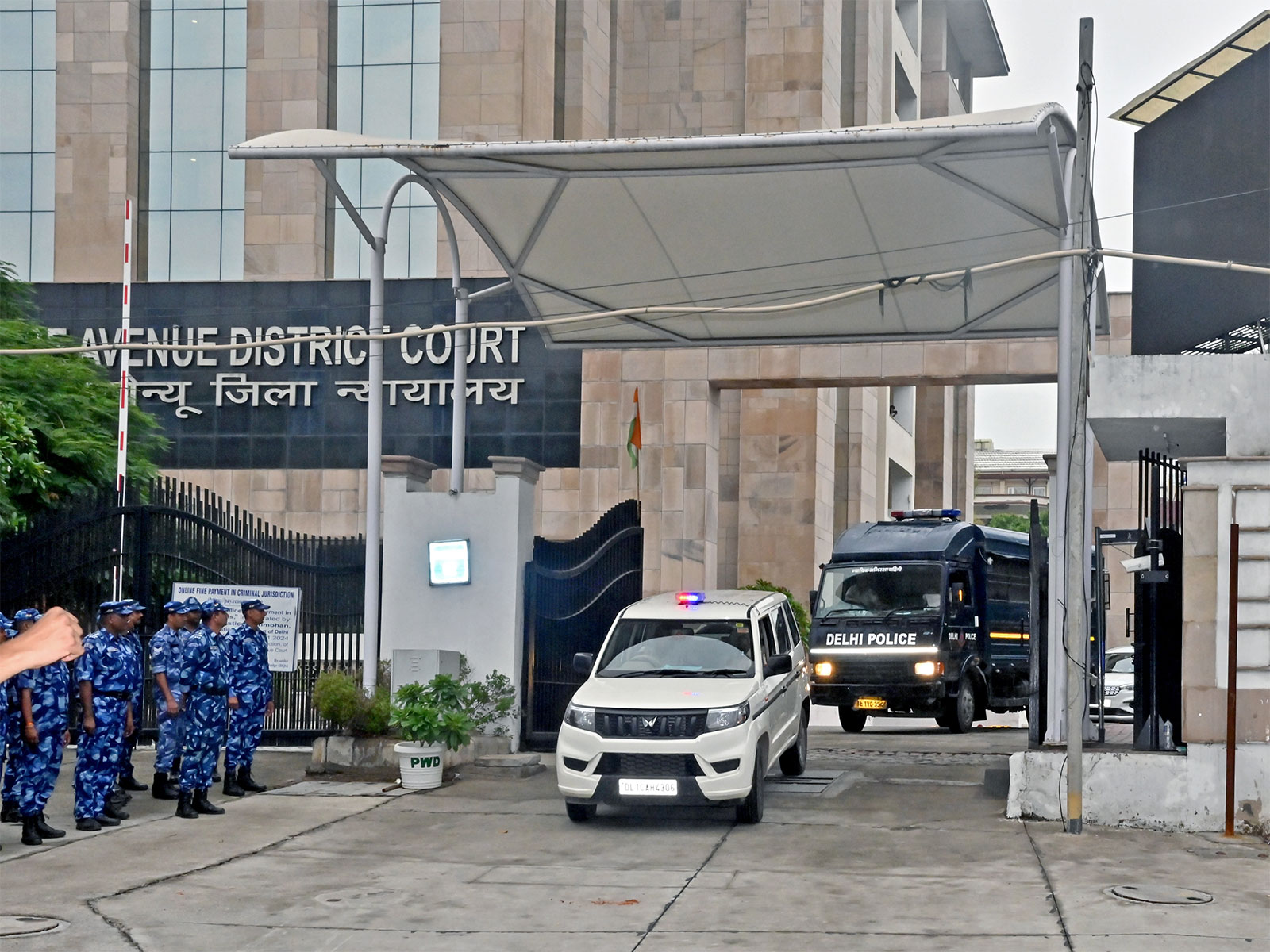
The order was passed by Additional Chief Judicial Magistrate Jyoti Maheshwari of the Rouse Avenue Courts while deciding two applications together, one moved by the CBI seeking judicial custody and the other filed by the accused under Section 480 of the Bharatiya Nagarik Suraksha Sanhita seeking bail.
Advocates Amit Kumar, Vipin Kumar, Priyanka Singh, Arunesh Gupta and Tarang Aggarwal appeared on behalf of the accused, while the CBI was represented by its prosecutors. After hearing rival submissions and perusing the case diary, the court dismissed the CBI's application and allowed the bail plea.
The case is part of the CBI's ongoing Operation Chakra-V, under which the agency on January 8, 2026, arrested Vidhyadharan for the alleged illegal sale of SIM cards that were subsequently used in cybercrimes.
In December 2025, the CBI had detected an organised phishing network operating from areas around Delhi and Chandigarh, which allegedly provided bulk SMS services to cybercriminals, including foreign actors targeting Indian citizens.
According to the CBI, around 21,000 SIM cards were procured in violation of Department of Telecommunications rules to facilitate bulk SMS transmission, which was allegedly used by cybercriminals for phishing activities.
Three persons, including a channel partner of the telecom service provider, were arrested in December 2025 and are currently in judicial custody. The alleged role of Vidhyadharan surfaced during further investigation into the racket.
The agency alleged that while serving as an area sales manager with Vodafone, the accused facilitated the fraudulent issuance of SIM cards in bulk by arranging dummy individuals and falsely projecting them as employees of Lord Mahavira Services India Private Limited.
It was claimed that he submitted their documents to complete KYC formalities. Members of a family residing in Bengaluru were allegedly arranged and shown as employees of the company, and copies of their Aadhaar cards were recovered from his possession. The SIM cards procured through these means were allegedly used to operate the phishing ecosystem uncovered during the probe.
However, the court noted that the accused had already undergone custodial interrogation and that the investigating officer had admitted no further recovery was required from him. It observed that whatever information was to be elicited from the accused had already been provided and that all incriminating material was already with the investigating agency, making further detention unnecessary.
Assessing the role attributed to the accused, the court held that even if the prosecution's allegations were accepted at face value, they pointed towards negligence in the discharge of official duties rather than active participation in a criminal conspiracy. The court found that the essential element of conspiracy was "glaringly missing" and that merely sharing Aadhaar details for KYC purposes could not justify an inference that the accused was aware of or complicit in the subsequent cybercrimes.
The court also rejected the CBI's apprehension that the accused might influence witnesses or tamper with evidence, observing that such fears were based on conjecture and unsupported by material on record. It took note of the fact that the accused had clean antecedents, a fixed place of residence, and was not a flight risk.
Relying on settled principles laid down by the Supreme Court in P Chidambaram v. CBI and Sanjay Chandra v. CBI, the court reiterated that the object of bail is to secure the presence of the accused during trial and not to punish or detain preventively. It held that continued detention, particularly when investigation was still underway and evidence was already secured, would not serve the interests of justice.
Accordingly, the court granted bail to Binu Vidhyadharan subject to strict conditions, including cooperation with the investigation, regular appearance before the court, non-interference with witnesses or evidence, prior permission before leaving the country, and keeping his mobile phone operational at all times.
The court clarified that nothing in the order shall be treated as an expression on the merits of the case and formally admitted the accused to bail after accepting the bonds furnished on his behalf.