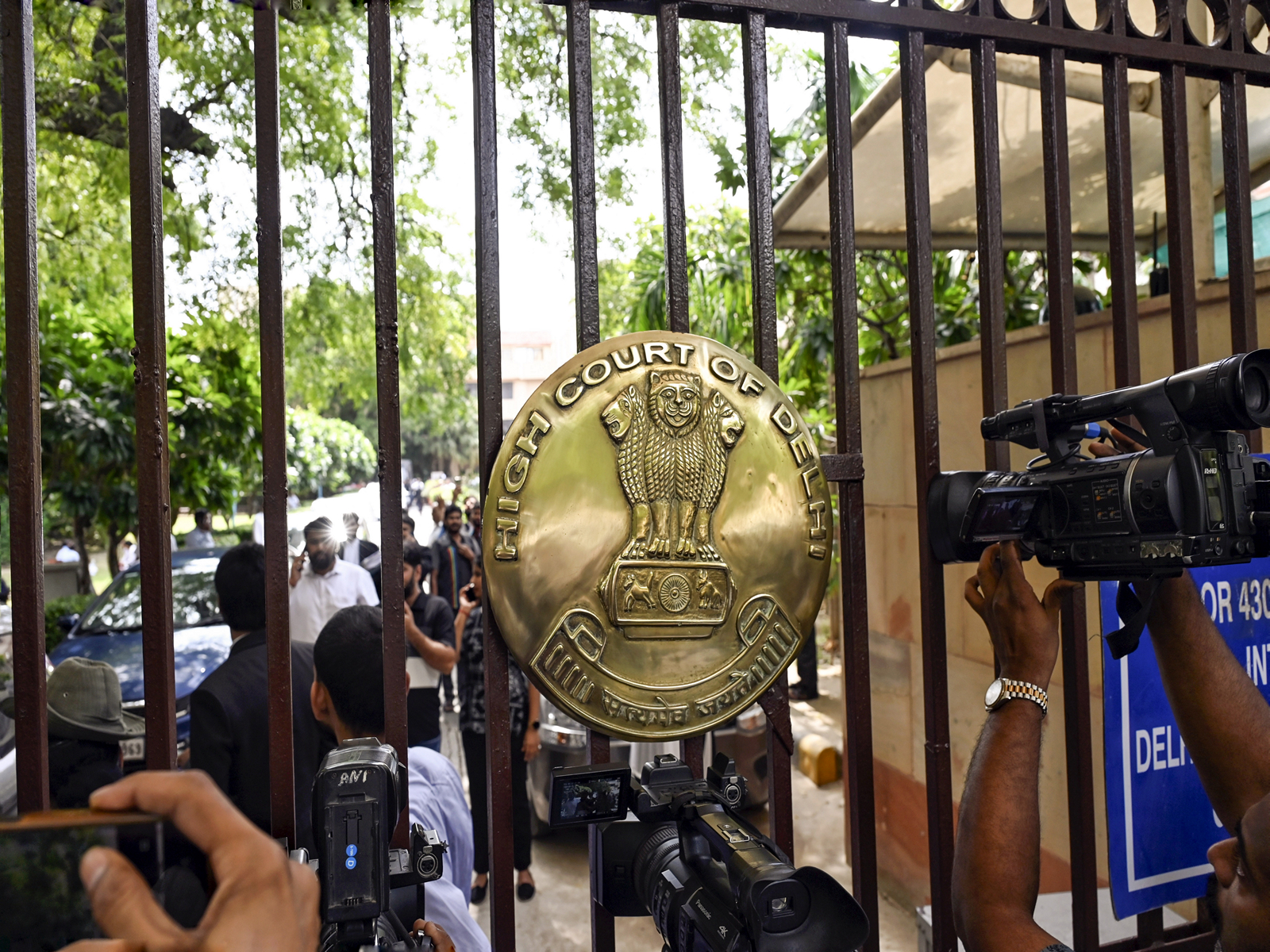
Delhi HC dismisses Somnath Bharti's election petition over non-joinder of necessary party
Jan 17, 2026
New Delhi [India], January 17 : The Delhi High Court on Saturday dismissed an election petition filed by AAP leader and former Delhi Law Minister Somnath Bharti challenging the 2025 Assembly election victory of BJP candidate Satish Upadhyay from the Malviya Nagar constituency, holding that the petition suffered from a fatal legal defect and was not maintainable in law.
Justice Jasmeet Singh ruled that Bharti failed to implead a necessary party against whom allegations of corrupt practice had been made, a lapse that mandatorily attracts dismissal under the Representation of the People Act, 1951
Bharti, a three-time MLA from Malviya Nagar, had contested the February 5, 2025, Delhi Assembly elections as the Aam Aadmi Party candidate.
The results declared on February 8 showed that he secured 37,433 votes, while Upadhyay won with 39,564 votes, a margin of 2,131 votes. Bharti subsequently approached the High Court seeking to have the election declared null and void.
In his petition, Bharti alleged several corrupt practices under the ROPA, including improper inducement of voters, manipulation of voter lists, non-disclosure of election expenditure, and collusion involving the Congress candidate Jitender Kumar Kochar. A key allegation was that Upadhyay had allegedly funded Kochar's campaign to divide votes against Bharti, amounting to bribery and undue influence under Section 123 of the Act.
Senior advocates appearing for Upadhyay raised a preliminary objection, arguing that since Bharti had levelled allegations of corrupt practices against Kochar, Section 82(b) of the ROPA made it mandatory to implead him as a respondent. Non-compliance, they contended, left the Court with no discretion but to dismiss the petition under Section 86(1).
They further argued that Bharti's subsequent application seeking either to implead Kochar or delete the allegations after expiry of the statutory 45-day limitation period could not cure the defect, as election law is a strict and self-contained code.
Accepting the objection, the Court held that election petitions are special proceedings that directly impinge on the people's mandate and therefore require strict compliance with statutory requirements. Justice Singh observed that Sections 81, 82 and 86 of the ROPA form a "closed procedural code," leaving no room for judicial discretion where mandatory conditions are not fulfilled.
The Court found that the allegations in paragraph 14 of the petition clearly attributed active participation to the Congress candidate in the alleged corrupt practice. Once such an allegation is made, impleadment becomes compulsory, irrespective of whether the charge is ultimately proved at trial. Failure to do so within the prescribed 45 days was held to be an incurable defect.
Rejecting Bharti's argument that accepting money did not amount to a corrupt practice, the Court noted that post-1958 amendments to Section 123 of the ROPA expressly include receipt of gratification within the definition of bribery.
Holding that the omission struck at the very root of maintainability, the High Court dismissed the election petition along with the connected application, clarifying that courts cannot dilute or bypass binding statutory mandates on grounds of equity or technical hardship.