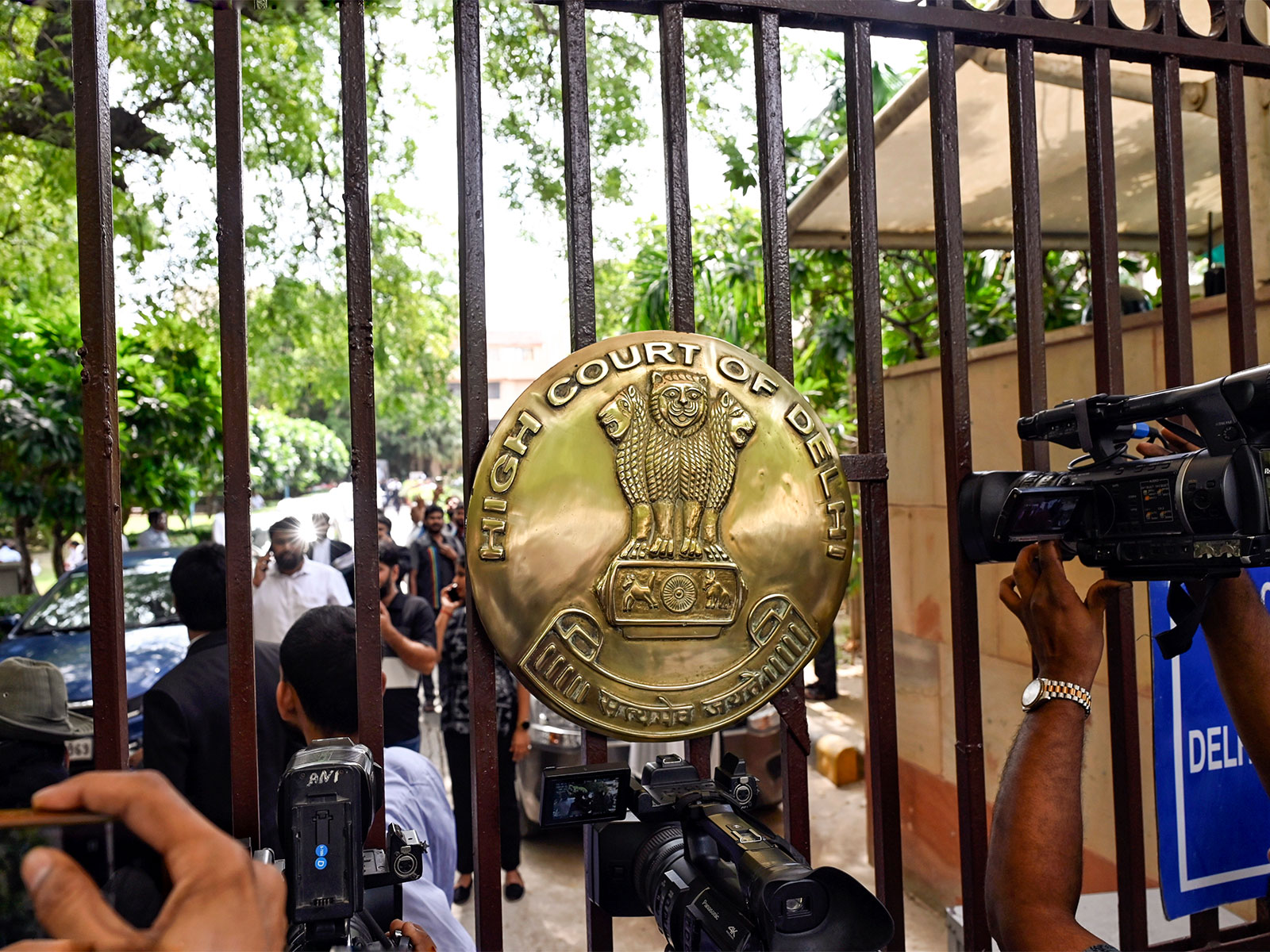
Delhi HC refuses to interfere with GNCTD notice proposing CAG audit of BSES discoms; says challenge is premature
Jun 22, 2026
New Delhi [India], June 22 : The Delhi High Court on Monday dismissed petitions filed by BSES Rajdhani Power Limited (BRPL) and BSES Yamuna Power Limited (BYPL) challenging a notice issued by the Government of NCT of Delhi (GNCTD) proposing to entrust their audit to the Comptroller and Auditor General of India (CAG), holding that the challenge was premature as the impugned communication was only a show-cause notice and not a final decision.
Justice Tejas Karia held that the notice dated June 6, 2026, merely granted the discoms an opportunity to submit their representations and participate in a hearing before any final decision on entrustment of audit was taken under Section 20(3) of the CAG (Duties, Powers and Conditions of Service) Act, 1971.
"The Impugned Notice does not record any adverse finding against the Petitioners, warranting any interference on merits at this stage in exercise of writ jurisdiction. The present Petition is, therefore, premature," the Court held.
The case arose from GNCTD's proposal to entrust the audit of BRPL and BYPL to the CAG. The BSES companies challenged the move, contending that it violated earlier judicial decisions, including the Delhi High Court's 2015 judgement in the URJA case, which had quashed an earlier attempt to subject the private discoms to a CAG audit.
The discoms also relied upon orders passed by the Appellate Tribunal for Electricity (APTEL) in April and May 2026, which had set aside an earlier proposal for a CAG audit and directed the Delhi Electricity Regulatory Commission (DERC) to appoint a Chartered Accountant to conduct an intensive audit in terms of directions issued by the Supreme Court in the Regulatory Assets (RA) judgement delivered on August 6, 2025.
Senior Advocates Sandeep Sethi and Buddy Ranganathan appeared for the petitioners along with a team led by Advocate Amit Kapur. Additional Solicitor General S.V. Raju represented GNCTD. Senior Advocate Sanjeev Kumar Dubey appeared for DERC, while Dr S.S. Hooda appeared for the CAG.
The petitioners argued that the notice was illegal and amounted to a colourable exercise of power designed to revive a CAG audit that had already been rejected by APTEL. They contended that the Supreme Court's RA judgement required an audit of the circumstances leading to prolonged non-recovery of Regulatory Assets and that the focus of such an audit was on regulatory failure by DERC rather than on the discoms themselves.
The companies further argued that GNCTD and DERC had misread the Supreme Court judgement and were attempting to achieve indirectly what had already been disallowed by the Delhi High Court in the URJA judgement. They also maintained that tariff-related issues fall exclusively within DERC's regulatory domain and cannot be subjected to a parallel CAG audit.
Defending the notice, ASG S.V. Raju submitted that the petition itself was not maintainable because it challenged only a show-cause notice. He argued that the proposed audit was necessary in the public interest and flowed from the Supreme Court's direction for a "strict and intensive audit" of the circumstances under which regulatory assets accumulated and remained unrecovered for years.
GNCTD contended that consumers ultimately bear the burden of regulatory assets through tariffs and surcharges, and therefore, an independent audit was necessary to examine the financial position of the distribution companies and ensure transparency and accountability.
The Court accepted the preliminary objection regarding maintainability and reiterated the settled principle that writ courts ordinarily do not interfere at the stage of a show-cause notice. Referring to Supreme Court precedents, including Union of India v. Kunisetty Satyanarayana and Secretary, Ministry of Defence v. Prabhash Chandra Mirdha, Justice Karia observed that a show-cause notice does not itself affect rights or impose liabilities and therefore does not ordinarily give rise to a cause of action.
The Court nevertheless examined the substantive objections raised by the petitioners because they were based on earlier judicial pronouncements and APTEL orders.
Rejecting the central argument of BSES, the Court held that the Supreme Court's RA judgement did not restrict the scope of the audit only to DERC.
Justice Karia observed that the Supreme Court had directed a "strict and intensive audit of the circumstances in which the Distribution Companies continued without recovery of Regulatory Assets." According to the Court, such a direction necessarily permits examination of the records, conduct, accounts and financial position of the distribution companies.
The Court held that there was no basis to contend that the audit could only be of DERC and not of the discoms. It also noted that the Supreme Court's judgement did not specify which agency should conduct the audit and did not prohibit the CAG from being entrusted with that task, provided the procedure under the CAG Act is followed.
"The RA Judgement contains no prohibition against an audit of the Petitioners, nor does it preclude such an audit from being conducted by the CAG," the Court observed.
A significant aspect of the ruling is the Court's finding that the 2015 URJA judgement does not bar the present proposal for a CAG audit.
Justice Karia held that the earlier case arose in a different factual and legal context. Unlike the previous attempt, the present audit is proposed pursuant to the Supreme Court's RA judgement, is intended to comply with directions regarding regulatory assets, and is being initiated following requests by DERC. Further, the petitioners have now been afforded an opportunity of hearing through the impugned notice.
The Court said the proposed audit is not an attempt by GNCTD to conduct a parallel regulatory exercise or interfere with tariff fixation powers of DERC. Instead, it is linked to the implementation of the Supreme Court's directions regarding the prolonged accumulation of regulatory assets affecting consumers.
The Court therefore concluded that the ratio of the URJA judgement was not attracted and could not be invoked to invalidate the notice at the threshold.
Dismissing the writ petition, the Court clarified that the proceedings under Section 20(3) of the CAG Act must still be decided by the competent authority after giving the BSES companies a full opportunity of hearing and considering all their submissions on merits.
Justice Karia also made it clear that the judgement is confined only to the validity of the notice and does not decide the merits of whether the audit should ultimately be entrusted to the CAG. All rights and contentions of the parties concerning implementation of the Supreme Court's RA judgement and compliance with APTEL orders have been kept open, subject to the outcome of pending proceedings before the Supreme Court. Accordingly, the writ petition and all pending applications were dismissed.