Despite Piyush Goyal's assurance, HP apple growers gear up for nationwide strike, Delhi march over import duty cut
Feb 07, 2026
Shimla (Himachal Pradesh) [India], February 7 : Despite repeated assurances by Union Commerce and Industry Minister Piyush Goyal that Indian apple growers' interests will be protected, apple farmers in Himachal Pradesh have intensified preparations to join the nationwide farmers' strike on February 12 and announced a Delhi march, warning that recent import duty reductions under India-US and other free trade agreements could devastate the hill state's apple-based economy.
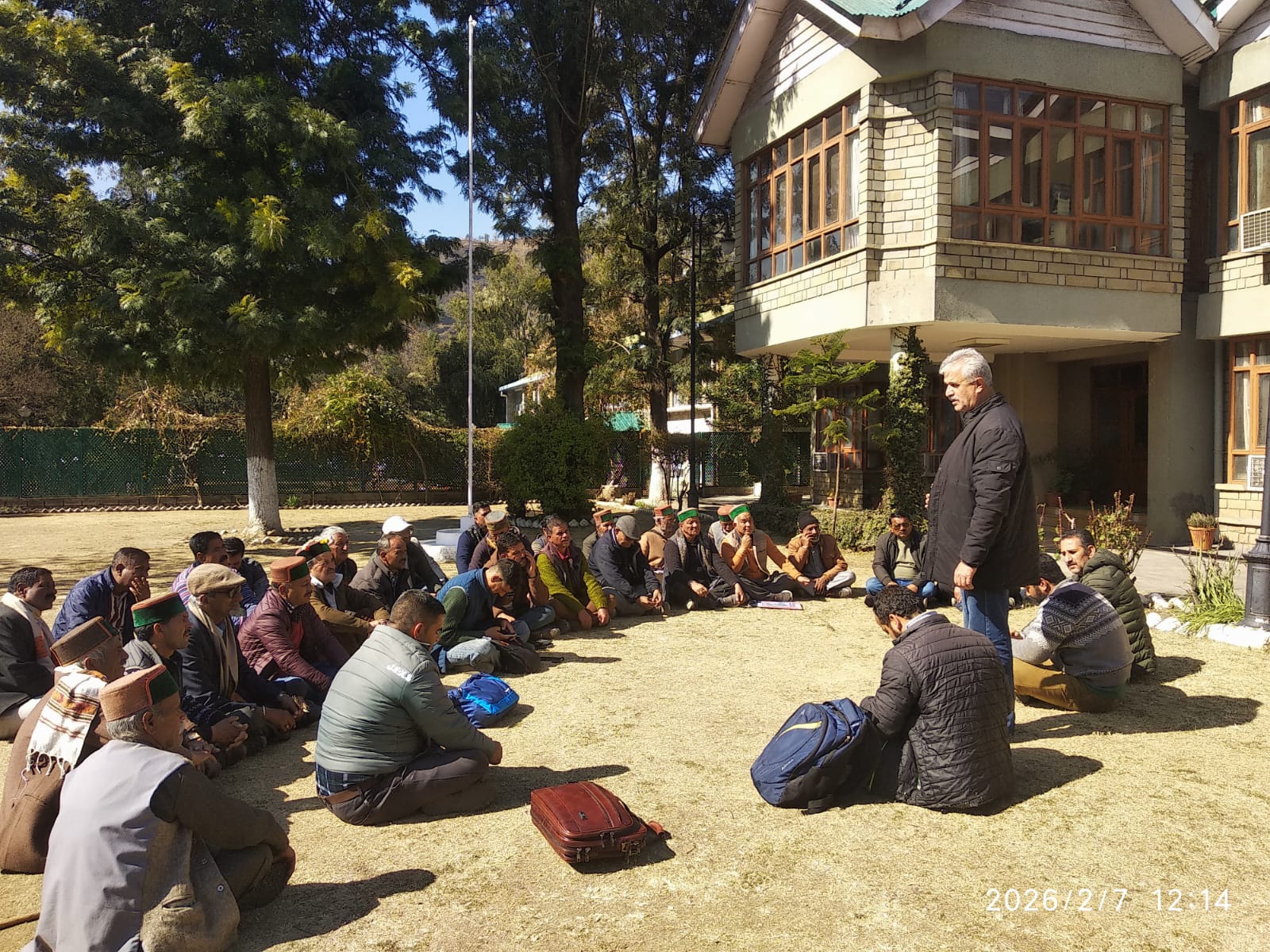
Farmer organisations across Himachal Pradesh have accused the Centre of pursuing "anti-farmer" trade policies and said growers are now ready to march to Delhi as part of a united national movement. The call was reiterated during block-level meetings of the Himachal Pradesh Apple Growers' Association (HPAGA) held in Jubbal and Rohru, where orchardists resolved to mobilise farmers at the village level for the February 12 strike.
Former MLA and senior farmers' leader Rakesh Singha cautioned that reduced import duties on apples from the United States, New Zealand and European Union countries would expose local growers to heavily subsidised foreign produce.
"The impact of this policy will be very deep. American apple farming is backed by massive subsidies and corporate players like Walmart and Cargill. Our farmers do not get even a fraction of that support. This reduction in import duty will destroy apple orchards here. This storm has already reached our fields, and it will uproot everything," Singha told ANI.
He alleged that the move was politically motivated and aimed at weakening Himachal Pradesh's economy.
"This is not just about apples. This is about breaking the backbone of Himachal's economy. This fight is for the people of Himachal Pradesh, and we will stop this through a united movement," he said.
HP Apple Growers' Association President Sanjay Chauhan said the India-US trade understanding and other free trade agreements would "tear apart" the apple economy of hill states.
"The trade deal between India and the United States has created serious controversy. Farmers in Himachal Pradesh, Jammu and Kashmir and Uttarakhand, more than 15 lakh families will suffer massive losses," Chauhan said.
He demanded that the Union government place the full details of the trade deal before Parliament for a comprehensive discussion.
"This deal affects agriculture, trade and manufacturing. Import duties on apples were already reduced earlier. This is an attack on India's federal structure and on financially weak hill states," he added.
Chauhan also linked the issue to the withdrawal of the Revenue Deficit Grant (RDG) and GST compensation.
"Himachal Pradesh has already lost around Rs 48,000 crore in revenue support earlier. Ending RDG and GST compensation will push the state deeper into debt. This is a direct economic attack on the people of Himachal," he said, urging the Chief Minister to convene an all-party meeting.
On Union Minister Piyush Goyal's assurances, Chauhan said the minister had "confused the entire issue", adding that there was no clear protection for apple growers mentioned in the joint statements related to the trade deal.
Echoing similar concerns, Harish Chauhan, Convener of the Joint Farmers' Associations in Himachal Pradesh and a progressive apple grower, described the trade agreements as a "death warrant" for hill farmers.
"These foreign trade agreements are crushing apple, walnut and almond growers in Himachal, Kashmir and Uttarakhand. Tariffs and even non-tariff barriers are being removed. For apple farmers, duties have effectively been reduced by around 25 per cent. We have been sacrificed in this deal," he said.
He warned that past data showed a sharp rise in US apple imports whenever tariffs were lowered.
"As soon as tariffs are reduced, cheap apples flood the Indian market. Our apple-based economy will collapse. This deal is nothing short of a death warrant for hill farmers," he said, also raising concerns over the possible entry of genetically modified apples and dairy products in the future.
Congress MLA Kuldeep Singh Rathore said the reduction in import duty would severely hit Himachal's apple economy.
"In 2014, Prime Minister Narendra Modi called Himachal his second home and announced higher import duties on apples. Today, recent FTAs are against farmers and will shatter our economy," Rathore said.
Apple cultivation forms the backbone of Himachal Pradesh's rural economy, supporting nearly 5-6 lakh families directly and indirectly. Along with Jammu and Kashmir and Uttarakhand, the hill states account for the bulk of India's apple production, contributing thousands of crores of rupees annually and generating large-scale seasonal employment.
Farmers argue that, unlike growers in the US, New Zealand and the European Union, Indian apple farmers receive minimal subsidies, limited scientific support and lower productivity per hectare, making them vulnerable to cheap imports. They point out that under earlier FTAs, India had already reduced apple import duty to 20 per cent from 50 per cent for imports from New Zealand and EU countries.
The latest round of protests was formalised during block-level meetings of the HP Apple Growers' Association in Jubbal and Rohru. Presiding over the Jubbal meeting, Sanjay Chauhan said farmers were facing multiple crises, including land dispossession, sealing of houses and shrinking government support.
"Free trade agreements, the proposed Seed Bill, weakening of MGNREGA, smart meters and cuts in budgetary support under the Market Intervention Scheme are pushing agriculture into deeper distress," he said.
The meetings unanimously resolved to ensure maximum participation in the February 12 nationwide farmers' strike in coordination with the Himachal Kisan Sabha, joining the protest. Local units were directed to intensify mobilisation efforts across apple-growing belts.
In Rohru, farmers reiterated their commitment to collective action. Rohru block secretary Raman Tharta said a district-level convention of the Himachal Kisan Sabha and the Himachal Apple Growers' Association would be held in Shimla on February 27 and 28.
Addressing a press conference in New Delhi on Saturday, Union Commerce and Industry Minister Piyush Goyal sought to allay farmers' concerns, stating that adequate safeguards were in place to protect Indian apple growers.
"Even today, nearly six lakh metric tonnes of apples are imported, including a large quantity from the United States. At present, apples are imported at a minimum price of Rs 50 per kg, and with a 50 per cent import duty - Rs 25 - this ensures protection to farmers. In effect, imported apples cannot enter the Indian market at less than Rs 75 per kg. Our production is limited, while consumption is increasing," Goyal said.
He added that concessional duties granted to the US were still subject to minimum import price safeguards.
"For the US, the minimum import price has been kept at Rs 80 per kg, with a 25 per cent import duty - around Rs 20 - making the effective minimum price nearly Rs 100. Our apple farmers are fully protected and should not worry. Their produce and prices are adequately safeguarded," the minister said.
Meanwhile, Himachal Pradesh Horticulture Minister Jagat Singh Negi warned that the state's apple-based economy would be severely impacted by foreign trade agreements signed by the Union government and the reduction in import duties.
"Under the foreign trade agreements being signed by the Government of India, apple horticulture in Himachal Pradesh will no longer remain viable. Import duty has been drastically reduced, and apples from the European Union and the US will enter India throughout the year, severely affecting our orchardists," Negi told ANI. He said misuse of trade routes had further worsened the situation.
"Apples are also entering India via Afghanistan by misusing trade agreements, even from countries with which India has no direct trade agreements. This will hit our state even harder," he said.
Negi said Himachal's apple economy was worth nearly Rs 5,000 crore, warning of massive losses to orchardists in the coming years.
"The policies of the BJP-led Modi government are anti-farmer and anti-orchardist. Despite repeatedly raising these concerns with Union ministers, nothing has changed," he added.
Farmer leaders have warned that unless the Centre reconsiders its import policy, Himachal Pradesh will witness a large-scale agitation, with apple growers prepared to march to Delhi as part of a nationwide movement to defend their livelihoods and the future of hill agriculture.