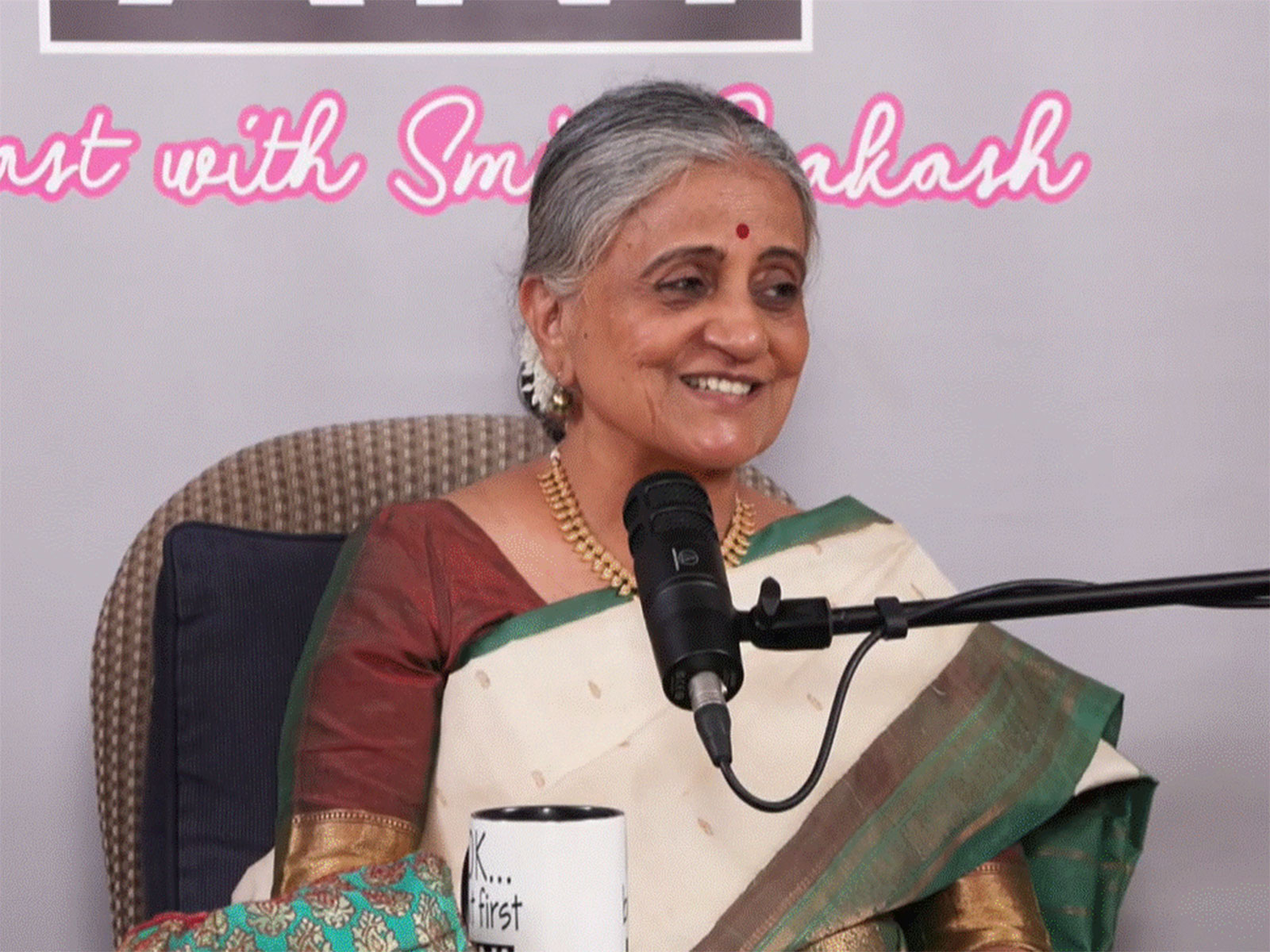
"Don't make the mistake": Film critic Bhawana Somaaya on why Bimal Roy advised BR Chopra not to cast Raj, Shammi, Shashi Kapoor in 'Waqt'
Dec 10, 2025
Mumbai (Maharashtra) [India], December 10 : Veteran film critic and trade analyst Taran Adarsh, along with film critic and author Bhawana Somaaya reflected on the golden era of Hindi cinema, recounting how filmmakers like Raj Kapoor, Bimal Roy and BR Chopra shared scripts, exchanged ideas and built films through collaboration, a stark contrast to the filmmaking culture prevalent today.
Sharing insights into the working styles of three of Indian cinema's most influential directors, Taran Adarsh and Bhawana Somaaya highlighted how the earlier generation of filmmakers believed in openness, creative exchange and honest criticism.
Somaaya said filmmakers of that era, including Raj Kapoor, Bimal Roy and BR Chopra, regularly shared their final scripts, seeking feedback to strengthen the narrative and screenplay and shared an insightful anecdote about the collaborative spirit of India's cinematic legends, highlighting how Bimal Roy advised BR Chopra against casting the Kapoor brothers in 'Waqt' (1965).
Roy said, "Don't make the mistake", which ultimately led Chopra to cast Shashi Kapoor, Raj Kumar and Sunil Dutt.
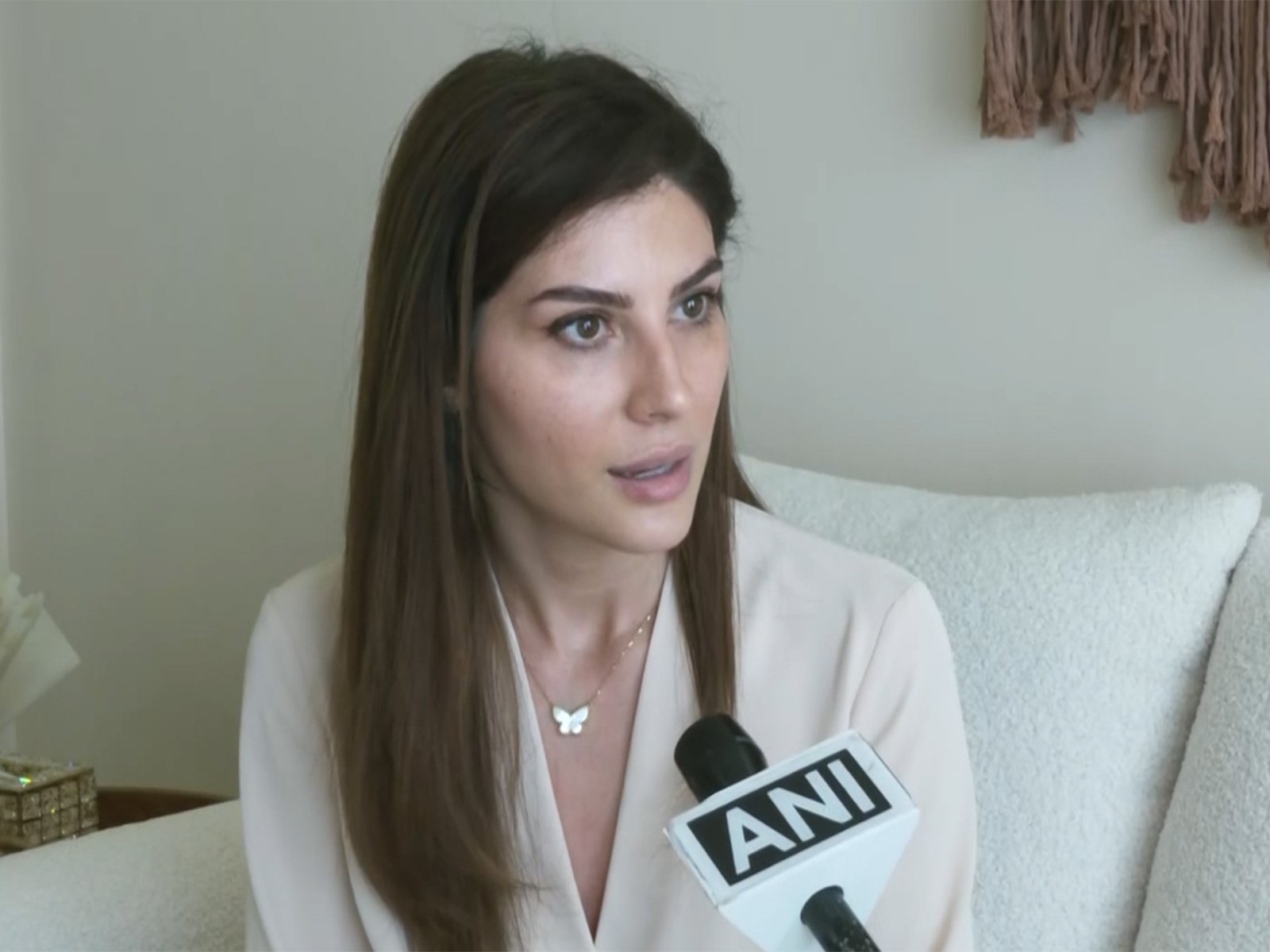
In a conversation with ANI, Bhawana said, "In 'Waqt', actually, BR Chopra wanted to cast the entire Kapoor family. That is Raj Kapoor, Shammi Kapoor, and Shashi Kapoor as the brothers. But Bimal Roy said, don't make the mistake because there is a scene in the film where Balraj Sahni is sitting on the Marine Drive parapet and Raaj Kumar passes by and Shashi Kapoor passes by and they don't recognise each other. And he says, if you take the real siblings, and when they are passing by, and they don't recognise each other and the audience recognises, people will not buy it. What I'm trying to say is that today, no one wants to share the script with their peer group. They are not taking any feedback, which is showing in the results."
This example showcases the openness and creative exchange among filmmakers of that era, contrasting with today's industry dynamics.
Bhawana further noted that the director, dialogue writer, and story writer would always work together and exchange ideas. She added that Yash Chopra once told her that while he was working on his film, 'Daag', he took his family to Kashmir; however, before leaving, he made sure to visit novelist and screenwriter Gulshan Nanda to finalise the story.
She shared that "Yashji told me" after he released a film, "He took his family to Kashmir for the holidays. Before leaving, he visited Gulshan Nanda (novelist and screenwriter) and confirmed the story of 'Daag')"
'Daag: A Poem of Love' is a 1973 romantic drama film produced and directed by Yash Chopra. The film stars Rajesh Khanna, Sharmila Tagore, and Raakhee in lead roles, with supporting performances from Madan Puri, Kader Khan, Prem Chopra, and A. K. Hangal.
She continued, "Uske baad screenplay writer use likh dete the" (After that, the screenplay writer used to write it.) And the dialogue writer wrote the dialogue. Yashji came back from the holiday, and after that, he would have a meeting with the dialogue writer, the screenplay writer, and the story writer. And four minds are contributing and disagreeing with one another. And also adding and telling each other where they are going wrong, "she shared.
Somaaya noted that modern filmmakers often work in isolation, neglecting valuable feedback and peer review.
"Today, what happens is the filmmaker who produces the film wants to be the director. He wants to be a writer. Sometimes he is also a cinematographer. So if you are going to hold all the leashes of the horse, the horse is going to go galloping, I don't know where," she added.
Reflecting on the industry's changing dynamics, Adarsh noted that actors today exert significant influence over creative choices, including script changes and casting suggestions, often diluting the filmmaker's vision.
"And the final approval come from the actor he will tell you ye change kariye, ye casting lijiye, is kahani mein ye mod aana chahiye, iska ye draft change kariye..that has spoiled lot of things (And the final approval comes from the actor. He will tell you, change this, take this casting, In this story, this mode should come. Change this draft completely). And this has spoiled a lot of things. Now, if you look at today's date, compared to the earlier years."
Despite this, they acknowledged that some modern directors such as Sanjay Leela Bhansali and SS Rajamouli continue to assert creative conviction, refusing to compromise their scripts or craft under external pressure.
"But even today, there are filmmakers who say no. It's a very simple word, no. But it's a very powerful word. Aaj aap ye Sanjay Leela Bhansali se nahi keh sakte that change this, change that. And hua tha ek actor ke saath and he shut down the film. Aaj S. S. Rajamouli hai aap unhe ye nahi keh sakkte ye change kariye vo change kariye(S. S. Rajamouli is there. You can't tell them to change this or that. Because they have conviction in their command over the script. Over their craft. It's so enormous. It's so beautiful. Many actors actually, they overrule. That's what we have said, it should be done. And the producers, the filmmakers, they are under so much pressure in those actors. That they don't understand that we are making a film. We shouldn't please the actors," noted Taran Adarsh.
Adarsh recounted his first visit to RK Studios, where he met Raj Kapoor, who took him on a tour of the sets. It was my first trip to RK Studios. And my father had said, If you want to build contacts, go visit studios. I was the second generation. My business is in trade magazines. So it was my first trip. I took a bus. I still remember the number 371 from Bandra to Chembur. RK Studios. When I reached there, I went to the studio. Nobody stopped me. Outside one floor, a man is standing with a black umbrella. In the sun, a man is sitting in a kurta pyjama. That was Raj Kapoor, sir. My first trip and my first meeting with Raj Kapoor sahab. And he was sitting there. Now tell me: a 16-year-old boy, a 15-year-old boy, a 17-year-old boy. I gathered my courage and went to him and said, 'I am Adarsh(BK Adarsh) ji's son. I have come to meet you. This is my first time at RK. He said, 'baitho baitho', " Taran added, "it was lunch break, and he (Raj Kapoor) asked 'khana khaya.'"
He further shared, "You know, in today's day and age, people don't even share their photographs of the film ki look reveal ho jaayyega ya actor ka character bahar aa jayega public domain mein before the film is out (Or the actor's character will come out in the public domain before the film is out). He took me inside the RK studios. He showed me the entire set. I said, What are you shooting? And he said, I'm shooting a song, which, later I realised, was Yeh Galiyaan, Yeh Chowabara, the track from the film 'Prem Rog'."
'Prem Rog', directed and produced by Raj Kapoor, stars Rishi Kapoor in the lead, portraying a man who falls in love with a widow played by Padmini Kolhapure. The screenplay, written by Jainendra Jain and Kamna Chandra, brings out the social challenges and prejudices surrounding widow remarriage in traditional Indian society.
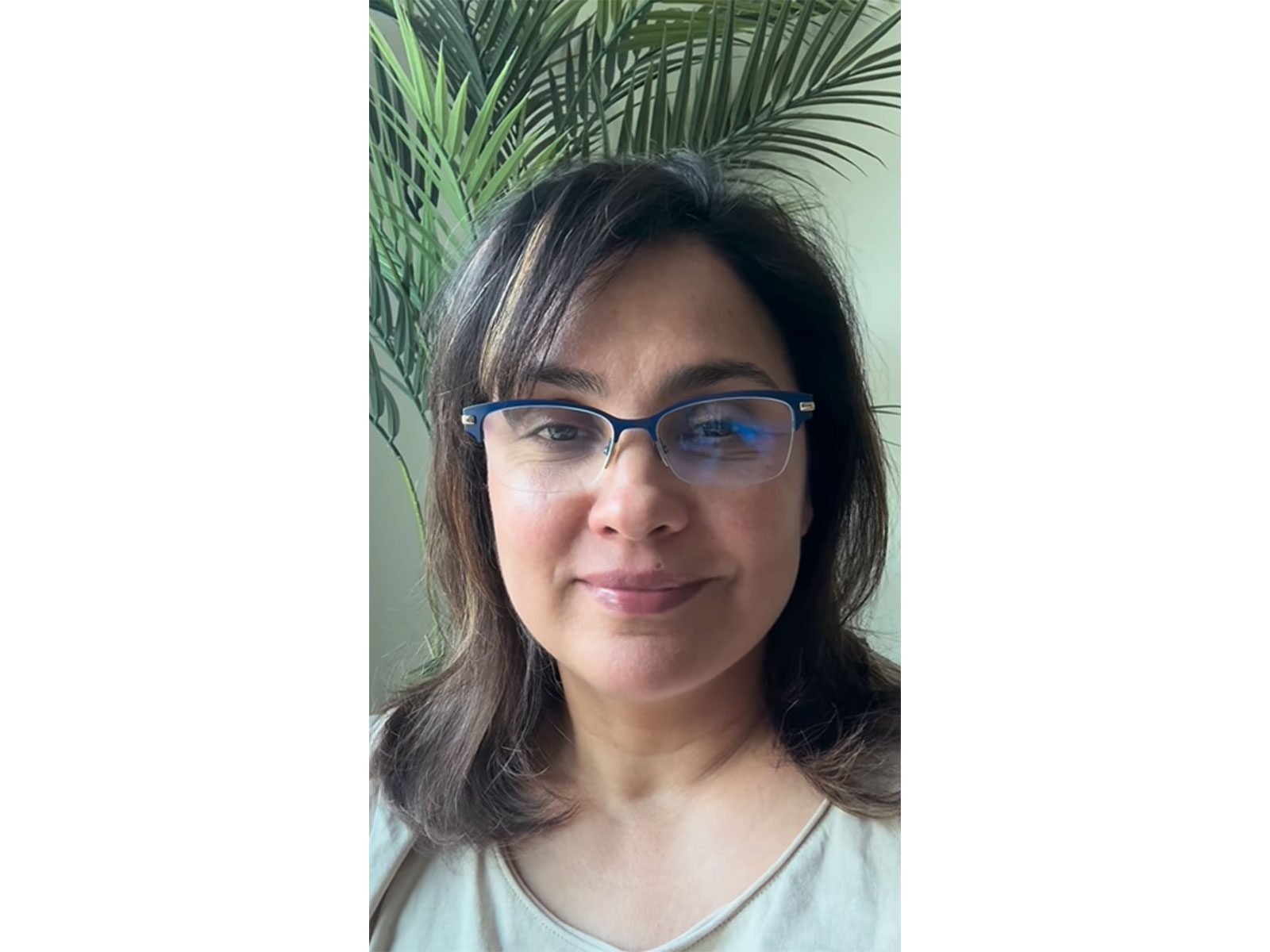
Bhawana Somaaya, who is a film journalist, critic, and author, was honoured with the Padma Shri in 2017. She began her career as a film reporter in 1978 and went on to work with several leading film magazines through the 1980s and 1990s. Somaaya later served as the editor of Screen from 2000 to 2007.
Over the years, she has authored more than 13 books on Hindi cinema, including biographies and industry chronicles such as Salaam Bollywood (2000), The Story So Far (2003), and a trilogy on Amitabh Bachchan--Amitabh Bachchan: The Legend (1999), Bachchanalia: The Films and Memorabilia of Amitabh Bachchan (2009), and Amitabh Lexicon (2011).