DRDO successfully tests fighter escape system at 800 km/h on rocket sled track in Chandigarh
Dec 02, 2025
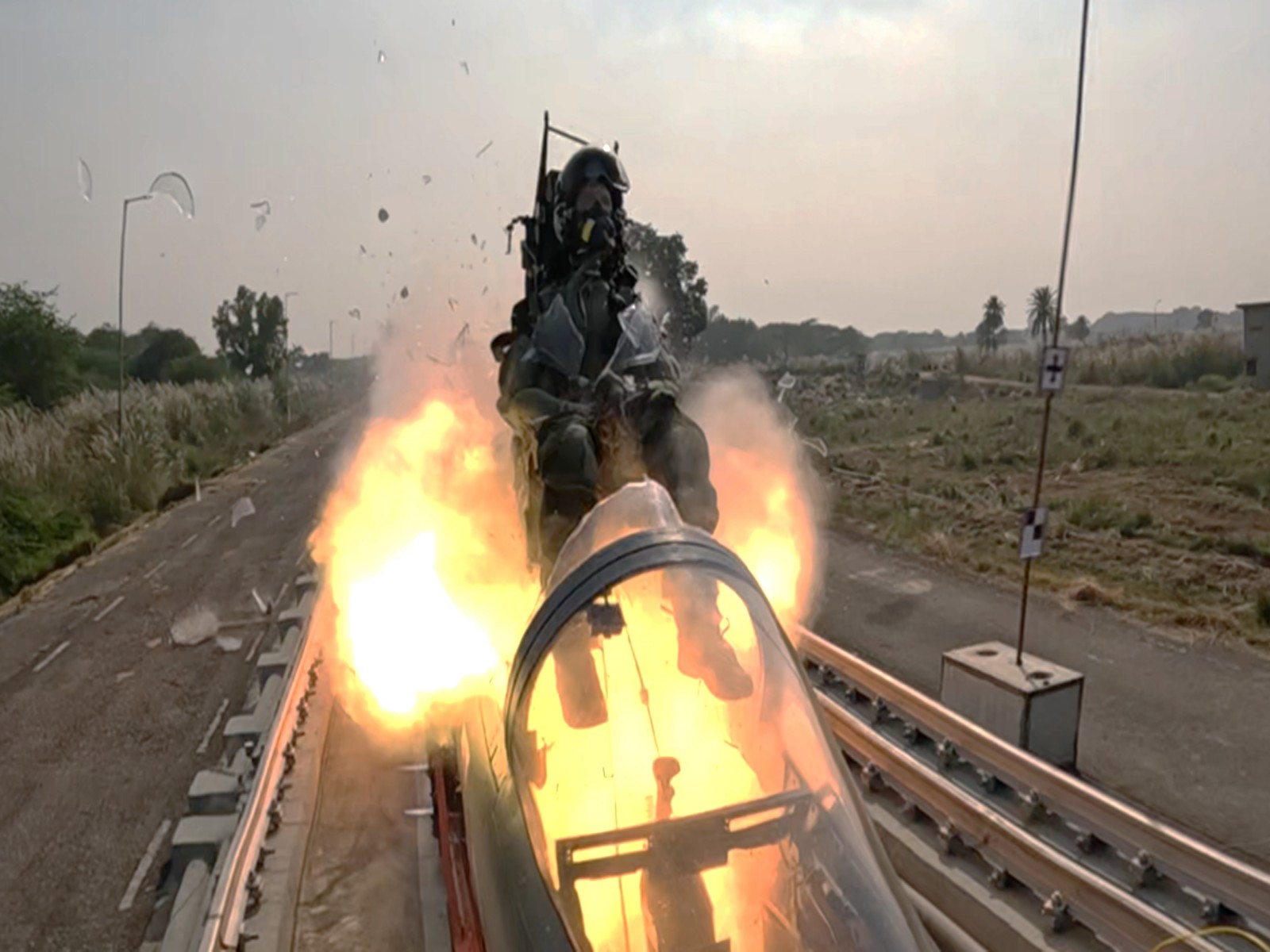
Chandigarh [India], December 2 : The Defence Research and Development Organisation on Tuesday successfully carried out a high-speed rocket-sled test of a fighter aircraft escape system at the Rail Track Rocket Sled (RTRS) facility of the Terminal Ballistics Research Laboratory in Chandigarh.
The test reached a controlled velocity of 800 km/h and validated canopy severance, ejection sequencing and full aircrew recovery.
The DRDO conducted the test in collaboration with the Aeronautical Development Agency and Hindustan Aeronautics Limited.
"This complex dynamic test places India in an elite club of nations with advanced in-house escape system testing capability," a statement from the Ministry of Defence said.
Dynamic ejection tests are more demanding than static tests, such as the net test or the zero-zero test, which requires the pilot to eject a ground zero without moving.
Meanwhile, dynamic ejection tests are harder because they evaluate the real-world performance of the aircraft's ejection seats and crew escape systems.
They are considered a key measure of the performance of ejection seats and canopy-severance systems. Canopy Severance System (CSS) is part of the pilot's escape aid system in aircraft. It is designed to rescue the pilot in shortest possible time during in-flight and on-ground emergencies in combat aircraft.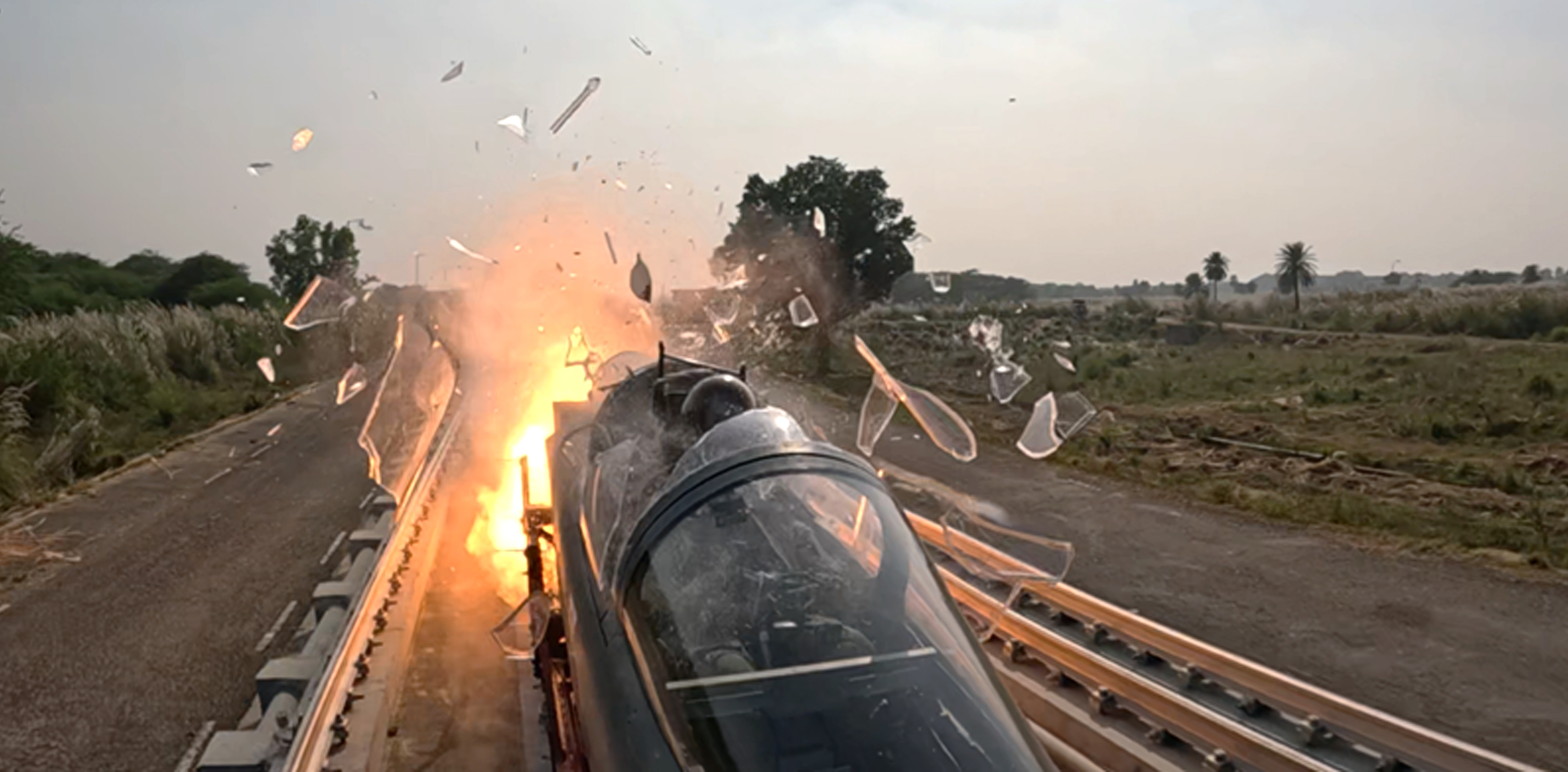
For this test, the system is carrying the forebody of the Light Combat Aircraft Tejas'.
"A dual-sled system with the LCA aircraft forebody was propelled to precisely controlled velocity through phased firing of multiple solid propellant rocket motors," the MoD statement read.
The canopy fragilisation pattern, ejection sequencing and complete aircrew recovery process was simulated using an instrumented Anthropomorphic Test Dummy, which recorded critical loads, moments, and accelerations that would be experienced by ejected pilots. The entire sequence was captured through onboard and ground-based imaging systems. The test was witnessed by the officials from the Indian Air Force (IAF), and the Institute of Aerospace Medicine & certification, the statement added.
Defence Minister Rajnath Singh congratulated DRDO, the IAF, ADA, HAL and industry partners.
He called the test "a significant milestone for India's indigenous defence capability towards self-reliance." Secretary, Department of Defence R&D and DRDO Chairman Samir V Kamat also praised the team involved.
Later in an X post, the Defence Minister shared," Defence Research and Development Organization (DRDO) has successfully conducted a high-speed rocket-sled test of fighter aircraft escape system at precisely controlled velocity of 800 km/h- validating canopy severance, ejection sequencing and complete aircrew-recovery at Rail Track Rocket Sled (RTRS) facility of the Terminal Ballistics Research Laboratory (TBRL), Chandigarh."
DRDO set up the four-kilometre Rail Track Rocket Sled Penta Rail Supersonic Track at TBRL back in 2014.
The national test facility is one of only a few of its kind in the world.
It supports the testing of several critical systems, including payloads for ISRO's manned missions, navigation systems for missiles and aircraft, proximity fuses for advanced warheads, fuses for armament systems, parachutes for payload delivery and arrester systems for aircraft.
ISRO has also used the TBRL facility for Rail Track Rocket Sled deployment tests of the Gaganyaan pilot and Apex Cover Separation parachutes in cluster configuration.