"Even Veerappan falls short": Jagan Mohan Reddy slams Chandrababu Naidu govt over Amaravati capital project
Apr 01, 2026
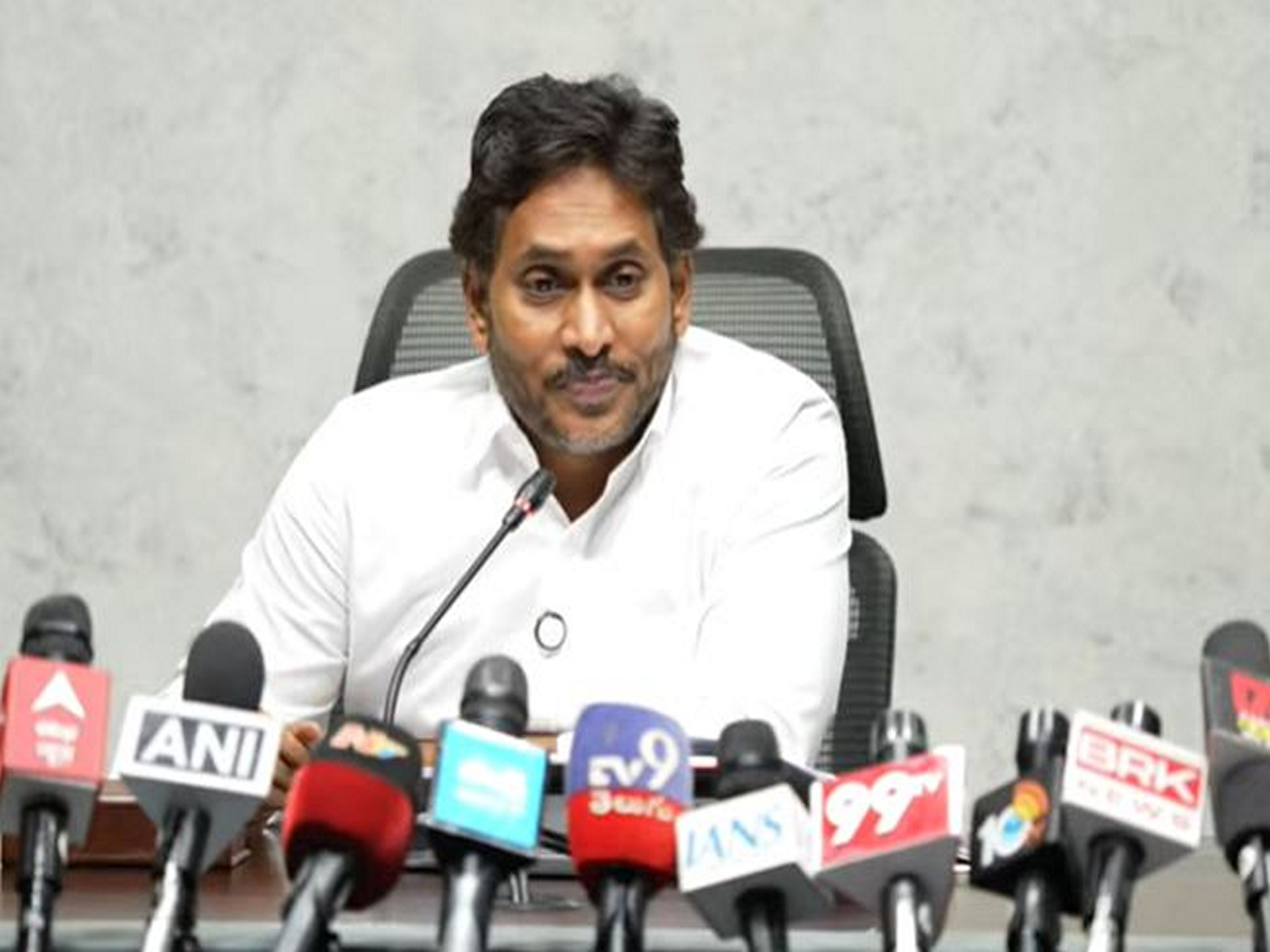
Amaravati (Andhra Pradesh) [India], April 1 : Former Andhra Pradesh Chief Minister YS Jagan Mohan Reddy on Wednesday attacked the Chandrababu Naidu-led government, alleging that corruption in the Amaravati capital project is so massive that forest brigand Veerappan would fall short in comparison.
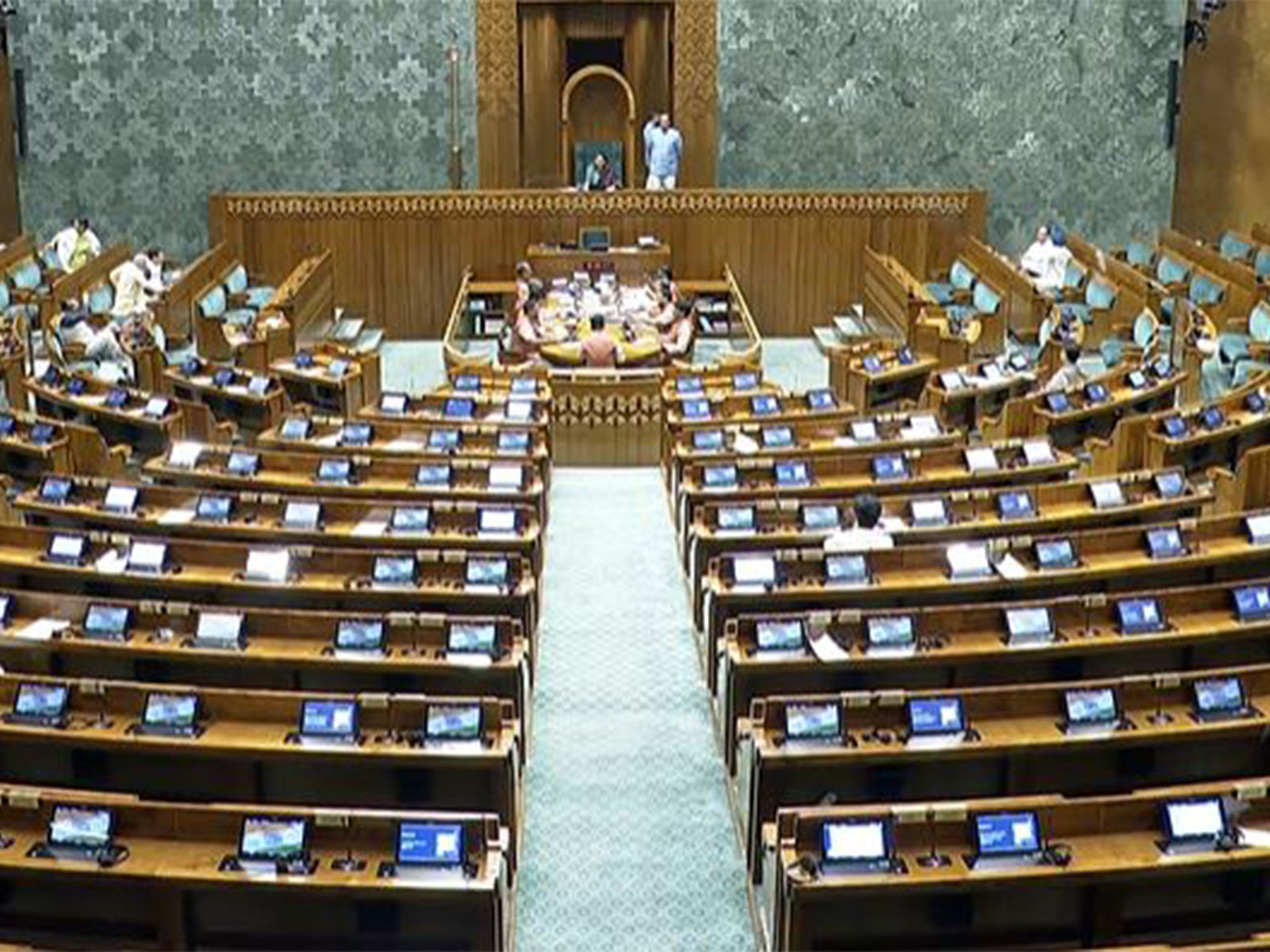
Jagan claimed the project has been turned into a "hub for scams," citing inflated construction costs that far exceed those of the new Parliament building in Delhi.
Drawing comparisons, Reddy stated that the Telangana Secretariat was constructed at a cost of ₹615 crore, while the new Parliament building in Delhi cost around ₹970 crore.
"However, in Amaravati, the proposed costs are significantly higher, ₹1,400 crore for the Assembly, ₹1,480 crore for the High Court, and over ₹7,700 crore for five Secretariat towers," he said.
He questioned whether such massive spending is justified, asking if the buildings are being constructed with gold.
"It was alleged that corruption is visible at every step in Amaravati and that raising questions on this expenditure is being countered by branding critics as anti-Amaravati," said Reddy.
Clarifying the stand, Reddy said they are not against Amaravati but stressed the need to assess whether such a large-scale project is practical and financially feasible.
He questioned whether it is appropriate to pursue a capital project primarily for alleged scams and said the state does not have the financial capacity to bear such huge costs.
Highlighting an alternative approach, Jagan said steps were taken to ensure Amaravati does not become a burden on the state by proposing Visakhapatnam as the administrative capital, with an investment of ₹10,000 crore to develop it into a major city.
"Kurnool was proposed as the judicial capital, and Amaravati as the legislative capital, under a three-capital model aimed at balanced regional development," he stated.
Reddy emphasised that during their five-year tenure, Amaravati was not neglected and reiterated that they were never against Amaravati.
He said, "According to the DPR ( Detailed Project Report) given earlier, infrastructure development in Amaravati across one lakh acres could cost around ₹2 lakh crore, and this could increase further in the future."
He pointed out that around ₹5,000 crore was spent between 2014 and 2019, and overall, only about ₹8,000 crore has been spent on Amaravati in seven years.
"In the last two years alone, loans worth ₹47,000 crore were raised, ₹13,000 crore was drawn, and ₹5,000 crore was given as advances to contractors," he said.
The leader questioned how the state can afford to spend ₹2 lakh crore on a single region and what impact such spending would have on welfare schemes and development in other parts of the state.
He also stated that, "It was alleged that concentrating all resources in Amaravati has already started showing negative consequences."
He further accused that Amaravati is being used as a tool for scams, with loans being raised in its name.
Reddy claimed that instead of becoming a capital for the state, Amaravati has turned into a hub for alleged scams.
Serious allegations were also made regarding tenders, stating that cancelled contracts were reissued at higher rates to the same parties.
The leader said that while most high-end constructions in the country cost less than ₹5,000 per unit, tenders in Amaravati were awarded at nearly ₹14,000, raising questions over transparency.
As an alternative, Jagan Mohan proposed developing a capital region by integrating Vijayawada, Guntur, and Machilipatnam, suggesting that investing just 10% of the projected ₹2 lakh crore would be sufficient to build a strong and sustainable city.
"With an existing population of 30 to 40 lakh and better infrastructure, the integrated region could grow rapidly compared to Amaravati, which currently lacks population density," he said.
He concluded that Andhra Pradesh urgently needs a practical, growth-driven capital city and questioned why such an approach was not considered earlier. The Amaravati issue continues to remain a key political flashpoint in the state.