First in South-East Asia: Fortis, Gurugram, performs life-saving hybrid cardiac surgery
Jan 08, 2026
New Delhi [India], January 8 : In a landmark clinical milestone, doctors at Fortis Memorial Research Institute in Gurugram successfully performed an exceptionally rare and complex life-saving Hybrid Cardiac Surgery (open bypass surgery combined with minimally invasive endovascular repair) on a 29-year-old man suffering from a ruptured and massively dilated thoracic abdominal aorta (the main artery which carries blood from the heart to the rest of the body) - a condition associated with extremely high mortality.
According to available medical literature, this is the first such surgery reported in South-East Asia.
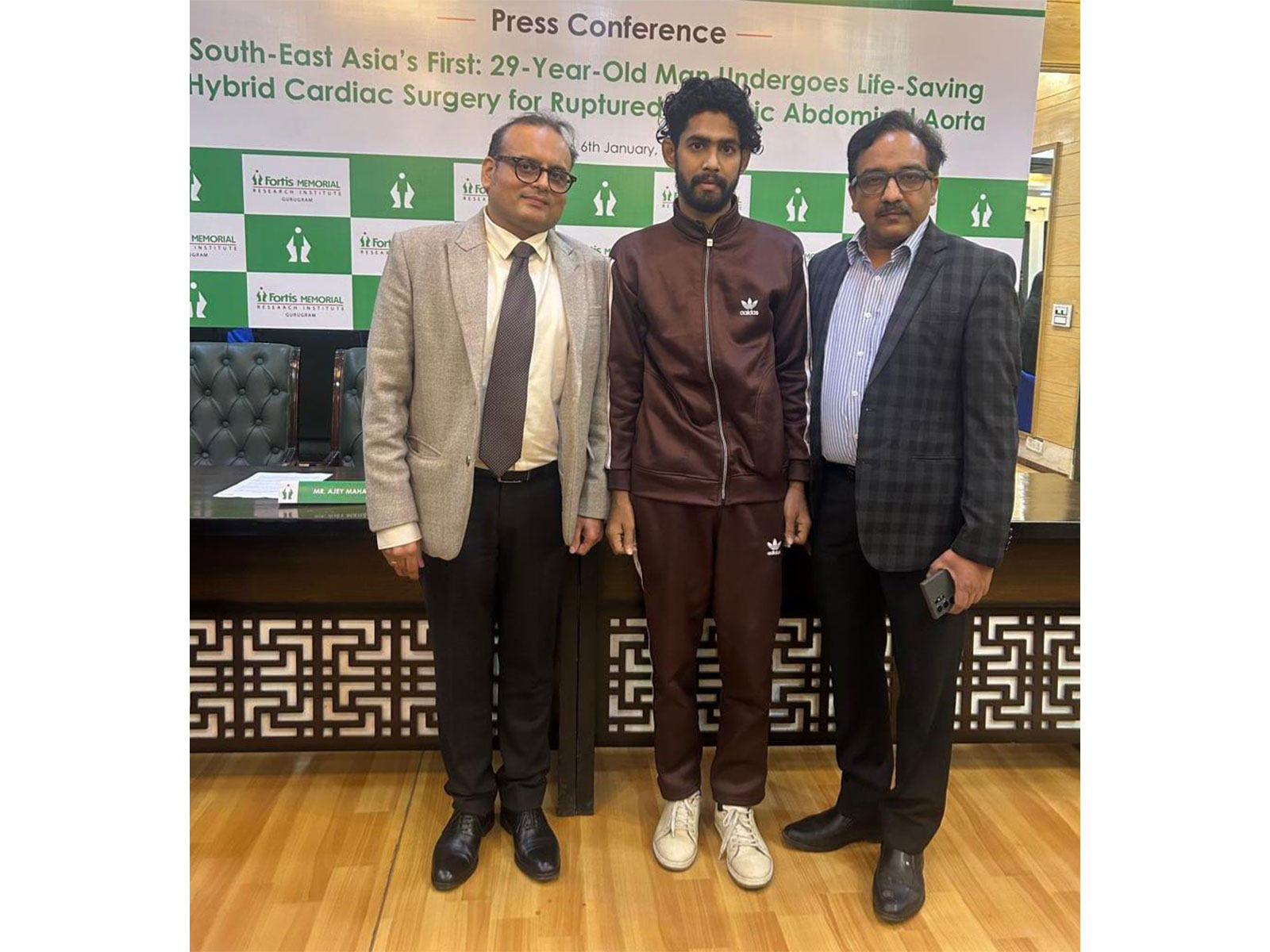
Patient Saif Alam, a resident of Palamau district in Bihar, arrived at Fortis Gurugram in a critical condition with a ruptured aorta. His condition was initially misdiagnosed as fluid accumulation in the chest at multiple hospitals in Bihar, wherein a chest tube was inserted to control the bleeding. This, however, led to further complications and uncontrolled internal bleeding.
Over the next few months, the patient's condition deteriorated significantly, where his heart function dropped to nearly 15% and he was confined to bed for almost a month, due to the risk of sudden fatal bleeding. The patient sought treatment across several hospitals in Bihar, Kolkata and Bengaluru, where surgery was declined due to the extremely high risk involved. Eventually, as the last hope, he was referred to Fortis Memorial Research Institute, Gurugram, where the Cardio Thoracic Vascular team took on the challenge as an emergency, life-saving intervention.
On detailed evaluation at Fortis Gurugram, the team of doctors led by Dr Udgeath Dhir, Principal Director - Cardio Thoracic Vascular Surgery, Fortis Memorial Research Institute, Gurugram, found that the patient's entire Thoracic Abdominal Aorta was severely dilated (abnormally enlarged) and with extensive clots.
As a result, blood supply to vital organs, including kidneys, liver and intestines, was critically compromised. Given the severity of the condition and multiple high-risk factors, conventional open surgery was not feasible, as it carried a very high risk of paralysis, organ failure, and possible loss of life.
Giving details of the case, Dr Udgeath Dhir said, "The patient's heart was functioning at only about 15%, making immediate intervention critical. Given the complexity of his condition, we adopted an advanced hybrid surgical approach, combining open bypass surgery with minimally invasive endovascular repair. The procedure began with the placement of a stent graft to seal the ruptured aorta and control the bleeding. This was followed by a highly specialised procedure known as aortic debranching. The hybrid debranching with endovascular repair technique is among the rarest vascular procedures performed globally. This hybrid approach ensured uninterrupted blood flow to all vital organs while simultaneously protecting the spinal cord, thereby significantly reducing the risk of paralysis."
"Continuous spinal cord pressure monitoring was performed throughout the procedure to ensure neurological safety. Remarkably, despite the extreme complexity and risk, with an estimated mortality risk of nearly 50%, the patient has recovered well and was discharged in mere six days. He is currently stable and on medical management for low heart function, with plans for a future cardiac procedure once he has fully recovered," he added.
Meanwhile, Dr Anand Kumar, Senior Director, Cardiac Anaesthesia, Fortis Memorial Research Institute, Gurugram, said, "Effective management of such critical patients is essential because of their labile blood pressure, decreased cardiac performance, and heightened vulnerability to neurological damage. Therefore, anaesthetic dosing must be meticulously determined and continuously monitored to ensure hemodynamic stability and prevent additional neurological harm."
On the other hand, patient Saif Alam stated that he had "lost all hope" before he was referred to Fortis, Gurugram and expressed his gratitude for the hospital and the doctors for helping him "resume a normal life."
He said, "For months, I had lost all hope of living after enduring prolonged suffering and visiting numerous hospitals across North and South India with no definitive medical intervention. It was only after being referred to Dr. Udgeath Dhir at Fortis Memorial Research Institute, Gurugram, that I finally received the right treatment and began to recover. I am truly grateful for the care that has helped me get better and resume a normal life."