From 'Make in India' to 'Make in Brazil': Lessons in Industry, Credit and Digital Sovereignty
Mar 02, 2026
Sao Paulo [Brazil], March 2 : India's rapid economic rise and assertive industrial strategy have positioned it at the centre of global economic debates, offering lessons for countries seeking to revive manufacturing and technological capability.
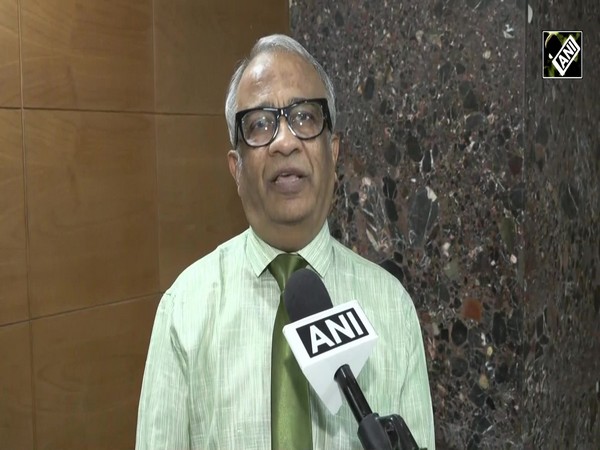
In an interview with TV 247, economist Paulo Gala, professor at the Fundacao Getulio Vargas, reflected on India's development model and its implications for Brazil's policy direction.
According to Brasil 247, the discussion followed Brazilian President Luiz Inacio Lula da Silva's recent visit to India, highlighting contrasting national strategies. Gala underscored India's long-term commitment to industrialisation under initiatives such as Make in India, supported by state-backed industrial corridors designed to channel infrastructure, incentives, and investment into priority sectors and regions.
He noted that India has tripled its per capita income over two decades, sustaining annual growth rates of 6 to 7 per cent, a trajectory he described as comparable, though smaller in scale, to China's ascent.
According to Gala, India's key strength lies in aligning economic growth with industrial policy. He pointed to the symbolic importance of conglomerates such as Tata Motors expanding globally, arguing that true "national champions" must evolve into international competitors to validate state support.
By contrast, Brazil's industrial output, estimated at around USD 250 billion, lags behind India's nearly USD 500 billion, reflecting what he termed a prolonged phase of deindustrialisation.
High interest rates remain Brazil's principal constraint, Gala said, describing them as the country's "Achilles' heel." He argued that when financial returns exceed gains from productive investment, domestic capital shifts away from manufacturing toward rent-seeking.
He criticised the structure of Brazil's long-term credit benchmark tied to loans from BNDES, stating that market-linked rates undermine efforts at reindustrialisation. While defending targeted subsidies, he stressed that they must be linked to innovation, technological advancement, and measurable performance outcomes.
On technological sovereignty, Gala emphasised the need for strong domestic capital and innovation ecosystems. He cautioned that multinational corporations often centralise research and patents at headquarters, leaving subsidiaries dependent on imported technology. This, he said, contributes to Brazil's persistent services deficit and growing outflows in royalties and intellectual property payments.
Addressing artificial intelligence and Brazil's Redata incentive package for data centres, Gala welcomed regional decentralisation but warned against replicating a commodity-export model in digital form. Data infrastructure, he said, must serve as a foundation for domestic software and hardware development rather than merely providing cheap energy and water to foreign firms.
Comparing India and China, Gala acknowledged China's larger industrial scale but noted that India's perceived geopolitical alignment with Western economies has attracted supply chain diversification.
On AI and employment, he rejected alarmist narratives, stating that while automation poses risks to service-sector jobs, technological revolutions historically create new opportunities. Ultimately, he argued, the decisive factor is national strategy ensuring that research, patents, jobs, and income generated by emerging technologies remain anchored within the domestic economy.