'From silence to strength': Taking justice to their doorsteps this Women's Day
Mar 09, 2026
By Divya Malhotra
New Delhi [India], March 9 : On a quiet morning in countless Indian homes, women wake before the sun rises- preparing breakfast, packing school bags, responding to office emails, and gently nudging a sleepy toddler awake. Their days stretch between boardrooms and kitchens, buses and daycare centres, dreams and duties. Many of them do this silently, carrying the invisible weight of expectations while navigating battles that rarely make headlines.
This International Women's Day, a nationwide initiative seeks to ensure that those unheard stories finally find a platform.
Beginning March 8, the National Commission for Women (NCW) has launched an ambitious nationwide programme titled "Mahila Jan Sunwai"- Women's Public Hearing, an initiative designed to bring justice closer to women who may otherwise never reach institutional doors.
Under the larger umbrella of the Rashtriya Mahila Aayog Aapke Dwaar programme, the week-long drive will run until March 14, covering nearly 500 districts across 25 States and Union Territories, making it one of the largest coordinated grievance redressal efforts for women in India.
For years, the challenge for many women seeking justice has not only been the complaint itself, but the journey required to register it- navigating bureaucracy, travel costs, family pressures, and often, fear.
The Mahila Jan Sunwai initiative attempts to reverse that dynamic.
Instead of waiting for women to approach institutions, the institutions are now moving closer to them.
The hearings will be conducted jointly by the NCW and State Women's Commissions, aiming to resolve over 15,000 registered complaints, along with thousands of expected walk-in cases. The initiative will prioritise districts with a high number of complaints as well as remote or hilly regions where access to grievance redressal mechanisms has traditionally been limited.
Chairperson Vijaya Rahatkar, who currently heads the NCW, says the idea emerged from a simple yet powerful realisation- that many women who suffer injustice never reach formal systems simply because they cannot.
"We receive complaints from across the country, but many women cannot travel to Delhi or reach official offices," Rahatkar said, adding, "So we decided that if women cannot come to us, we will go to them," in an interview with ANI.
Over the past few months, the commission has already organised public hearings in around 100 locations. The current initiative expands that effort dramatically.
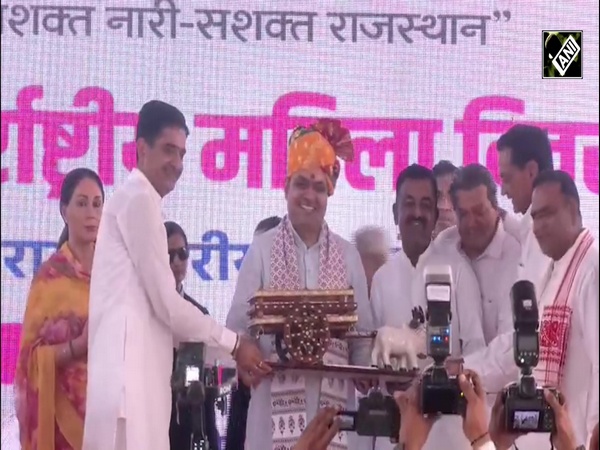
Rahatkar herself will be visiting districts in Rajasthan, Gujarat, Madhya Pradesh, Telangana, and Jharkhand, beginning with a hearing in Jaipur. Police officials, local authorities, and state commission members will participate to ensure that cases- especially family disputes, workplace complaints, and safety issues -- can be addressed quickly.
Many cases may be resolved on the spot through mediation and counselling. Others may move into legal channels if necessary.
The ultimate goal, Rahatkar emphasised, is not only justice, but confidence.
In many Indian households, women are still taught an old and familiar lesson: adjust, tolerate, stay quiet.
Rahatkar believes that narrative must change.
"In our society, daughters are often told to stay silent and tolerate difficulties," she said during an interview with ANI, adding, "I don't think it should be like that. Sons and daughters must be treated equally. Families should teach understanding, but not silence."
She stressed that strong families are built on mutual respect rather than suppression.
"We must maintain our family values, but that does not mean women must bear injustice quietly," she added.
For many women, however, the decision to speak up remains complex. Economic dependence, social stigma, childcare responsibilities, and emotional ties can all weigh heavily when deciding whether to file a complaint.
That reality is reflected in the voices of women across the country- voices that form the backbone of India's social and economic fabric.
Take Rajni Bhandari, a working professional and mother to a three-year-old daughter. Like millions of Indian women, her day is a careful balancing act between career ambitions, household responsibilities, and motherhood.
Speaking about the NCW initiative, Rajni believes programmes like Mahila Jan Sunwai can send an important message.
"When a national body openly launches a grievance redressal programme for women, it shows that women's voices are being taken seriously," she said.
Yet she also points out a deeper reality: women today are already demonstrating extraordinary resilience.
"Women are breaking the stereotype that they belong only in the kitchen," she explained, adding, "They are making their mark in every field while managing homes, careers, and children."
But even strong women sometimes hesitate to raise their voices.
"Many women hold themselves back because they are unsure if the system will truly support them," Rajni said, adding, "Confidence will grow when women see real results- when complaints are handled fairly and quickly."
For her, empowerment is not a slogan reserved for March 8.
"Real empowerment happens when a woman receives respect, equal opportunities, and decision-making power in everyday life," she said, adding, "It begins at home -- when daughters and sons are treated equally, when daughters-in-law are given the same respect as daughters."
Women across professions echo similar sentiments.
Garima Chaudhary, a dietitian and nutritionist at Cloudnine Hospital and a single mother of two daughters, believes empowerment begins with education and self-reliance.
"When a woman is educated, healthy, and financially independent, she becomes a force not only for herself but for her family and society," she said, adding, "An empowered woman is the foundation of an empowered society."
Meanwhile, Shreya Malhotra, a cabin crew professional and new mother, sees empowerment through the lens of legacy.
"This year feels special because I've added a new role to my life- being a mother," she said, adding, "I want my child to look at me and say that her mother didn't give up on her dreams."
Shreya hopes to break generational barriers that many women continue to carry.
"Our mothers made sacrifices for us, but we must also challenge the outdated rituals and expectations that limit women," she said, adding, "If we can leave those burdens behind, the next generation won't have to carry them."
Her message this Women's Day is simple: make a promise to yourself.
"Just like people make New Year resolutions, make a Women's Day resolution- to be strong, to raise your voice, and to make a difference," she said.
The Mahila Jan Sunwai programme represents more than a series of hearings. It signals a shift in how institutions approach gender justice- moving from passive systems to proactive outreach.
With the involvement of state commissions, police authorities, and local administrations, the initiative aims not only to resolve complaints but also to build trust among women who may have long felt unheard.
If successful, the programme could redefine how grievance redressal systems operate across India.
But as many women point out, the true measure of success will not lie in the number of hearings conducted or complaints registered, but in the outcomes they produce.
International Women's Day is often marked by speeches, campaigns, and social media tributes celebrating women's achievements.
Yet beyond the hashtags lies a more complicated reality.
Across India, women continue to navigate structural inequalities, domestic pressures, workplace challenges, and societal expectations- often all at once.
The launch of Mahila Jan Sunwai may not solve every problem overnight. But it represents an acknowledgement that change begins by listening.
And sometimes, the most powerful transformation starts with something deceptively simple: giving someone the space to speak.
As women across the country step forward, whether in a public hearing room, a workplace meeting, or within their own homes, the message of this Women's Day becomes clear. Empowerment is not a moment. It is a movement.
And it begins the day a woman realises her voice was never meant to remain silent.