Gen Z-led campaign drives Nepal to formalise academic special consideration policy
Dec 29, 2025
By Binod Prasad Adhikari
Kathmandu [Nepal], December 29 : Sabin and Santosh Dangol from Nepal's Makwanpur district lost their mother eleven days before their Higher Secondary Level board examinations. Draped in white clothes from head to toe, the grieving brothers appeared for the exams, fearing that a year-long academic gap could prove costly in the years to come.
Despite losing their mother shortly before the board examinations, both brothers, impacted by continued emotional distress, went ahead with the exams as no deferment was available.
"At that time, we were in shock--everything felt unreal. Our mother passed away just eleven days before the board examinations, and we were expected to complete the Kriya (death rituals) while also sitting for exams. There was no space to pause or process what had happened," Sabin told ANI.
"We couldn't grieve properly, and we couldn't perform properly academically. We were present in the exam hall, but not in our full mental or emotional capacity. As a result, both our exam results and our mourning were affected," Dangol added.
Students in Nepal are not only forced to sit for examinations during emotional distress but also during natural disasters. Ramesh Rawat from Bardiya district was compelled to appear for his Grade 10 board examinations--the gateway to school-level education--despite severe flooding in his area.
His schoolbooks were washed away by floodwaters, and his family was displaced for weeks. With most of his study materials destroyed, he sought permission from his institution to appear for the examinations later, which was only possible by taking a gap year.
Forced to sit for the exams, Rawat failed four subjects and temporarily dropped out to support his family following the disaster. Annual monsoon flooding and inundation are recurring phenomena in his district, but at the time there was no disaster-triggered academic relief mechanism, which led to multiple academic gaps.
"The monsoon floods destroyed our home--my schoolbooks, notes, certificates, and everything. We were displaced for months, and there was no stability to even think about studying. During the SEE, there was no option for an alternative exam date or any form of academic support. I failed four subjects and was forced to drop out temporarily to support my family. Although I deeply wanted to continue my education, I got trapped in circumstances I couldn't escape," Ramesh told ANI.
The experience of Anjali Yadav mirrors similar challenges. Anjali gave birth to her first child two weeks before her end-semester Master's level examinations at Tribhuvan University. Although she was in the recovery phase, her request for deferment was rejected, citing "no maternity accommodation policy".
As a result, she had to skip the examinations, was marked "NQ" (Not Qualified) in her academic transcript, and faced a one-year academic delay.
"I gave birth just two weeks before my end-semester examinations. There was no maternity accommodation policy and no institutional understanding--childbirth was treated as negligence rather than a medical and biological reality. I was compelled to miss the exams and was marked 'NQ,' which affected my entire master's journey," Anjali told ANI.
For students affected by such circumstances, one outcome remains common: their board scores become statistical outliers against otherwise consistent academic records. This results in GPA distortion, restricted access to scholarships, rankings and competitive academic pathways, with transcripts reflecting physical survivability rather than academic competence.
The Special Consideration Campaign (SCC), led by the Global Coalition for Special Consideration (GCSC) since 2023, has sought to address this gap. The coalition includes students who have experienced similar challenges during their academic journeys and worked to bring policy-level changes, largely driven by Gen Z.
The campaign has been instrumental for students denied accommodation during medically documented acute illness or required to sit national board examinations under severe physical impairment. The newly introduced policy also covers bereavement, medical emergencies, maternity, disasters and congenital disabilities.
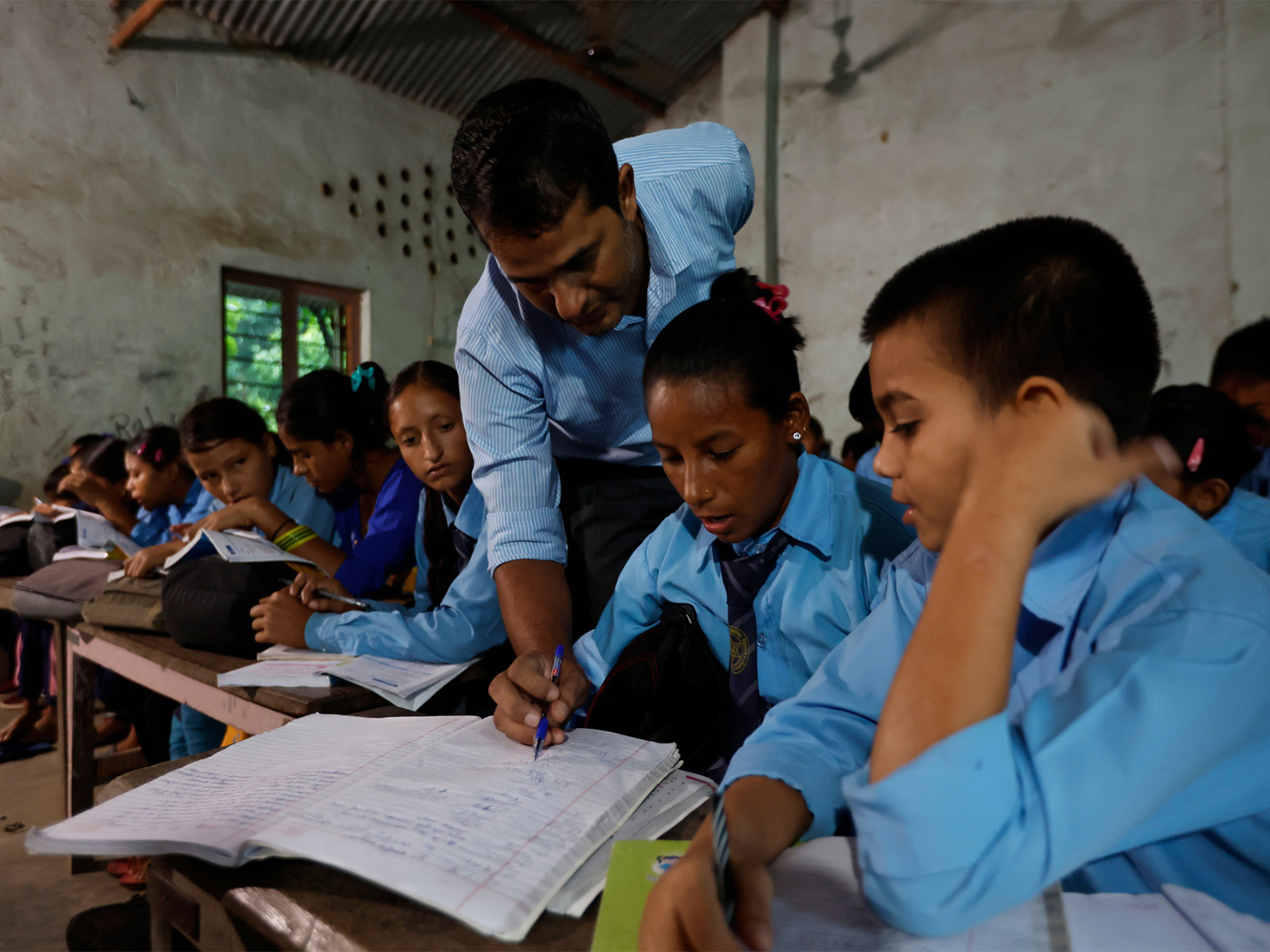
Nepal, which records nearly 700,000 students failing to appear for examinations annually, stands to benefit from the SCC initiated under the GCSC. Nepalese schools and universities--lacking awareness and centralised policies--had routinely denied accommodations for life-disrupting emergencies, even in internal examinations, unknowingly affecting nearly 700,000 students each year.
"Looking back, we believe such a policy should have existed much earlier. Still, we are grateful that this change has finally been made. At least now, other students will not be forced to sit for exams during such circumstances," Sabin Dangol told ANI, reacting to the policy change.
Led by youths, including high school students, the campaign conducted a structural review of Nepal's board and university assessment regulations and framed SCC as standards-preserving flexibility rather than grade inflation.
"I was preparing for competitive colleges abroad from the beginning of high school--maintaining high scores in exams, participating in every possible opportunity, engaging in research, creating passion projects, building leadership experience, and serving my community in every possible way. However, during the 12th board examinations, I was acutely ill with jaundice and, because Nepal had no medical accommodation policies at the time, was compelled to sit for the papers despite being medically unfit," said Aavash Subedi, founder and director of the GCSC.
"In Physics, my strongest subject, I was physically unable to complete the exam and had to submit it half-attempted, receiving a final grade of 'D+', significantly lowering my overall GPA and class ranking, affecting my competitive college applications, and constraining access to scholarships and post-secondary opportunities," Subedi told ANI.
"Upon further analysis, I came to know that Nepalese schools and universities--lacking awareness and central policies--were routinely denying accommodations for life-disrupting emergencies, even in internal examinations, unknowingly affecting nearly 700,000 students each year. It was this realisation that compelled me to initiate the Special Consideration Campaign, so no other student would have to endure what I did. With the support of the National Policy Forum and STARs Scholars Network, I was able to lobby the Nepalese Ministry of Education following a 1.5-year-long advocacy," he added.
The new policy defines eligibility criteria, documentation standards, deferrals and resits, alternative assessment mechanisms, and appeals and review processes.
Through direct government engagement between 2023 and 2024, the campaign involved the Ministry of Education, the Centre for Education and Human Resource Development (CEHRD), and the National Examination Board through formal channels.
"I often think that if this policy had existed back then, my life would have taken a very different path. I'm glad it has finally been enacted--at least other students won't have to go through what I did," Ramesh told ANI.
Although progress was stalled three times due to changes in government, the SCC was formally adopted by the Ministry of Education under the Special Consideration Policy despite repeated government collapses. The GCSC continued engaging with successive administrations to resume committee processes.
This marked Nepal as the first nation in South Asia to establish a national, institutionalised emergency-responsive assessment framework, with implementation underway and a legal foundation secured.
The lack of academic accommodation, a widely overlooked issue in education policy globally, is estimated to affect 286 million students annually, with projections reaching 1.6 billion over the next decade if left unaddressed.