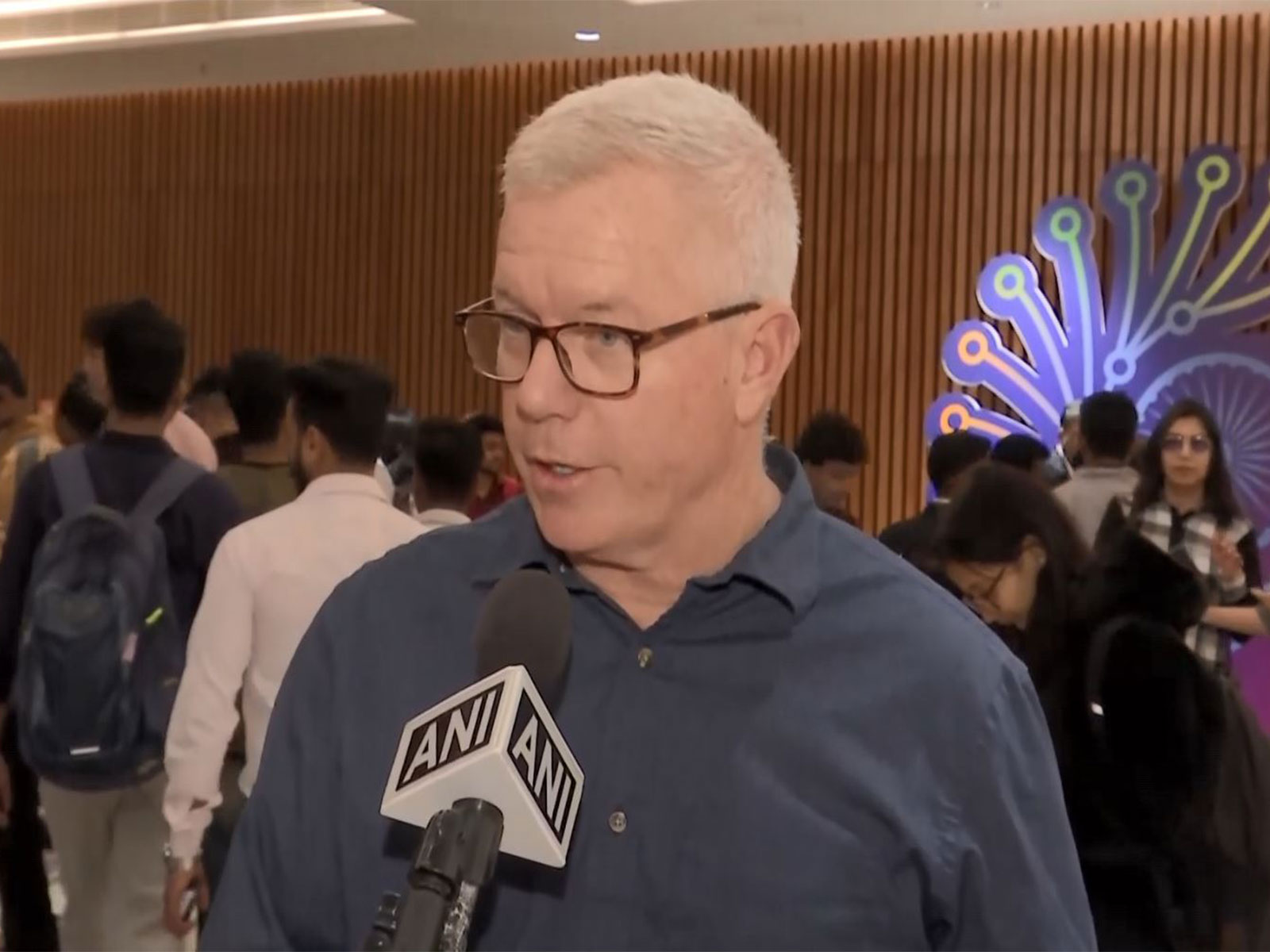
'Generative AI has made cybercrime cheaper and more effective': GCA Interim CEO Brian Cute warns of 'exponential' rise in attacks
Feb 17, 2026
New Delhi [India], February 17 : Highlighting the growing threats in the digital landscape, Brian Cute, the Interim Chief Executive Officer of the Global Cyber Alliance (GCA), has warned that the rise of Generative AI has made the "cost of doing business for cyber criminals cheaper and more effective."
Speaking to ANI on the sidelines of the India AI Impact Summit 2026 in the national capital, Cute detailed how his organisation, an NGO active since 2015, works with network operators to make the "Internet's infrastructure more secure" while simultaneously providing "cyber protection for end users."
These remarks take on particular significance as India becomes the first country from the Global South to host this global summit, bringing together leaders to deliberate on the transformative and sometimes perilous potential of AI.
The GCA chief noted a disturbing trend in the volume and sophistication of digital crimes, which serves as a critical backdrop to the summit's focus on responsible AI.
"On the end user side, the increase in phishing attacks and scam attacks has been exponential in terms of volume, in terms of effectiveness," he said.
He further pointed out that "scam centres in Southeast Asia are leveraging Gen AI to deliver more attacks globally" and are "becoming more effective using deep fake technology."
Addressing the technical evolution of these threats, Cute remarked, "You're seeing significant increases in click-through rates, so they're going to be more successful."
He cautioned that the situation is set to intensify as bad actors "start adopting agentic frameworks that'll be delivering even more effective attacks at higher volume." This warning resonates with the summit's core mission to shape an AI future that is inclusive and impactful yet remains securely guarded against such systemic risks.
To combat these challenges, the Global Cyber Alliance employs a two-pronged strategy that aligns with India's vision for a resilient digital ecosystem.
"We attack the problem from both the infrastructure side and the end user side," Cute explained. On the infrastructure front, the NGO works with network operators to address "routing security, malicious domain names." For individuals and smaller entities, the GCA provides "content, curriculum, and actual tools."
Cute emphasised the accessibility of their resources, stating that they "put together toolkits that have a number of free tools that have been vetted by our technical team as fit for purpose and secure."
These tools are designed so that "any small business, any NGO, any individual user could download into their devices or their networks to make them more operationally secure."
Cute stressed the necessity of adopting the very technology being used against the public to ensure sovereign safety.
"We collectively have a significant challenge coming towards us, and we need to leverage AI to address that challenge and defend people and defend the Internet," he said.
This call for a unified, AI-driven defence coincides with the broader objectives of the AI Impact Summit, which kicked off on Monday in New Delhi.
The event welcomes world leaders from across 20 countries, including French President Emmanuel Macron, Brazilian President Lula da Silva, Sri Lankan President Anura Kumara Dissanayake, and UN Secretary-General Antonio Gutteres.
Running from February 16 to 20, the summit showcases New Delhi's ambition to lead the Global South in defining a future for sovereign AI that is both responsible and impactful.