Global leaders hail India to be global powerhouse in Artificial Intelligence adoption, innovation
Feb 20, 2026
New Delhi [India], February 20 : Top executives from the world's leading technology firms reiterated that India was positioned to lead the global landscape in Artificial Intelligence due to its massive scale, talent pool, and digital infrastructure, during the India AI Impact Summit 2026.
The industry heads emphasised that the country was transitioning from a software hub to a primary engine for AI development and deployment.
Sam Altman, CEO of OpenAI, noted that the nation possesses the necessary elements for significant growth. "India has all the ingredients to be a full-stack AI leader," Altman said. He further remarked, "This will be one of the biggest markets for AI in the world, and I think India will have a huge amount of influence."
Echoing similar sentiments, Alexandr Wang, Meta's Chief AI Officer, highlighted the strategic importance of the region. "India is one of the most important countries for Meta, full stop. It's one of the few countries where we could scale personal superintelligence very fast," Wang stated.
Roy Jakobs, Global CEO of Royal Philips, observed, "Solutions built for India's scale and constraints have the potential to inform global models of care." He added that India was now "positioned to take a leadership role in developing Artificial Intelligence for the world".
Cristiano Amon, Global CEO and President of Qualcomm, supported this view, stating, "Not only does India have the ability to innovate domestically, but it also has the capability to provide technology to the rest of the world."
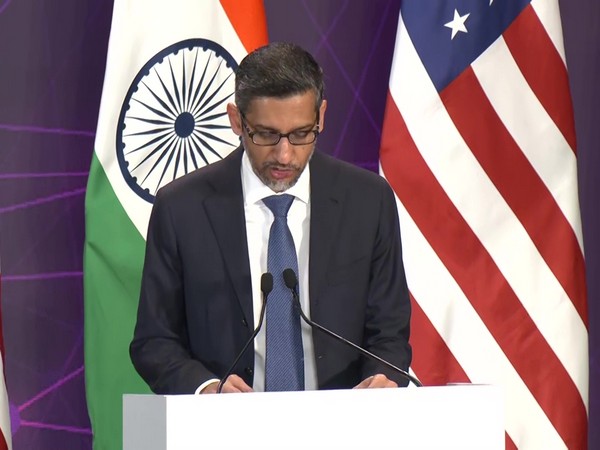
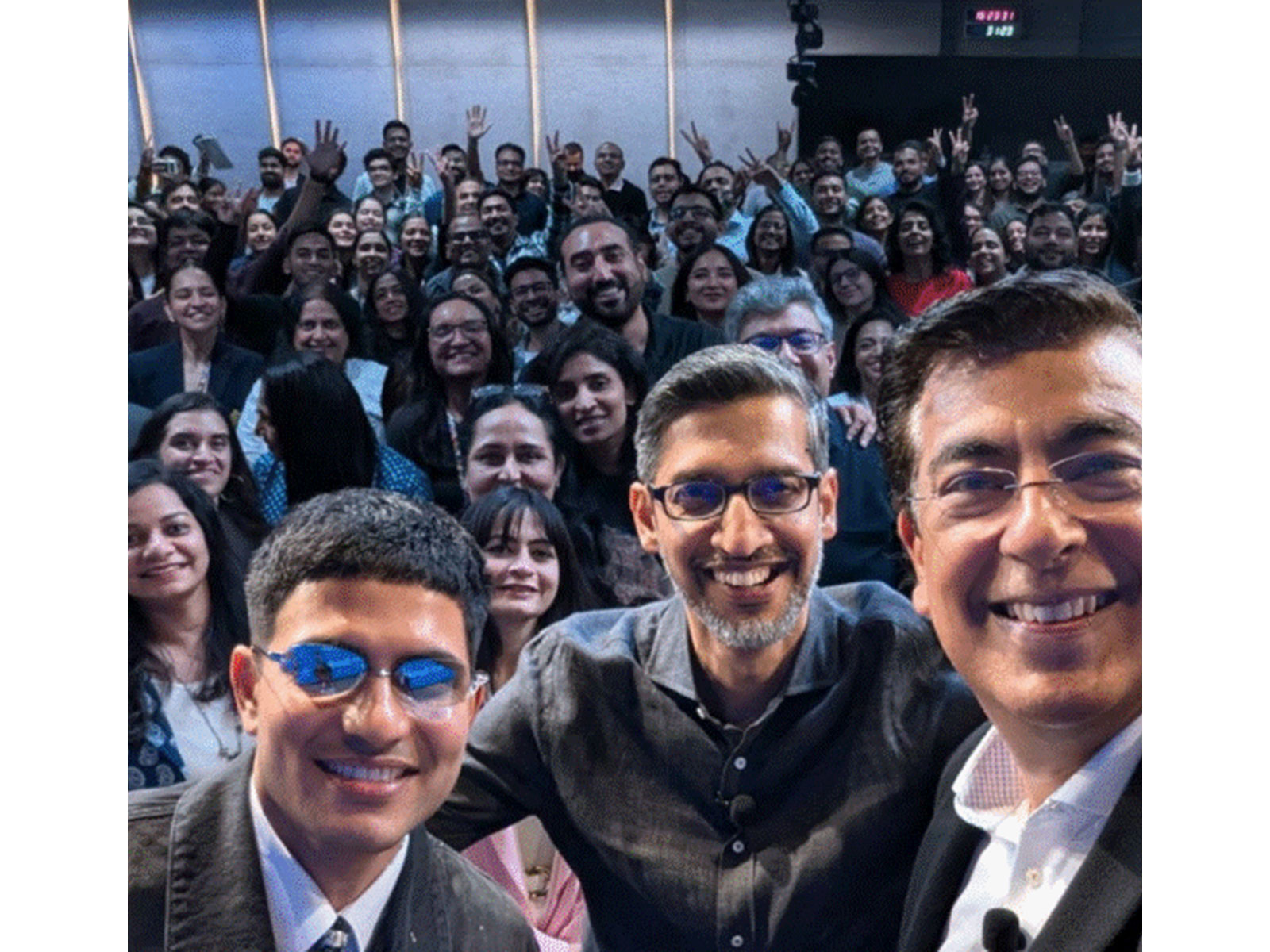
Google CEO Sundar Pichai reaffirmed his company's long-term interest in the Indian ecosystem. "I believe India is going to have an extraordinary trajectory with AI, and we want to be a partner," Pichai said. He emphasised that "Google has a full-stack commitment to India".
Demis Hassabis, CEO and Co-Founder of Google DeepMind, added, "I think India will be a powerhouse to AI."
Meanwhile, Microsoft President Brad Smith noted that the global community is looking toward India to "think together about what we can do to bring AI to more of the world, especially the global south."
The conversation also focused on the socio-economic impact of these technologies. Shantanu Narayen, Chairman and CEO of Adobe, predicted that the number of AI users in India will eventually surpass that of any other region. "The leadership that India can play, not just in what these models mean, how do you think about data, how do you think about privacy and security and trust," Narayen said.
Highlighting the educational aspect, Julie Sweet, Chair and CEO of Accenture, remarked, "India's doing a great job of embedding AI into the educational system, starting in primary school."
From a structural perspective, Nandan Nilekani, Co-founder and Patron of Networks for Humanity, compared the potential of AI to the open architecture of UPI. He stated that "open networks allow many actors and innovators to build applications at the edge using AI."
Kiran Mazumdar Shaw, Chairperson of Biocon Group, noted that India can "immediately create a global reference model when it comes to the use of AI with the kind of health data we are connecting."
"We see AI as the operating system and infrastructure that will enable that foundation for India's development," said Jaime Valles, Vice President, AWS Asia Pacific & Japan.
The summit concluded with a consensus that India's diversity, market size, and digital public infrastructure provide immense leverage in building differentiated artificial intelligence.
"Not only does India have the ability to innovate domestically, but it also has the capability to provide technology to the rest of the world," stated Cristiano Amon, Global CEO & President, Qualcomm.