Golden Crescent remains world's primary opiate trafficking hub: Report
Jul 06, 2026
By Rajnish Singh
New Delhi [India], July 6 The Afghanistan-Pakistan-Iran corridor or Golden Crescent corridor continues to serve as the world's primary opiate trafficking complex, with pre-ban opium stockpiles estimated at around 13,200 tonnes still sustaining global heroin supply chains despite restrictions on cultivation, an official assessment report said.
Beyond Pakistan, the report mentions, the Golden Crescent trafficking network splits into multiple routes.
It says the Balkan Route (primary overland corridor used by migrants and refugees travelling from the Middle East and Asia into the European Union), remains the principal pathway for heroin destined for Western Europe, passing through Iran and Turkey before entering European markets. Long regarded as Europe's dominant heroin corridor, the route is increasingly being used to transport methamphetamine alongside heroin, reflecting a growing convergence of drug trafficking networks and the diversification of illicit supply chains.
The Narcotics Control Bureau's (NCB's) Annual Report 2025 also mentions that drug trafficking routes are "neither static nor predictable, and they respond to enforcement pressure with geographic displacement, adapt to geopolitical events through rerouting, and exploit legitimate trade infrastructure."
It further highlighted that India sits at the intersection of every major trafficking pathway.
"The Afghanistan-Pakistan-Iran corridor remains the world's primary opiate trafficking complex. Pre- ban stockpiles of about 13,200 tonnes are currently sustaining these trafficking pipelines," it said.
For India, the report said, the Golden Triangle threat manifests most acutely through the North-Eastern land frontier. The Manipur corridor, through which the indian National Highway 102 passes, is the primary land entry point for both heroin and methamphetamine tablets.
"The South Asian arm flows through Pakistan into India via both the land frontier in Punjab and Rajasthan, and the maritime frontier along the Gujarat and Maharashtra coastlines, the latter a route of increasing concern given its use of fishing vessels and coastal craft that operate below the detection threshold of standard maritime surveillance," it further mentioned.
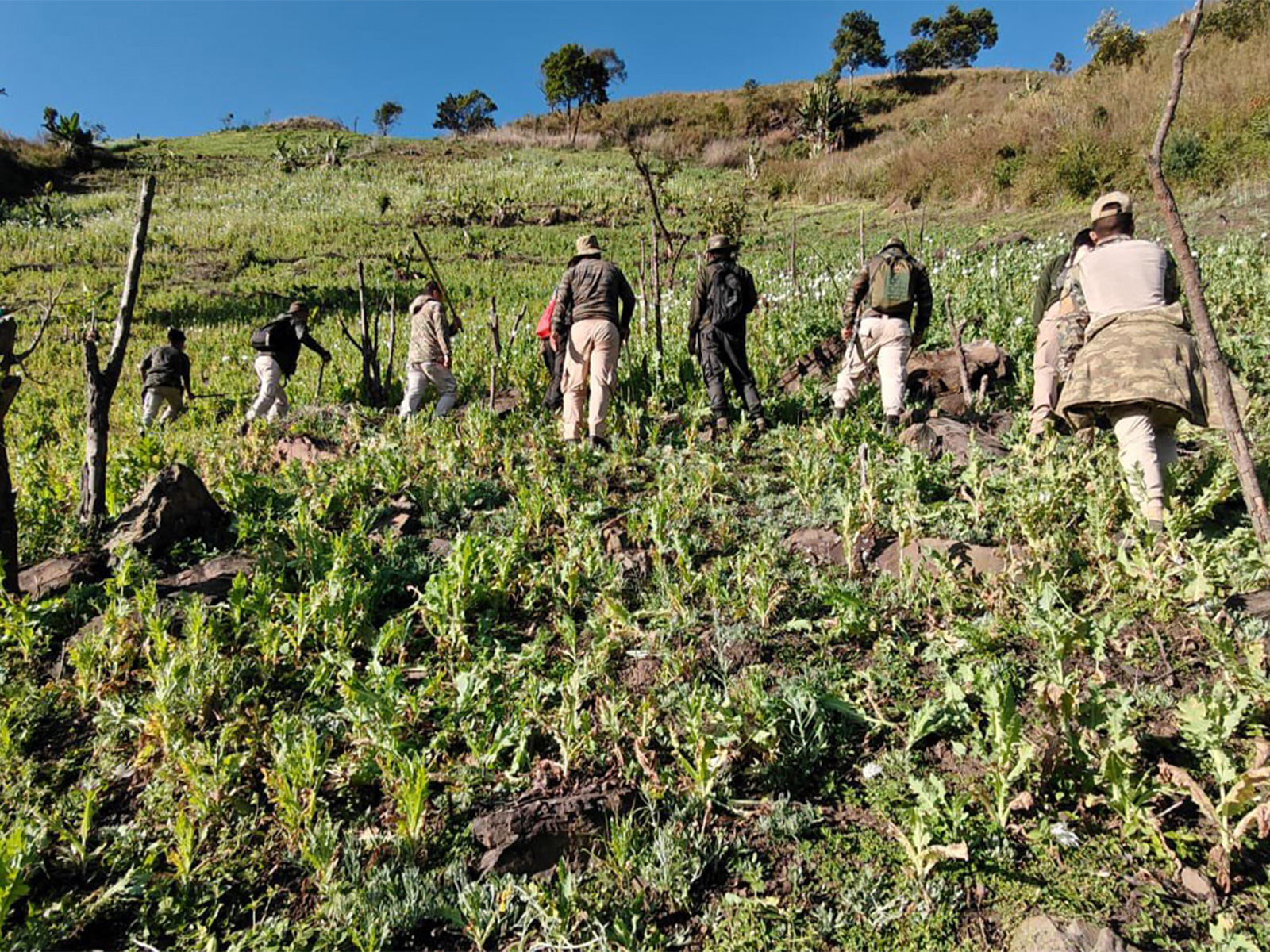
It later pointed out that Myanmar's Golden Triangle has expanded as both an opiate supplier and a dominant methamphetamine hub.
The convergence of opium cultivation with large-scale methamphetamine manufacturing, the report said, primarily in areas controlled by ethnic armed groups in Shan State, has created a poly-drug production complex that is simultaneously the largest source of Golden Triangle opiates and the dominant supply hub for South-East Asian methamphetamine markets.
It later mentioned that Cocaine's traditional trafficking architecture, Andean production, North American primary market, European secondary market via West African transit, is undergoing a significant geographic expansion.
"Syria's political transition in 2024, which has disrupted the Captagon manufacturing network centred on the Syrian Arab Republic, has created a trafficking uncertainty zone in the Near and Middle East that their suppliers, including emerging methamphetamine trafficking networks operating through the Gulf, are now exploiting," the report also reads.
The report later said the potential geographic relocation of Captagor production to Libya or Egypt would extend synthetic drug supply into North Africa in a manner that could create new maritime trafficking routes hrough the Mediterranean and potentially the Red Sea.
It also said that the rise of the Taliban in Afghanistan is another example of geopolitics leading to the rise and fall of drug production hubs and trafficking networks.