"Golden letters" or "Humiliating failure"?: India-US trade framework triggers political storm as Piyush Goyal assures farmers, Opposition cites Epstein files pressure
Feb 07, 2026
New Delhi [India], February 7 : Union Minister Piyush Goyal on Saturday placed farmers at the government's defence of the India-US interim trade agreement, declaring the day would be "etched on golden letters" in India's economic history.
Unveiling details of the framework, Goyal asserted with "absolute certainty" that Indian farmers, dairy producers, MSMEs, artisans and craftsmen would not suffer any loss from the deal, even as the Opposition mounted a multi-pronged attack accusing the government of compromising agriculture, energy security and national interest under the pressure from US after Prime Minister Narendra Modi's name appeared in the Epstein files.
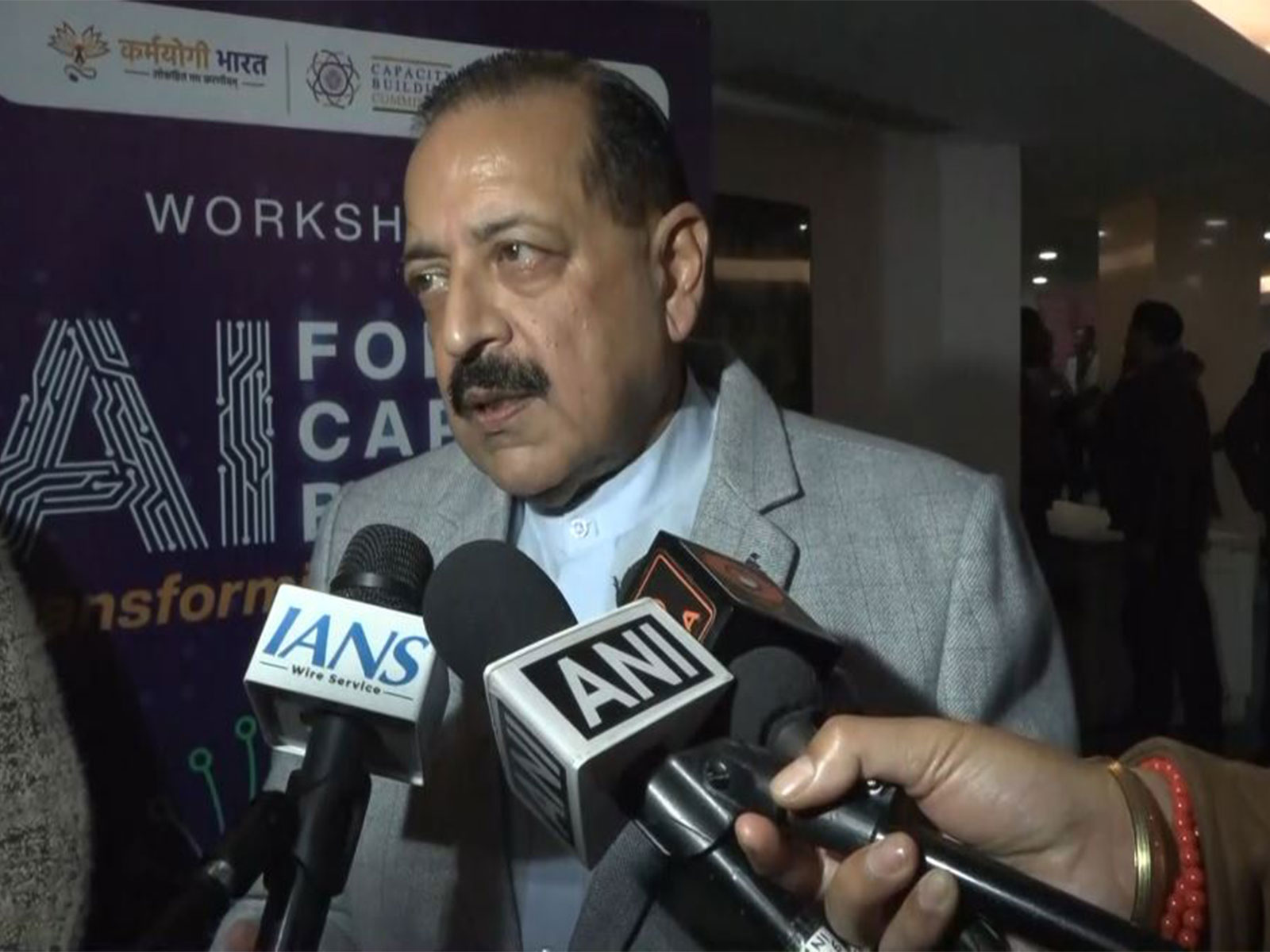
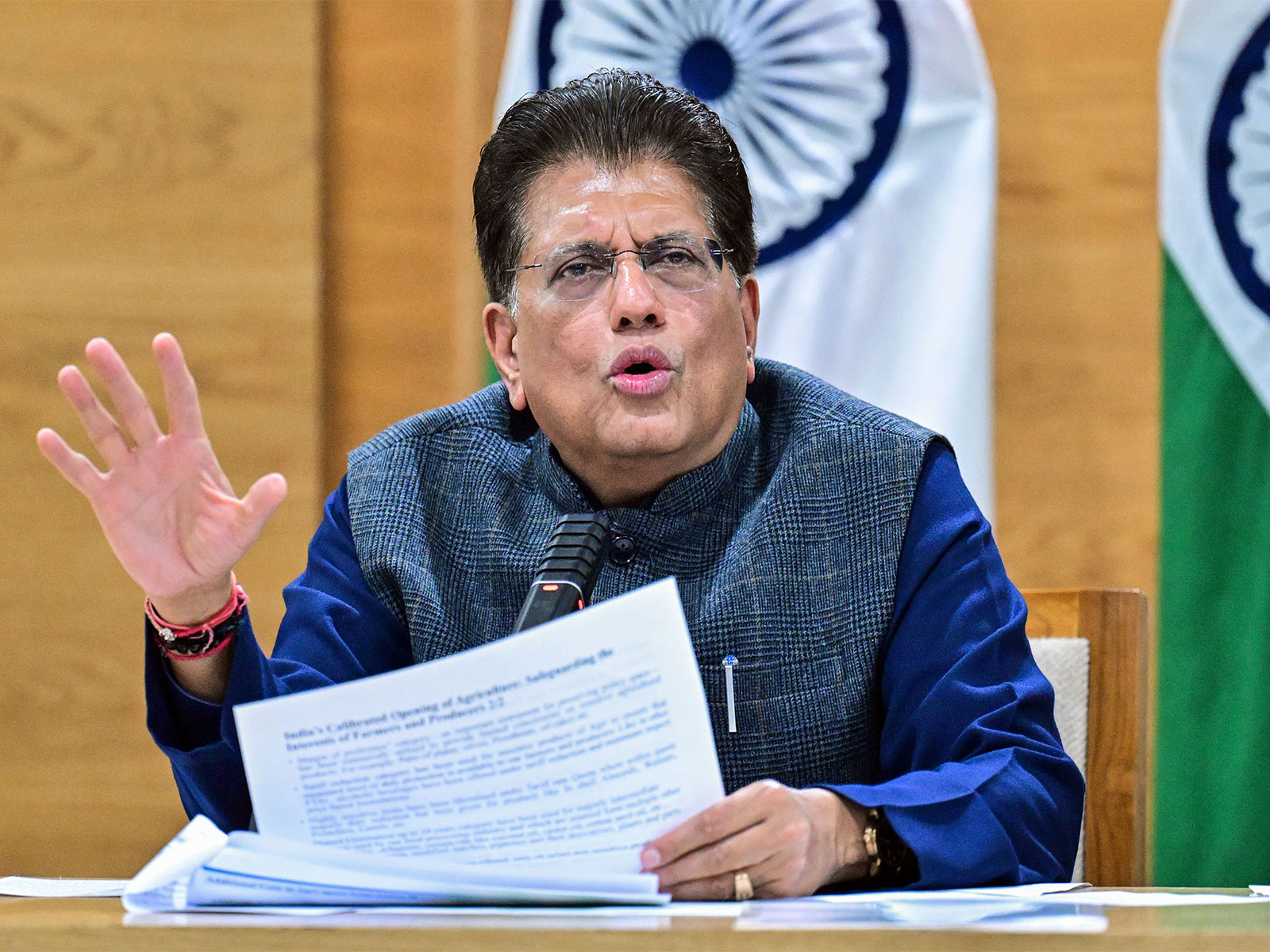
Addressing a press conference, Goyal said the agreement marked a crucial milestone in India's journey towards becoming a developed nation. He highlighted that reciprocal US tariffs on Indian goods have been reduced sharply to 18 per cent from 50 per cent, opening up a USD 30 trillion economy to Indian exporters.
"A USD 30 trillion economy is now open to our exporters. This joint statement gives every Indian citizen new hope, enthusiasm and fresh resolve," he said, adding that India would now enjoy lower tariffs than its competing neighbours.
Seeking to counter fears around agriculture, Goyal repeatedly stressed that sensitive farm sectors have been ring-fenced. "I can say categorically that the interests of farmers and the dairy sector have been protected," he said, citing explicit safeguards for dairy, fruits, vegetables, spices and key grains.
In a post on X, the minister said the deal would "safeguard the interests of domestic farmers, strengthen local agriculture through preferential access to such a large market, and mark another powerful step forward in the direction of a self-reliant India."
The government released detailed lists of products protected from US imports, including milk, cheese, butter, ghee, yoghurt and whey products, as well as staples such as wheat, rice, maize, millets, barley, oats and sorghum. A wide range of vegetables, frozen and preserved produce, and spices such as pepper, cumin, turmeric, ginger, coriander and mustard have also been excluded. Goyal underlined that genetically modified food would not be allowed into India under the agreement.
At the same time, he said Indian agricultural products would gain zero-duty access to the US market. "Agricultural products from Indian farmers will be exported to the United States at zero duty. At the same time, no tariff concessions have been granted for agricultural products from US farmers entering the Indian market," he said. According to the minister, this asymmetry would work decisively in India's favour.
Beyond agriculture, Goyal described the framework as a "big win" for exporters, citing zero-duty access for gems and diamonds, pharmaceuticals, aircraft parts, and smartphones. Reduced tariffs will also benefit textiles and apparel, leather and footwear, plastic and rubber goods, organic chemicals, home decor and artisanal products. "This is a big thrust to MSMEs employing a large number of women and youth," he said, projecting large-scale job creation as exports from labour-intensive sectors scale up.
The joint statement also outlines plans to deepen cooperation in technology, including graphics processing units and data centre equipment, a move Goyal said would accelerate India's digital and AI ecosystem. Improved access to advanced US technologies, he argued, would lower costs for Indian companies, attract investment and strengthen manufacturing partnerships.
As part of the broader framework, India has expressed its intention to purchase USD 500 billion worth of US energy products, aircraft and aircraft parts, precious metals, technology products and coking coal over the next five years. The United States will remove tariffs previously imposed on certain aircraft and aircraft parts from India. Both sides have also committed to addressing non-tariff barriers and strengthening supply chains as negotiations continue towards a comprehensive Bilateral Trade Agreement.
At the NDTV Profit Conclave 2026, Goyal rejected the argument that globalisation is in retreat. "Globalisation is neither retreating nor taking a back seat. On the contrary, global trade continues to grow despite all this turbulence," he said, citing expectations that India's combined goods and services trade would grow by five to six per cent this year.
Drawing a sharp contrast with UPA-era trade policy, Goyal criticised agreements signed with competing developing economies, arguing they undermined Indian industry. "They gave concessions to countries like Indonesia and Vietnam, effectively shooting themselves in the foot," he said.
In contrast, he maintained that the Modi government's focus has been on complementary developed markets. He also hinted at rapid progress on new deals, saying India is "at the verge of closing another Free Trade Agreement," with Canada, the GCC and Mercosur among active interlocutors.
The Congress led a fierce counter-offensive, with party media department chairman Pawan Khera calling the framework a "humiliating failure," alleging that India had opened its agricultural market under American pressure and halted imports of Russian oil. "Tariffs that were once 3 per cent are now 18 per cent, and sweets are being distributed," he said, warning of a widening trade deficit and further pressure on the rupee.
Congress MP Sukhdeo Bhagat claimed US President Donald Trump was dictating terms, while Jairam Ramesh alleged that the government had accepted US monitoring of India's Russian oil imports, calling it "extraordinary."
In a separate post on X, Ramesh said, "The Commerce Minister's defence of the India-US trade deal from the point of view of Indian farmers is too clever by half. First, the statement includes 'additional products' that are not specified. This is far too open-ended and shows something is being hidden. Second, the statement says that India has agreed to address longstanding barriers to trade in US food and agricultural products. What does this mean if not the removal of restrictions on GM crops and dairy products? Third, much is made of the claim that lower-priced US DDGS imports will benefit India. But DDGS is derived from GM corn. This is nothing but a backdoor entry. Fourth, lakhs of soyabean farmers in Maharashtra, MP, and Rajasthan will be hit by imports of DDGS and soyabean oil. There will undoubtedly be more concerns as fuller details are revealed."
Manish Tewari sought clarity on whether India had committed to stopping Russian oil purchases, a claim New Delhi has not officially confirmed. Congress MP Manickam Tagore termed the agreement a "trap deal," listing agricultural and animal products that could potentially be impacted. Randeep Singh Surjewala warned that cheaper US imports could further depress domestic prices, particularly in cotton.
The Aam Aadmi Party escalated its rhetoric. Rajya Sabha MP Sanjay Singh alleged that the government had "sold the country" under pressure, claiming the deal would devastate farmers who cannot compete with heavily subsidised American producers. He also alleged reduced Russian oil imports would impose an additional Rs 80,000 crore burden on consumers, and controversially linked the agreement to the Epstein files.
Singh, while speaking to ANI, said, "This agreement is a betrayal of the country. You have sold the country under the pressure that PM Modi's name came up in the Epstein files." AAP Delhi president Saurabh Bharadwaj said even weak governments in the past had not "surrendered" India's interests.
While several ministers rallied behind the agreement. Union Home Minister Amit Shah described it as a boost to India's "roaring growth engine," saying it would benefit farmers, MSMEs, entrepreneurs and youth.
"The Interim Trade Agreement entered into by India and the US gives another boost to India's roaring growth engine. Translating PM Shri @narendramodi Ji's vision of a Viksit Bharat into an inevitable reality, the agreement paves the way for a boom in Make in India, hardworking farmers, entrepreneurs, MSMEs, startup innovators, and fishermen, while creating employment for youth and women. Heartiest gratitude to Modi Ji for the landmark deal, and congratulations to every citizen of India", Shah said in a post on X.
Minister of State Jitin Prasada called it a landmark deal under Prime Minister Narendra Modi's leadership, insisting farmers are fully safeguarded. "Under the leadership of PM Narendra Modi, this is a landmark deal between India and the US. This is a historic deal. The 50 per cent tariff has been cut down to 18 per cent. Trade will thrive, industries of people will thrive, and employment opportunities will increase," he said.
Ramdas Athawale dismissed fears around agriculture, saying the deal would empower farmers. "This agreement will boost trade. In between, our relations with the US were strained, but for many years, they have been good. Whatever people are thinking about the farmers here, it's not like that. This deal will be used to empower the farmers here," he said.
Former foreign secretary and Rajya Sabha MP Harsh Vardhan Shringla said the agreement gives exporters clarity and a decisive advantage, especially when combined with recent progress on an EU trade deal. External Affairs Minister S Jaishankar said the framework would ensure greater market access and open new vistas for 'Make in India'.
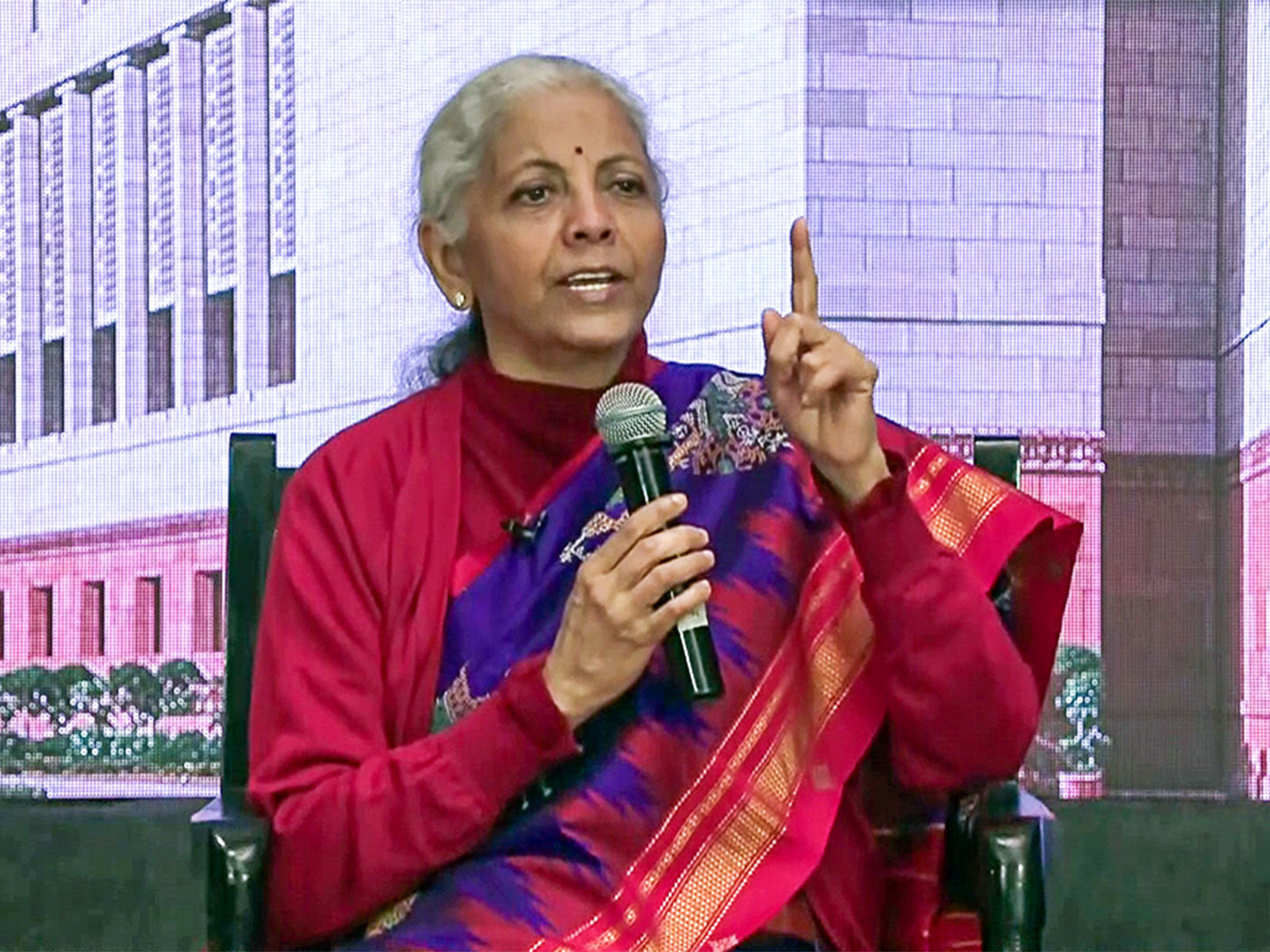
Union Finance Minister Nirmala Sitharaman also hailed the India-United States interim trade deal, expressing commitment to bilateral ties.
Sharing the joint statement issued by India and the US on X, Sitharaman said, "India-US issue a joint statement: announces 'a framework for an Interim Agreement regarding reciprocal and mutually beneficial trade (Interim Agreement).' We remain committed to negotiating the broader U.S.-India Bilateral Trade Agreement (BTA)."