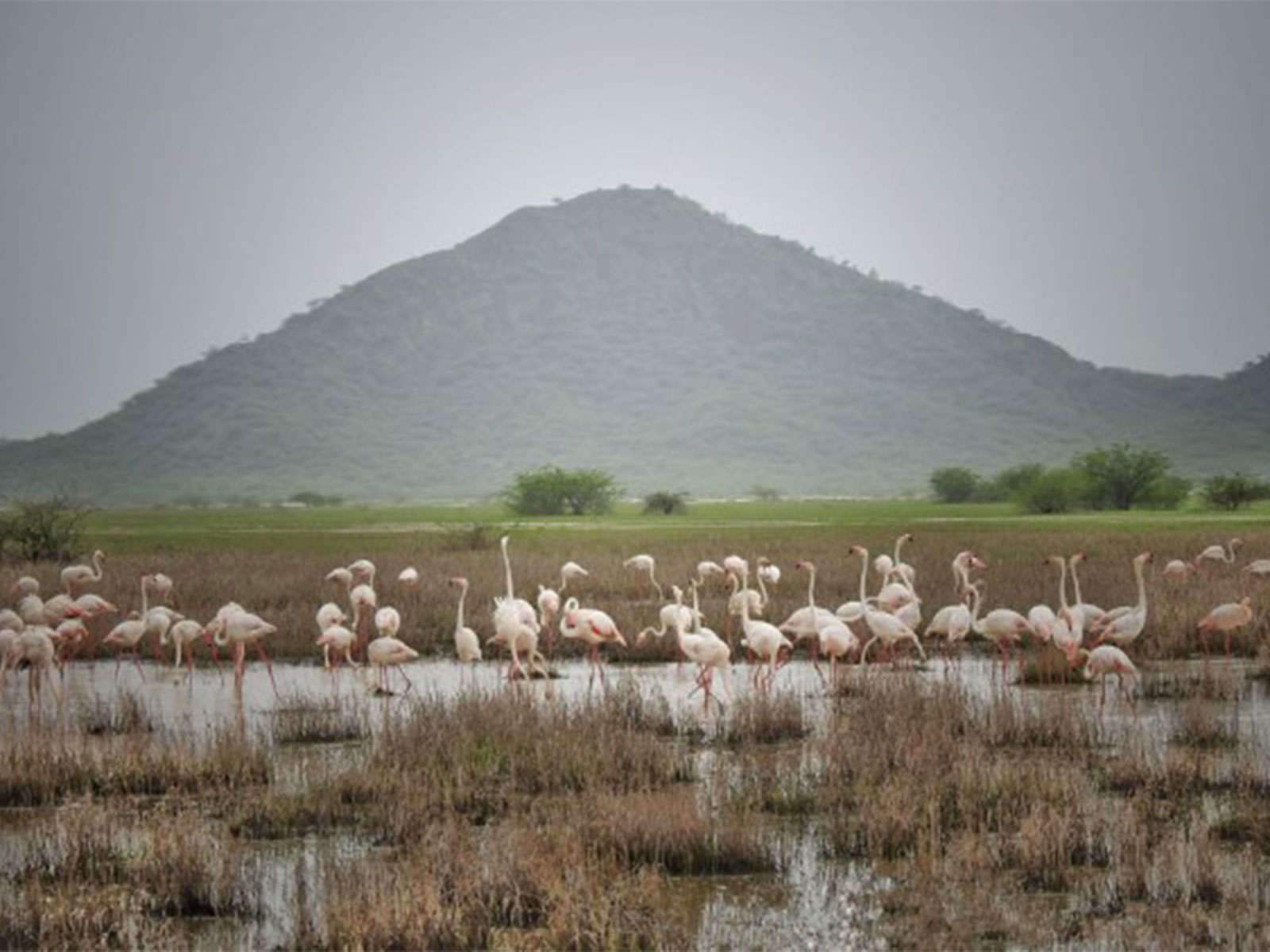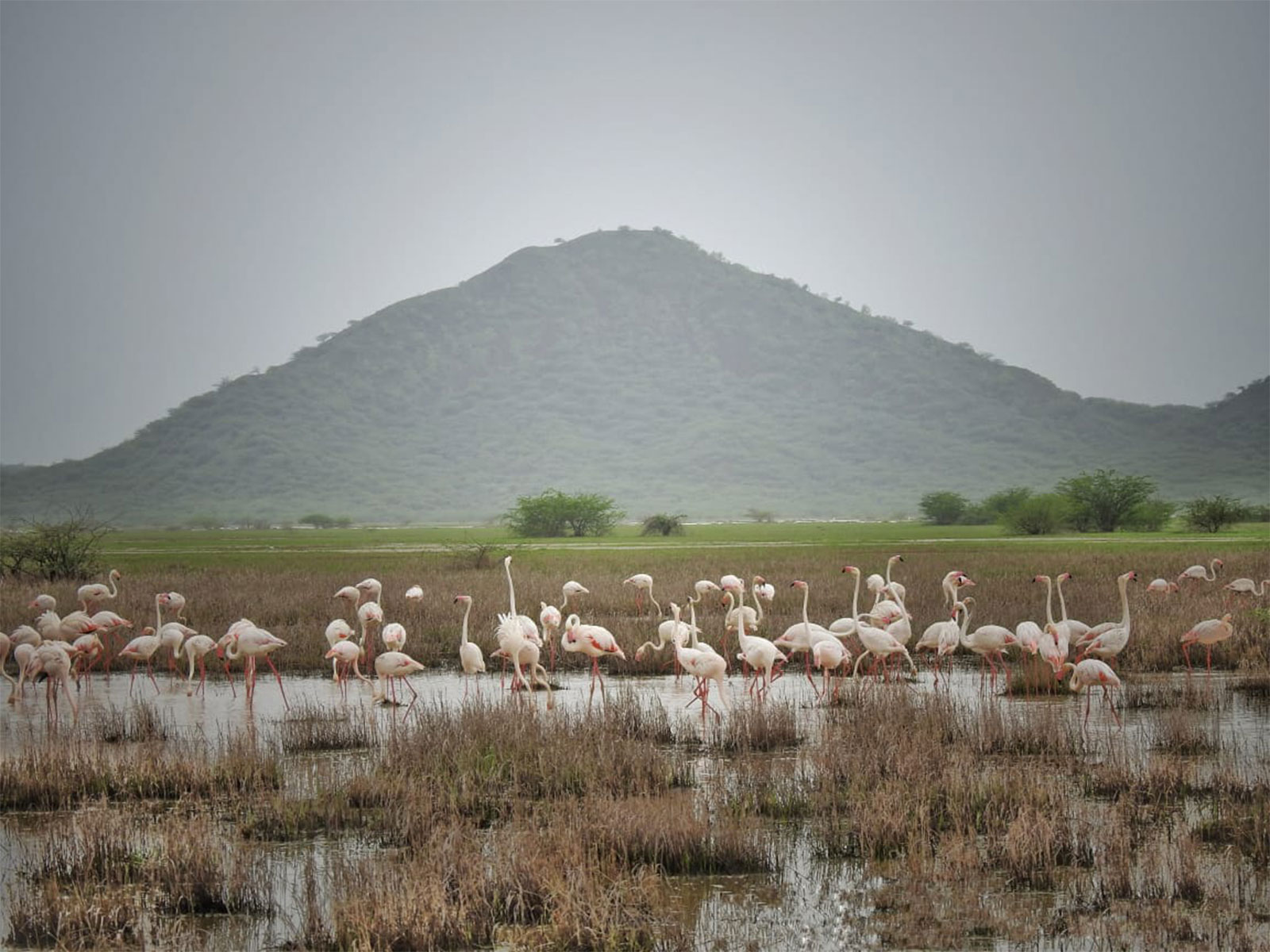
Gujarat: Foreign tourists from over 52 countries regularly visit Chhari-Dhandh to take glimpse of its rich diversity
Feb 06, 2026
Gandhinagar (Gujarat) [India], February 6 : Prime Minister Narendra Modi's early conservation vision for Chhari-Dhandh, a unique wetland ecosystem in Gujarat's Kachchh district, has positioned it among globally significant ecological sites.
The Chhari-Dhandh Wetland Conservation Reserve was officially designated as a Ramsar Site (Wetland of International Importance) on January 31, 2026, marking a major milestone in India's wetland conservation journey.
On Friday, on behalf of the Forest Department, Forest and Environment Minister Arjun Modhwadia presented the certificate of this global Ramsar Site status to Chief Minister Bhupendra Patel in Gandhinagar. CM congratulated the Minister and the entire Forest Department team on this significant achievement for Gujarat. Notably, Chhari-Dhandh has become Gujarat's fifth and Kutch's first wetland of international importance.
Chhari-Dhandh, a rare habitat lying at the ecological intersection of desert and grassland, attracts thousands of migratory birds every year, including the globally significant Grey Hypocolius (Hypocolius ampelinus). The wetland was declared Gujarat's first Conservation Reserve in 2008, when Narendra Modi was serving as the state's Chief Minister, under the provisions of the Wildlife (Protection) Act, 1972.
The decision of the then Chief Minister Narendra Modi reflected a long-term ecological foresight, recognising the wetland's potential role in biodiversity conservation, climate resilience, and sustainable habitat management in the arid landscape of Kachchh. Chhari-Dhandh has since become a preferred destination for bird lovers, researchers, and ornithologists worldwide.
For global tour operators and ornithologists involved in organising bird-watching trails, over 80 per cent of visitors to the reserve are foreign tourists, primarily from the Nordic countries, the United States, and the United Kingdom. Visitors from over 52 countries have so far come to see this unique wetland.
Ramsar recognition has further reinforced Chhari-Dhandh's standing on the global conservation map, highlighting India's commitment to protecting ecologically sensitive wetlands through science-based governance and international cooperation.
Ecologists consider Chhari-Dhandh one of Asia's most important wetlands for migratory birds, supporting large congregations of waterfowl. Ornithological surveys have documented over 50,000 waterbirds in the Banni wetlands, including reports of more than 40,000 cranes at a single site.
Approximately 283 bird species have been recorded in and around Chhari-Dhandh, including 11 globally threatened and 9 Near Threatened species, underscoring its high conservation value.
Based on its biological richness, the Gujarat government had notified Chhari-Dhandh as a Conservation Reserve in August 2008, the first such designation in the state. Since then, sustained conservation interventions--ranging from habitat protection and monitoring to community participation--have helped preserve the wetland's ecological integrity.
Chhari-Dhandh today records the highest bird diversity in Kachchh district, with 187 bird species, accounting for more than 35 per cent of the state's avifaunal diversity. In April 2025 alone, an estimated 500-600 Grey Hypocolius were sighted in the reserve.
Spreading over 22,700 hectares and encompassing 12 villages, Chhari-Dhandh lies at the confluence of three major ecosystems--tropical thorn forest, Banni grassland, and the Little Rann landscape. This unique ecological juxtaposition supports diverse habitat types and sustains rich floral and faunal assemblages crucial for maintaining ecological balance in the region.
Chhari-Dhandh Conservation Reserve in Gujarat's Kachchh was designated a Ramsar Site for its unique desert wetland ecosystem and exceptional ecological importance at the international level.
A Ramsar Site refers to a wetland of global significance recognised under the Ramsar Convention on Wetlands--an intergovernmental treaty aimed at the conservation and sustainable use of wetlands. The convention was adopted on February 2, 1971, in Ramsar, Iran, and came into force in 1975, making it the world's first international environmental agreement focused on a specific ecosystem.
For a wetland to qualify as a Ramsar Site, it must meet at least one of nine internationally prescribed criteria, broadly classified under two categories: representative, rare or unique wetland types, and biodiversity-based criteria.
Chhari-Dhandh met multiple Ramsar criteria due to its rare desert wetland character, high biodiversity, and critical role as a migratory bird habitat along the Central Asian Flyway. The wetland supports more than 180 bird species, including resident, winter, and passage migrants, making it one of the most important avian habitats in the region.
The site serves as a vital wintering and stopover ground, providing feeding, resting, and shelter to migratory birds during their long journeys. Chhari-Dhandh is internationally renowned for hosting the Grey Hypocolius (Hypocolius ampelinus), a rare and globally significant winter migrant, along with several other threatened and regionally important species.
The Ramsar designation recognises Chhari-Dhandh's ecological value and strengthens efforts for its long-term conservation and sustainable management.
The Central Asian Flyway (CAF) is a major migratory route linking the Arctic and Central Asia with the Indian subcontinent. The Central Asian Flyway is a major migration route used by birds across Asia. Gujarat lies at the southern end of this flyway, making it a crucial wintering and stopover region for migratory birds. Wetlands of the Kachchh region--including Chhari-Dhandh Conservation Reserve-provide vital feeding and resting habitats.
Every winter, species such as flamingos, pelicans, cranes, ducks, waders and the rare Grey Hypocolius arrive here from Central Asia, Iran and Siberia. The health of these wetlands directly affects bird populations across continents, making wetland conservation in Kutch a matter of global ecological importance.