Guns and butter can complement each other if used smartly: CDS Gen Anil Chauhan on defence budget allocation
Jan 09, 2026
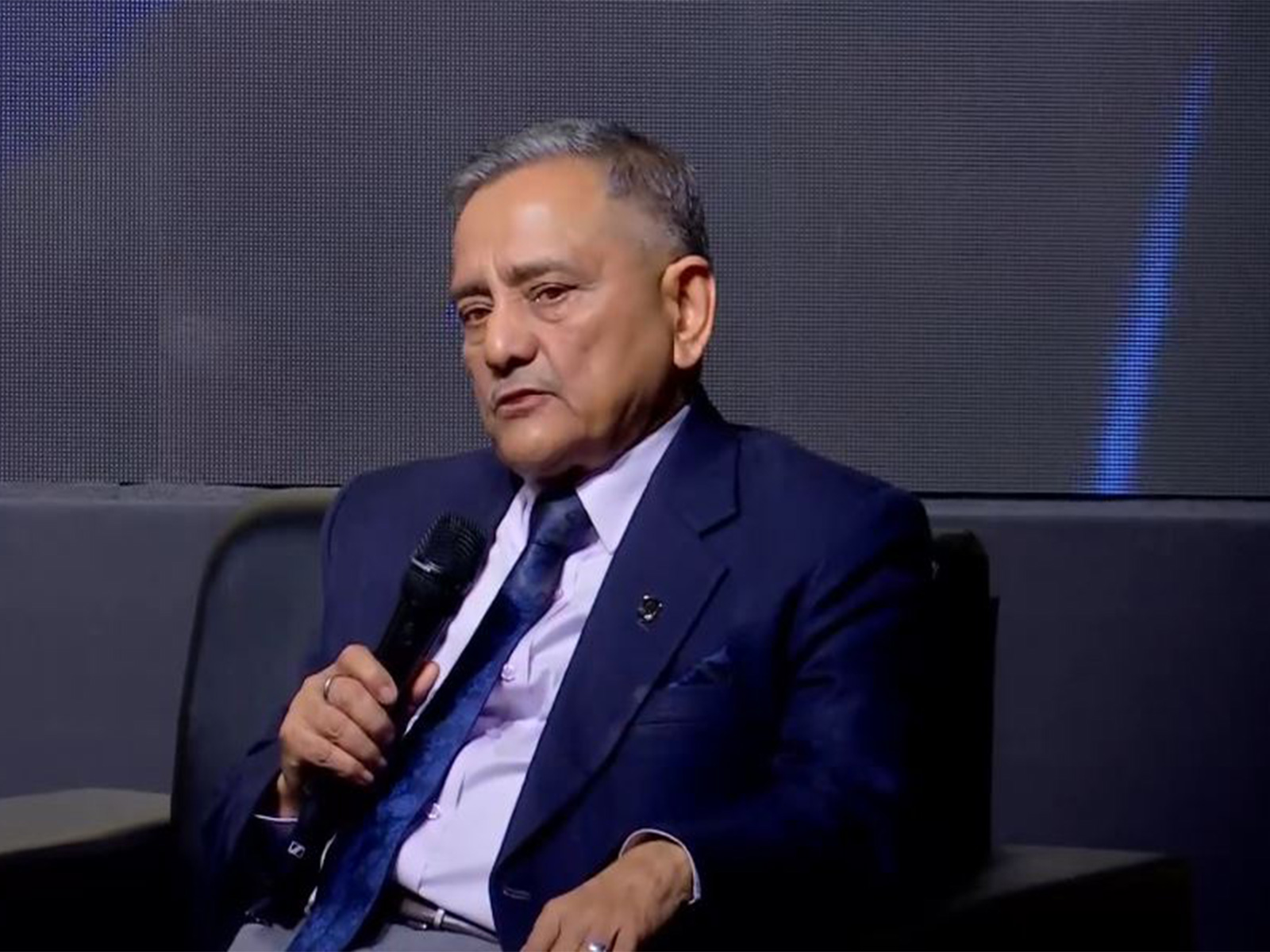
Pune (Maharashtra) [India], January 10 : Speaking on the long-standing debate between economic welfare and defence expenditure, Chief of Defence Staff (CDS) General Anil Chauhan on Friday said the long-standing debate between "guns and butter" can be resolved if resources are deployed smartly, with defence procurement contributing directly to national revenue, employment and industrialisation.
Addressing the Pune Public Policy Festival, regarding the budget allocation, CDS General said, "There has always been a debate between guns and butter. But if we play smartly, one can contribute to the other. The gun can contribute to the butter. Over the past three years, most of our procurements have been from domestic sources, once we do that, we're paying 18% GST, which goes back to the government funds. It helps generate employment and revenue through industrialisation. So, this is a change of strategy... that is one thing which we must realise."
On the current defence budget and future allocations, the CDS said that sustained economic growth could ensure smooth implementation of modernisation plans. "Currently, the budget allocation is just under 2%. My hypothesis is that if the GDP continues to grow at about 8%, the inflation rate remains low, and we see a 10% year-on-year increase, the present modernisation plans would go well, except for some high-ticket purchases... maybe a spike will be required immediately. Thereafter, it should stabilise," he said.
Elaborating on the modernisation roadmap for all three armed forces, General Chauhan said the nature of warfare is undergoing a fundamental transformation. "About 2-3 years back, when we would say that the armed forces must have a mix of obsolete, contemporary and futuristic niche equipment. I am considering classifying it differently. I am saying that today we are in revolutions in military affairs. The first revolution in military affairs was manoeuvre warfare, the second was net-centric warfare, and right now, we are at the cusp of the third revolution in military affairs, convergence, an intelligent, data-centric kind of warfare," he said.
He further detailed the revised approach to capability development. "We could have classified our equipment and modernisation by saying that 60% would be for warfare, support, and manoeuvre warfare, 30% for supporting net-centric warfare, and 10% for supporting cognitive, intelligent, the non-nuclear static deterrent, that kind of warfare," he said.
The CDS General said procurement processes are also being overhauled. "We are changing our procurement plans so that they are not being derived from the ICDP (Integrated Capability Development Plan), which is a different method than what we were following earlier. We are also involving a large number of ORSA (Operational Research and Scientific Analysis) studies to determine the right equipment in terms of numbers and quantities for the requirements," he added.
Speaking on his role during Operation Sindoor and in warfare campaigns, General Chauhan clarified the mandate of the CDS post. "The government sanction, which created this post of CDS in our case, says that the CDS will exercise no military command over the three service chiefs. So, in the operative world, I will not exercise military command. That doesn't mean that I don't have an operational role," he said.
Explaining further, he said, "I derive an operational role from the Chiefs of Staff Committee. As in Operation Sindoor, most decisions were taken by the Chiefs of Staff Committee, for which I am the permanent chairman. So here, there's an operational role for me. I also have a direct operational role in new domains of warfare. It may not be land, maritime or air, but it's space, cyber, cognitive, and electromagnetic domains. These are the new domains because they are directly under headquarters ideas."
On the possibility of a three-front war threat involving Pakistan, China and Turkey, the CDS said the situation needs to be assessed with nuance. "Of these three countries, one doesn't share a border with us: Turkey... There is no formal military alliance or treaty between them. Coming to each other's aid is a different kind of aid, we must take that into account in our particular calculus," he said.
Referring to operational preparedness, General Chauhan added, "In Operation Sindoor, we mobilise some assets, etc., that were deployed on the northern borders and move them to the western borders. These contingency plans are part of operational plans. That's how we take care of these fronts."
On emerging technological cooperation among adversaries, he said cognisance remains key. "Regarding technological cooperation between the two countries... we need to constantly look at what kinds of technologies they are acquiring and how they will affect warfare in the future. So we are cognizant of that. We're taking cognisance of whatever is happening. Accordingly, we are taking measures."