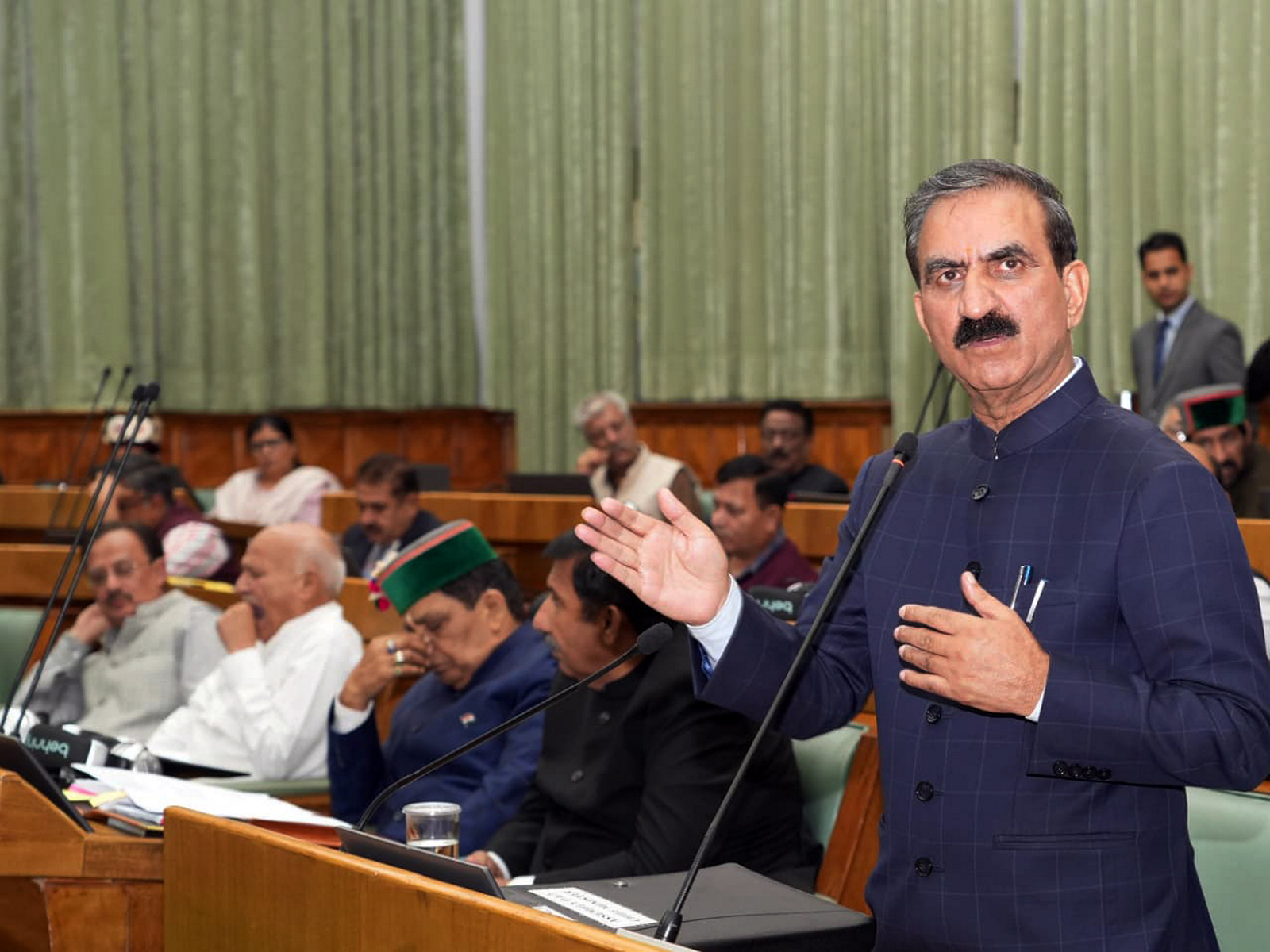
Himachal CM Sukhvinder Singh Sukhu approves State Innovation Policy, Rs 2-cr fund for technical education
Jul 05, 2026
Shimla (Himachal Pradesh) [India], July 5 : Himachal Pradesh government has approved the state innovation policy for technical Education institutions along with the state innovation fund implementation guidelines (2026-2028) to foster innovation, entrepreneurship and startup culture across technical education institutions in the state.
According to the release, the policy aims to transform the state into an emerging hub of innovation by empowering students, faculty members and startups to convert innovative ideas into practical, technology-driven and market-ready solutions.
It provides a comprehensive framework for prototype development, startup incubation, seed funding, intellectual property management, capacity building and industry collaboration, while ensuring transparency, accountability and measurable outcomes, as stated in the release.
To support the implementation of the policy, the Government has created a State Innovation Fund with a total outlay of Rs. 2 crore for the period 2026-2028.
The fund would provide micro-grants for prototype development, seed funding for promising startups, financial assistance for strengthening incubation centres, innovation competitions, boot camps, faculty and student training programmes and industry- and CSR-supported co-funding initiatives. The policy also lays special emphasis on inclusive innovation by encouraging greater participation of women, scheduled castes, scheduled tribes and rural youth in the technical education and startup ecosystem, as per the release.
The Director, Technical Education, Vocational and Industrial Training, would serve as the nodal officer for the implementation of the policy. Institutional-level Cluster Innovation Committees and a State Innovation Advisory Group would oversee project selection, fund utilisation, and overall implementation to ensure effective and time-bound execution.
Chief Minister Thakur Sukhvinder Singh Sukhu said that the policy would establish a uniform framework for intellectual property ownership and revenue sharing. He said that innovations developed under the programme would remain the property of the innovators, while educational institutions would retain non-exclusive rights for academic use.
He further said that the initiative would accelerate innovation-led economic growth, generate employment opportunities, strengthen the startup ecosystem and encourage greater participation of youth from all sections of society.
He said that the government would undertake a comprehensive review of the policy after two years, assessing key outcomes such as prototypes developed, startups established, intellectual property registrations, employment generated and external investment mobilised.