Himachal Pradesh steps up statewide offensive against Chitta, calls fight 'people's movement'
Dec 18, 2025
Shimla (Himachal Pradesh) [India], December 18 : Projecting a united front of political will, professional policing and citizen participation, Himachal Pradesh on Thursday asserted that it has emerged as a key State in India's fight against chitta (heroin) and other narcotics, treating the menace not merely as a law-and-order issue but as a social and security crisis.
In a detailed public awareness release, the State government said that under the leadership of Himachal Pradesh CM Sukhvinder Singh Sukhu and the professional stewardship of Director General of Police Ashok Tiwari, IPS, Himachal Pradesh has adopted a zero-tolerance, multi-layered strategy aligned with the Narcotic Drugs and Psychotropic Substances (NDPS) Act, 1985 and the national framework led by the Narcotics Control Bureau (NCB).
Officials said chitta, a highly addictive form of heroin, has emerged as a serious threat to youth, fuelling organised crime, illegal financial networks and social instability. Under the NDPS Act, possession of 250 grams or more of heroin qualifies as a commercial quantity offence, attracting a minimum of 10 years' rigorous imprisonment, stringent bail provisions, heavy fines and confiscation of illegal assets.
Acknowledging its geographical vulnerability as a transit and consumption corridor due to inter-state connectivity, mountainous terrain and tourism-related mobility, Himachal CM said it has focused on prevention through preparedness rather than reactive policing. "Himachal must never become a safe passage, shelter or market for narcotics," the release stated.
The Chief Minister has consistently described the anti-drug campaign as a moral responsibility of the state towards its youth, backing enforcement with large-scale awareness drives, walkathons and incentives for public participation.
Under DGP Ashok Tiwari, IPS, police operations have prioritised high-quality investigations, dismantling of drug networks through financial operations, preventive detention of habitual offenders, inter-state intelligence sharing, and strict legal compliance to ensure convictions. "Drug trafficking cannot be defeated by arrests alone; it must be dismantled economically, legally and socially," officials said.
The state's enforcement model includes district-level NDPS cells, specially trained investigators, scientific evidence handling, inter-state coordination with Punjab, Haryana, Jammu and Kashmir, Uttarakhand and central agencies such as the NCB, Customs and the BSF. Financial action under Sections 68A to 68Z of the NDPS Act is used to attach properties and disrupt traffickers' economic backbone, while preventive detention under the PIT-NDPS Act targets repeat offenders.
To encourage citizen participation, the government has announced a graded reward scheme for informers, ranging from Rs 10,000 for small recoveries to Rs 5 lakh for seizures above one kilogram, with higher rewards for information on organised gangs. Authorities assured that informer identities are strictly protected and that credible public input has already led to major seizures and arrests.
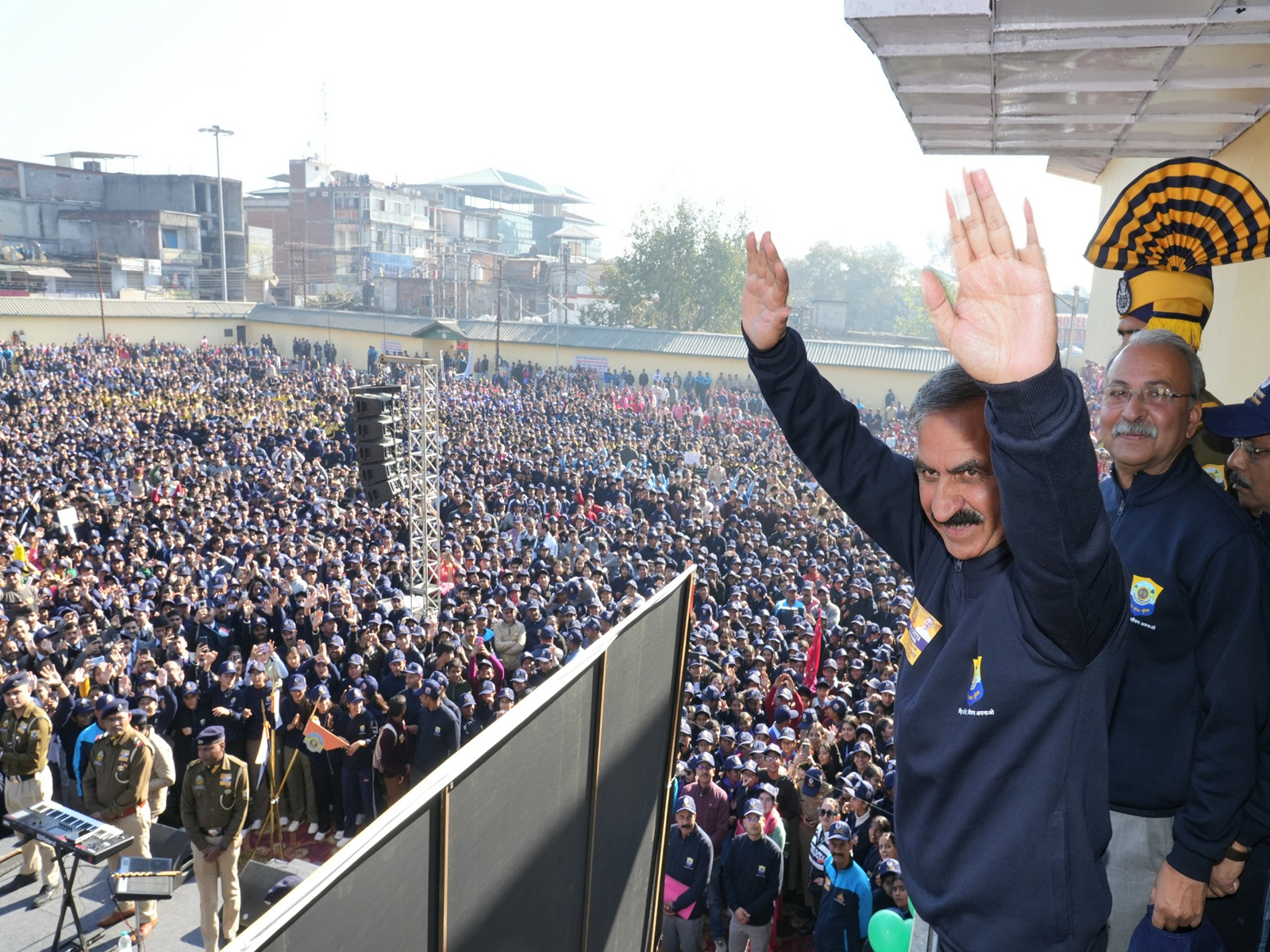
Awareness has also been raised on the streets through statewide anti-chitta walkathons held in Shimla on November 15, Dharamshala on November 25, and Hamirpur on December 16, with another scheduled in Bilaspur on December 26. Students, NGOs, teachers, parents, police personnel and volunteers participated, spreading the message of prevention, legal awareness and rehabilitation.
While identifying certain inter-State corridors and urban centres as high-risk zones for awareness and vigilance, officials reiterated that Himachal Pradesh is not a production zone. They stressed that the law differentiates clearly between traffickers, who face strict punishment, and consumers, for whom treatment and rehabilitation are encouraged.
Senior officials said Himachal Pradesh's approach, integrating governance, policing, law and society, is increasingly being viewed as a replicable model at the national level.
Addressing citizens, DGP Tiwari said chitta poses a direct threat to families and the State's future. "Policing alone is not enough. Public awareness and citizen participation are crucial. If you see or know something, speak up. Your identity will remain protected," he said.
Additional Superintendent of Police and Social Media Coordinator Narvir Singh Rathour said the anti-drug campaign has become a people's movement through walkathons, digital outreach and community engagement. "Citizens are our strongest allies. A drug-free Himachal is our shared responsibility," he added.