Himachal: Rescued Sambar from River Tirthan dies during treatment
Feb 04, 2026
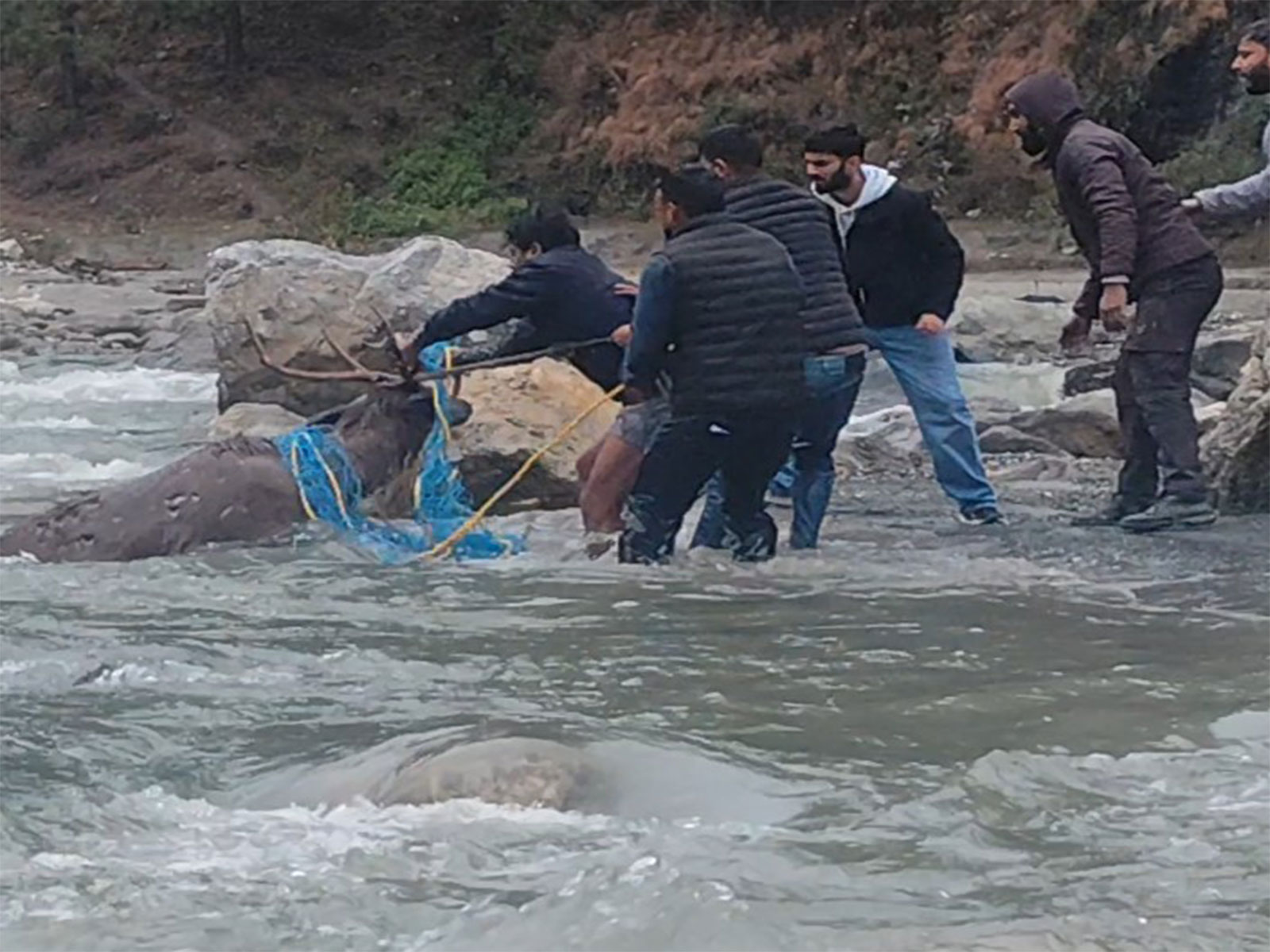
Manali (Himachal Pradesh) [India], February 4 : A Sambar, a large deer native to South and Southeast Asia, was injured and trapped in the Tirthan River on the border between the Banjar sub-division of Kullu district and the Bali Chowki area in Himachal Pradesh.
The animal was rescued by a forest department team. It is the largest deer species found on the Indian subcontinent and is widely recognised for its robust build and impressive antlers.
The injured Sambar died around 11:15 PM during treatment at the Banjar veterinary hospital, after which the forest department cremated it on Wednesday afternoon. The post-mortem report also revealed that the animal was injured.
However, it is yet to be ascertained whether the animal died due to injury or if any poacher was involved. The forest department is gathering the information.
According to the information received, villagers informed the forest department last evening that a Sambar was lying injured on the banks of the Tirthan River. Upon receiving the information, the forest department team arrived at the site with a tranquilliser gun. The Sambar got scared on seeing the team.
During this, the Sambar also tried to run away. However, it was already injured, which prevented it from running very far. The forest department managed to control it with great difficulty and admitted it to the animal husbandry department for treatment.
However, due to the severity of the injuries, it died last night. Banjar Forest Department DFO Manoj Kumar said a committee had been formed to ascertain the cause of death.
A post-mortem of the Sambar was also conducted in the presence of the committee members. This confirmed that it had sustained injuries. However, some villagers have also claimed that a smaller Sambar was present with it, and it is now being searched for by local people and the forest department.
The sambar is currently listed as Vulnerable on the IUCN Red List. Their population is declining due to habitat loss, poaching, and industrial exploitation.