How long does CM Stalin think he, his associates can escape? EPS after probe agency ED accuses TN minister of corruption
Dec 08, 2025
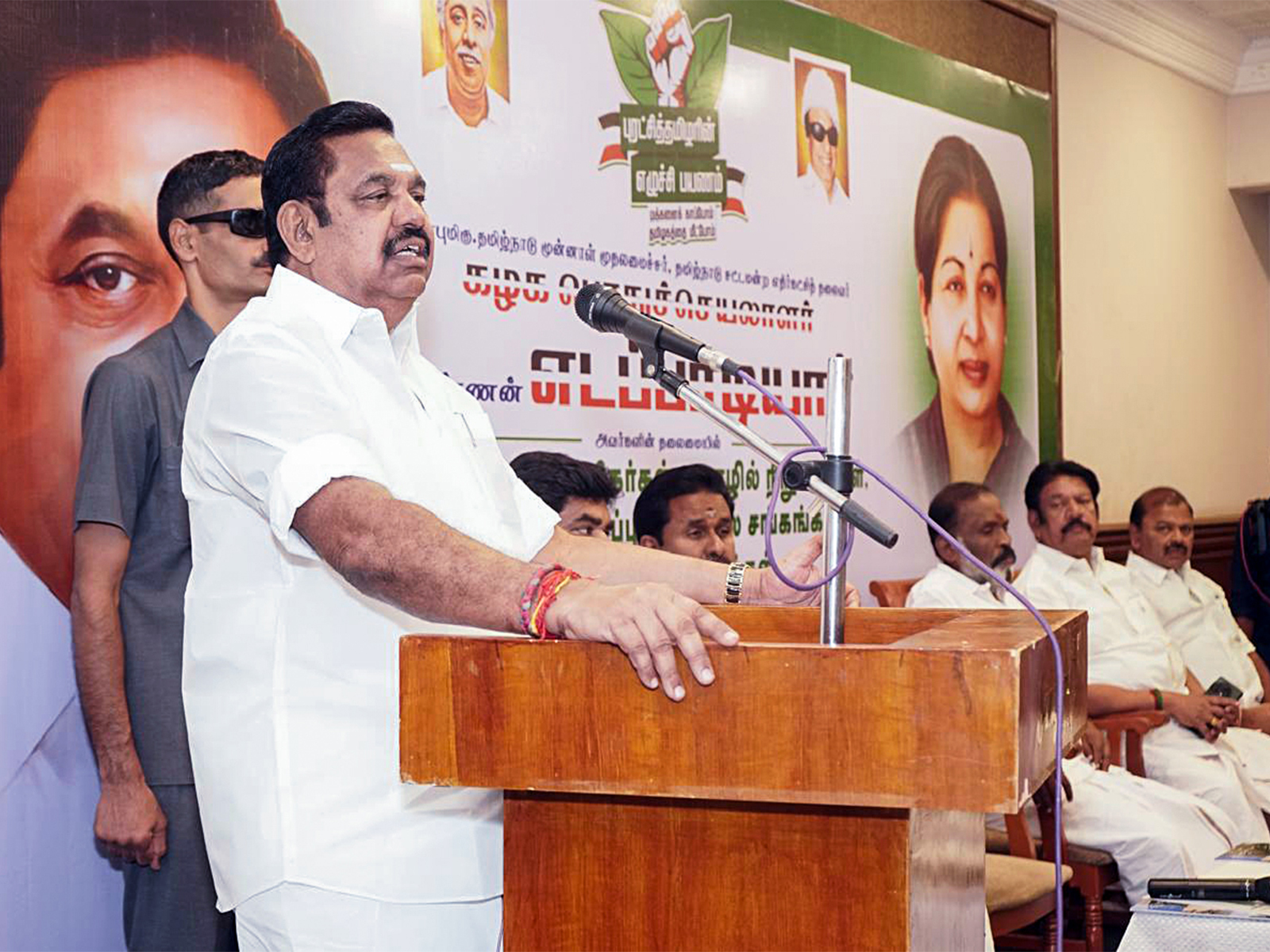
Chennai (Tamil Nadu) [India], December 8 : Following the Enforcement Directorate's allegation against Tamil Nadu Minister KN Nehru of corruption, AIADMK General Secretary and Leader of the Opposition Edappadi K. Palaniswami (EPS) asked how long Chief Minister MK Stalin thinks he and his associates could continue to escape.
In a post on X, Edappadi K. Palaniswami shared, "Reports say that the Enforcement Directorate has written a letter to the Tamil Nadu DGP stating that corruption worth Rs 1,020 crore has been identified merely in awarding tenders within the Municipal Administration and Drinking Water Supply Department. Through this letter, it has come to light that Minister @KN_NEHRU of the so-called Stalin-model DMK government has looted 7.5 percent to 10 percent commission through his relatives in the tender process."
"From construction of toilets to NABARD-funded projects, a detailed list has been mentioned, and it is said that huge corruption took place at multiple levels ranging from 20 percent to 25 percent. Furthermore, @dir_ed has stated that this is only "the tip of the iceberg" and has asked for a detailed investigation. I have been repeatedly saying that the so-called Stalin-model government run by DMK-- historically known only for scientific corruption--is nothing but a "Commission-Collection-Corruption model," he further said.
AIADMK leader EPS pointed out that this is yet another scam that has surfaced.
"The Stalin government, instead of investigating the ₹888 crore #CashForJobs scam already pointed out by ED, has continued to protect the corrupt minister! Now yet another scam has surfaced," he further said.
EPS shared that if the corrupt money looted by the DMK cabinet under CM Stalin's leadership is recovered the state government itself can implement the Madurai and Coimbatore Metro projects.
"The state government itself can implement the Madurai and Coimbatore Metro projects. Students could be given laptops every year. Rs 5,000 could easily be given to ration card holders for Pongal. Why stop with that? An entire year's state budget could be paid off!," he said.
Palaniswami asked how long the Chief Minister think he and his associates can continue to escape.
"After looting so much public money, how long does Mr. @mkstalin think he and his associates can continue to escape? Times are changing. Scenes are beginning to change. Once a government change occurs under the leadership of @AIADMKOfficial, every corrupt person involved in DMK's crimes--no matter who they are--will surely face jail. If Mr. Stalin truly has no burden on his conscience, let him order an honest, fearless investigation into these scams. Will he do it?" he further added.
The ED has written to the Tamil Nadu Chief Secretary, the Head of the Police Force, and the Directorate of Vigilance and Anti-Corruption (DVAC) alleging massive irregularities and large-scale bribery in the Municipal Administration and Water Supply (MAWS) department.
According to the agency, officials and associates linked to MAWS Minister K N Nehru manipulated tenders and collected bribes amounting to at least Rs 1,020 crore. The allegations are based on digital evidence compiled into a 258-page dossier sourced from searches conducted in April this year. The letter, dated December 3, was sent under Section 66(2) of the Prevention of Money Laundering Act (PMLA).
This is the second such communication from the ED to the Tamil Nadu government within two months. Earlier, the agency had sought action over an alleged cash-for-jobs scam linked to staff appointments within the MAWS department. The latest letter escalates the accusations, claiming that senior officials and associates of the minister operated a structured corruption network.
The ED has stated that contractors executing works for the department paid between 7.5 percent and 10 percent of their project value as bribes to associates of Minister Nehru. Several of these payments were purportedly referred to as "party fund" in communication records. Digital evidence, including WhatsApp chats, notes, and calculation sheets, allegedly reveals that tenders were fixed or predetermined to favour selected contractors.