HPCL commissions 3.55 MMTPA Residue Upgradation Facility at Visakhapatnam refinery
Jan 04, 2026
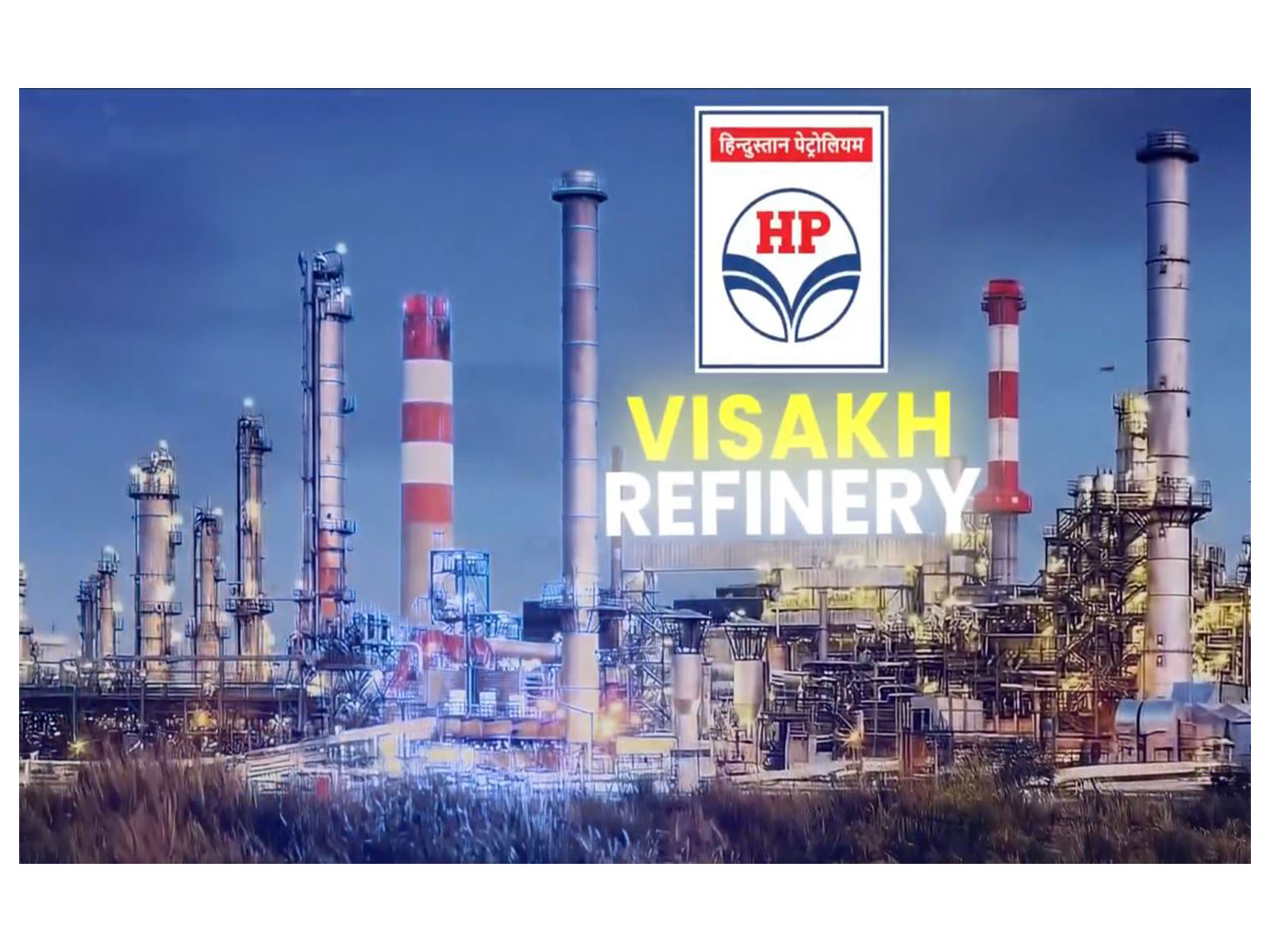
Visakhapatnam (Andhra Pradesh) [India], January 4 : Hindustan Petroleum Corporation (HPCL) has commissioned the Residue Upgradation Facility (RUF) at the Visakh Refinery in Andhra Pradesh.
Union Petroleum and Natural Gas Minister Hardeep Singh Puri, in a post on X, said that this critical infrastructure in Andhra Pradesh is a decisive leap toward Aatmanirbhar Bharat, under the leadership of Prime Minister Narendra Modi and Chief Minister Chandrababu Naidu. The Union minister described the commissioning of the facility as a significant milestone in India's journey toward energy self-reliance.
"The facility at Visakh Refinery is a "masterpiece of indigenous engineering", housing three LC-Max reactors of 2,200 MT each, ranking among the world's heaviest engineering blocks, and all fabricated and assembled within India," the minister said in the post on X.
"With a capacity of 3.55 MMTPA, the RUF utilises advanced residue hydrocracking technology to achieve a 93 per cent conversion of bottom of the barrel oils into high-value products, maximising the utility of every barrel to fuel the nation's rapid ascent!" the minister further wrote.
With an investment of Rs 31,407 crore, HPCL's Visakh Refinery in Andhra Pradesh has raised its processing capacity from 8.33 million tonne per annum to 15 million tonne per annum.
This expansion project at Visakh Refinery has made the east coast state of Andhra Pradesh one of India's energy hubs, strengthening energy needs in Andhra Pradesh and in Telangana, Chhattisgarh, Odisha, Jharkhand, Maharashtra, West Bengal, and Karnataka.
Recently, the Visakh Refinery inaugurated a demonstration plant for Sustainable Aviation Fuel (SAF) production via co-processing of Used Cooking Oil (UCO) in its Full Conversion Hydrocracker Unit, leveraging existing refinery assets.
As per HPCL's roadmap, following necessary certification, Visakh Refinery will produce 10 TMT of SAF per annum from January 2027, supporting India's commitment to decarbonising aviation and promoting a circular, waste-to-wealth economy.
India's SAF blending mandate is to achieve 1 per cent blending by 2027, 2 per cent by 2028 and 5 per cent by 2030.
India depends on imports for about 80 per cent of its crude oil requirement. The government has taken various steps to increase domestic crude oil production and reduce imports. At present, India is importing oil and gas from as many countries as possible, around 40 countries now, to meet its demand.