India aims to democratise AI through low-cost computing and techno-legal regulation: Ashwini Vaishnaw at WEF 2026
Jan 21, 2026
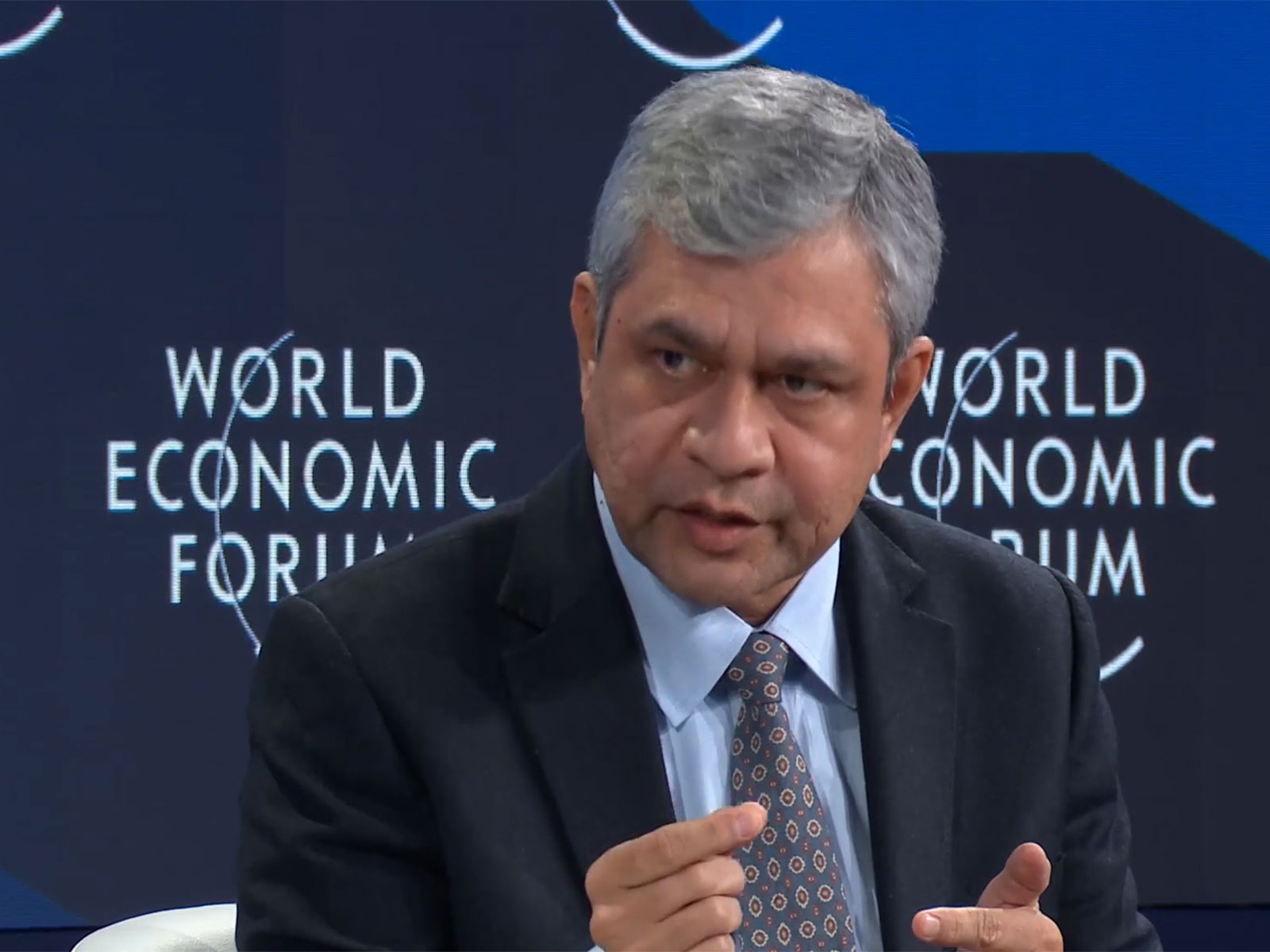
Davos [Switzerland], January 21 : Union Minister for Information Technology, Ashwini Vaishnaw, has detailed India's comprehensive strategy to dominate the global artificial intelligence landscape, emphasising a shift from big-tech-controlled resources to a public-private partnership model.
Speaking at a World Economic Forum panel on the "Role of AI in Economic Growth and Global Influence," the Minister revealed that India has successfully established a public-private partnership with 38,000 GPUs as a common compute facility, accessible to students, researchers, and startups at roughly one-third the global cost, unlike many countries where big tech controls GPU access.
Addressing the critical issue of regulation, Vaishnaw advocated for a "techno-legal" approach rather than relying solely on standalone legislation. He argued that the complexities of modern technology require robust technical tools to address risks such as bias and deepfakes, including detection systems accurate enough to stand judicial scrutiny. He added that India is developing technologies to mitigate bias, enable reliable deepfake detection, and ensure proper "unlearning" before AI models are deployed.
The Minister also highlighted a strategic shift in the economics of the Fifth Industrial Revolution, suggesting that the massive ROI of the future will come from cost-effective, scalable solutions rather than just "brute-force" computing. He debunked the myth that all AI progress requires expensive hardware, noting that "nearly 95% of AI work can be done using the 20-50 billion parameter models."
According to Vaishnaw, these smaller, efficient models can run on widely available CPUs, effectively reducing India's dependency on specific foreign suppliers and minimising the geopolitical risks associated with the global chip supply chain.
India's vision for democratising AI extends beyond hardware to include a massive investment in human capital. The government is currently overseeing the training of 10 million people in AI skills, aiming to steer the domestic IT industry toward providing scalable AI services for the global market. The Minister pointed to Stanford University's recent rankings as a testament to this progress, noting that India now ranks third globally in AI penetration, preparedness, and AI talent.
By offering government-subsidised GPU access and providing free AI models for common societal needs, India is positioning itself as a "use-case capital" for the world. The Minister concluded by reiterating that India's approach is fundamentally inclusive, ensuring that the benefits of the AI revolution reach the bottom of the pyramid. This systematic strategy combines affordable infrastructure, a unique regulatory framework, and a focus on efficient model deployment to cement India's status as a top-tier global AI leader.