India is entering into trade deals because it is full of self-confidence, ready to compete globally: PM Modi
Feb 13, 2026
New Delhi [India], February 14 : Prime Minister Narendra Modi has said India's free trade agreements are being widely discussed and analyzed globally and the country is entering into trade agreements with countries in different parts of the world as it is full of self-confidence and ready to compete with the world.
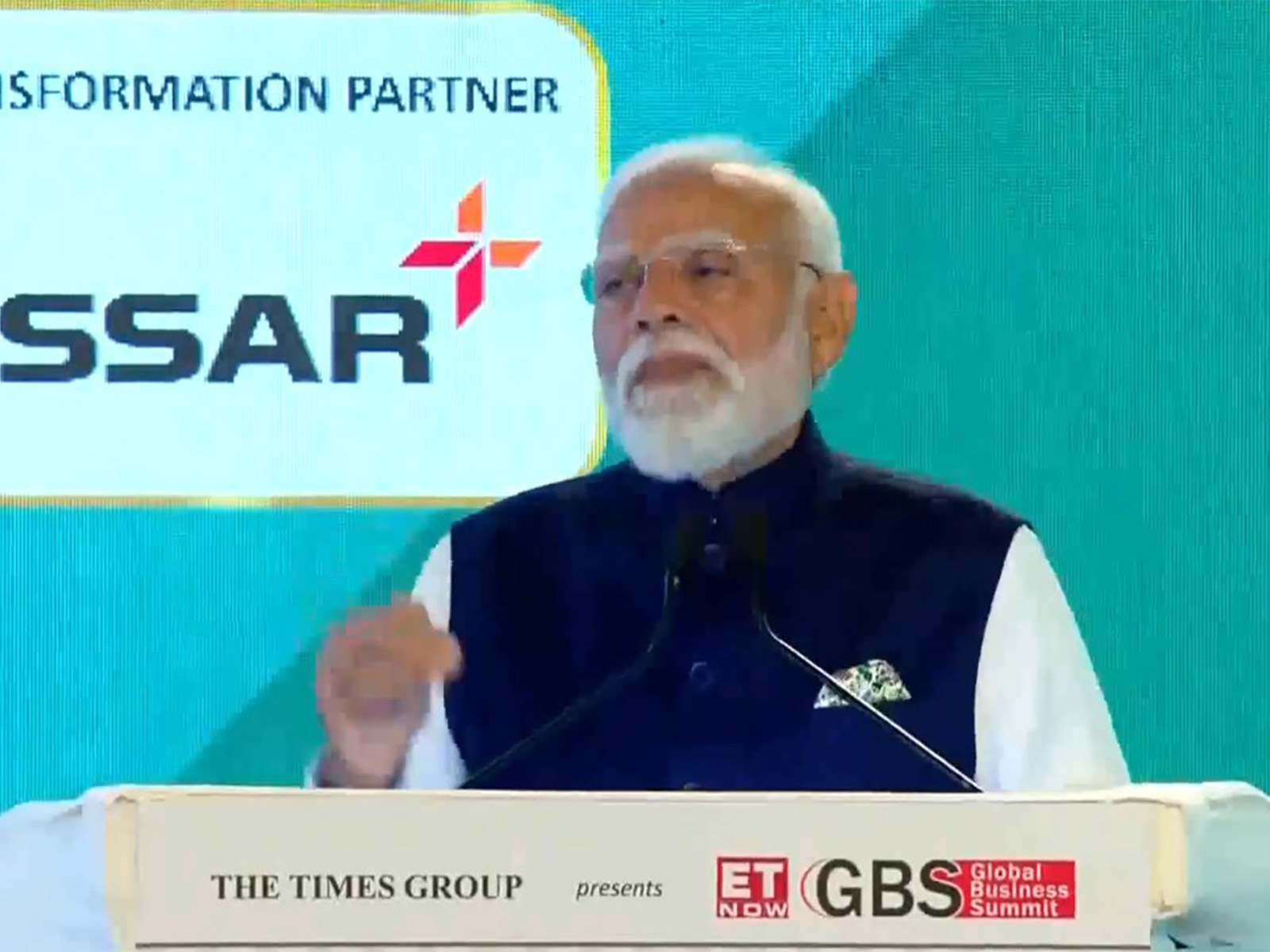
Addressing the ET NOW Global Business Summit 2026 here, PM Modi said the past decade has been one of unprecedented development for India, marked by strong delivery and by efforts that have strengthened our democracy.
He said India is riding the Reform Express and the government has made the Budget not only outlay-focused but also outcome-centric.
He noted that the government has regarded technology and innovation as the core drivers of growth.
"There's a lot of discussion these days about India's FTAs. As soon as I entered here, people started asking me about it... Have you ever wondered why these trade deals with developed countries didn't happen before 2014?... Because, there's been a shift in the government's vision, policy and intention. There's a shift in India's potential... Does a rich person marry a poor girl in a village? We faced the same situation globally. When the country was beset by policy confusion and scams and frauds galore, who could have trusted India?... We are able to sign these trade deals because today's India is full of self-confidence and ready to compete with the world," he said.
PM Modi said the world is moving towards a new world order. The Prime Minister remarked that after the Second World War, a new global order had emerged, but seven decades later that arrangement is breaking down and the world is moving towards a new order. He questioned why this is happening and explained that the earlier system was built on a One Size Fits All approach. He noted that it was assumed the world economy would remain at the core, supply chains would stay strong and reliable, and nations would be seen only as contributors. He highlighted that this model has now been challenged and is losing relevance, with every country realizing it must build its own resilience.
"The century of change you are talking about, and I say this with immense responsibility, India is going to be a massive foundation for this... India will drive the world's growth. India will become the engine of world's growth... The world is moving towards a new world order. The system established then was based on the idea of 'one size fits all'. It was then assumed that the world economy would be at the core," he said.
"In this system, nations were viewed solely as contributors. But today, this model is being challenged... Today, every nation is realising that it has to build its own resilience. What the world is discussing today, India made that its policy in 2015 itself. India had made its vision clear in the founding document of 'Niti Aayog', that India will not import even a single development model from any other nation," he added.
The Prime Minister said that an Indian reform that has taken the world by storm in the past decade is UPI.
"It's not just an app; it's a testament to the remarkable convergence of policy, process, and delivery. UPI is reaching citizens who could never have imagined the benefits of banking and finance. This reform wasn't done out of compulsion. It was our conviction. The conviction was the inclusion of citizens to whom the previous governments had not reached. 'Jise koi nahi poochhta, use modi poojta hai'," he said.
The Prime Minister said that as the country's economic power has grown, the Centre has empowered the states in equal measure.
"From 2004 to 2014, states received Rs 18 lakh crore through tax devolution. However, between 2014 and 2025, this amount increased to Rs 84 lakh crore. If we include the Rs 14 lakh crore proposed in this year's budget, the total comes to Rs 100 lakh crore," he said.
He said this year's budget has propelled the Reform Express forward.
"While the budget covers many aspects, I would like to highlight two key factors: capital expenditure (capex) and technology. As in recent years, infrastructure spending has been increased, reaching Rs 17 lakh crore. The multiplier effect of capex is significant--it enhances the country's capacity and productivity, and also generates employment across multiple sectors. Announcements such as the construction of five university townships, economic regions in tier-2 and tier-3 cities, and seven high-speed rail corridors represent investments in the future of our youth and the nation," he said.
The Prime Minister said that during the pre-2014 period, reforms in India were often driven by sheer compulsion rather than proactive planning.
He emphasized that reforms born out of compulsion never yield proper results for the nation. He expressed pride that in the past eleven years, reforms have been carried out with conviction, across policy, process, delivery, and even mindset. He stressed that if policy changes but processes and mindset remain the same, reforms remain only on paper, which is why his government worked to transform the entire system.
PM Modi elaborated on process reforms, citing the example of cabinet notes, which earlier took weeks or months to prepare, slowing development. His government made decision-making time-bound and technology-driven, ensuring that files could not remain pending indefinitely, and the results are visible today.
Citing the example of railway over-bridge approvals, which earlier took years and required multiple clearances, PM Modi said it has now been streamlined, leading to rapid infrastructure growth. He also highlighted border infrastructure, recalling that earlier even a simple road in border areas required permissions from Delhi, creating barriers for local decision-making. Post-2014, his government empowered local administration, resulting in fast-paced border infrastructure development.
"For example, the 1991 economic reforms were implemented only when the country was on the verge of bankruptcy and had to mortgage its gold reserves. Similarly, the National Investigation Agency (NIA) was established in response to the 26/11 terrorist attacks. When the power sector was in crisis and grid failures became frequent, the Congress government addressed the issues in the sector out of compulsion rather than foresight," PM Modi said.
He recalled that when the last decade began, India was the eleventh largest economy, and amidst turmoil there were fears of decline, but today India is rapidly advancing to become the world's third largest economy.
Underlining that India will be a major foundation for the Century of Change, PM Modi noted that India currently contributes more than sixteen percent to global growth and expressed confidence that this contribution will continue to rise year after year. He affirmed that India will drive global growth and emerge as the new engine of the world economy.
Underlining that India's new outlook is reflected in the budget as well, the Prime Minister highlighted that earlier discussions around the budget focused only on outlay--how much money was allocated, what became cheaper or costlier, how many new trains were announced--without questioning the outcomes of those announcements. He emphasized that his government"made the budget outcome-centric along with outlay-centric".
PM Modi noted another major change in Budget, stating that before 2014, off-budget borrowing dominated discussions, whereas now off-budget reforms are the focus.
He recalled reforms outside the budget such as next-generation GST, the creation of NITI Aayog in place of the Planning Commission, the abrogation of Article 370, the law against triple talaq, and the enactment of the Nari Shakti Vandan Adhiniyam. The Prime Minister underlined that whether announced in the budget or outside it, the Reform Express continues to gain momentum.
Underscoring that over the past decade, technology and innovation have been recognized as core drivers of growth, with the promotion of startup and hackathon culture, PM Modi noted that India now has more than two lakh registered startups working across diverse sectors. He added that the government has encouraged risk-taking and rewarded innovation, with visible results. He stated that this year's budget strengthens these priorities, particularly with significant announcements for sectors such as biopharma, semiconductors, and artificial intelligence.
PM Modi remarked on the difference in vision, noting that some question why he speaks of 2047 and developed India, dismissing it as uncertain. He countered that if freedom fighters had thought similarly, India would never have achieved independence. He stressed that when the nation comes first, every decision and policy is for the country. The Prime Minister affirmed that the government's vision is clear--to continuously work towards making India developed. He added that whether or not today's generation remains till 2047, the nation and its future generations will, and therefore it is the duty of the present to dedicate itself so that the future is secure and bright.
The Prime Minister remarked that the world must now be prepared to live with disruptions, noting that their nature will continue to evolve but systems will change rapidly.
He highlighted the disruptions already visible due to artificial intelligence and emphasized that AI will bring even more revolutionary changes in the future, for which India is ready.
He said that in a few days, the Global AI Impact Summit will be held in India next week with participation from numerous countries and technology leaders from across the world.