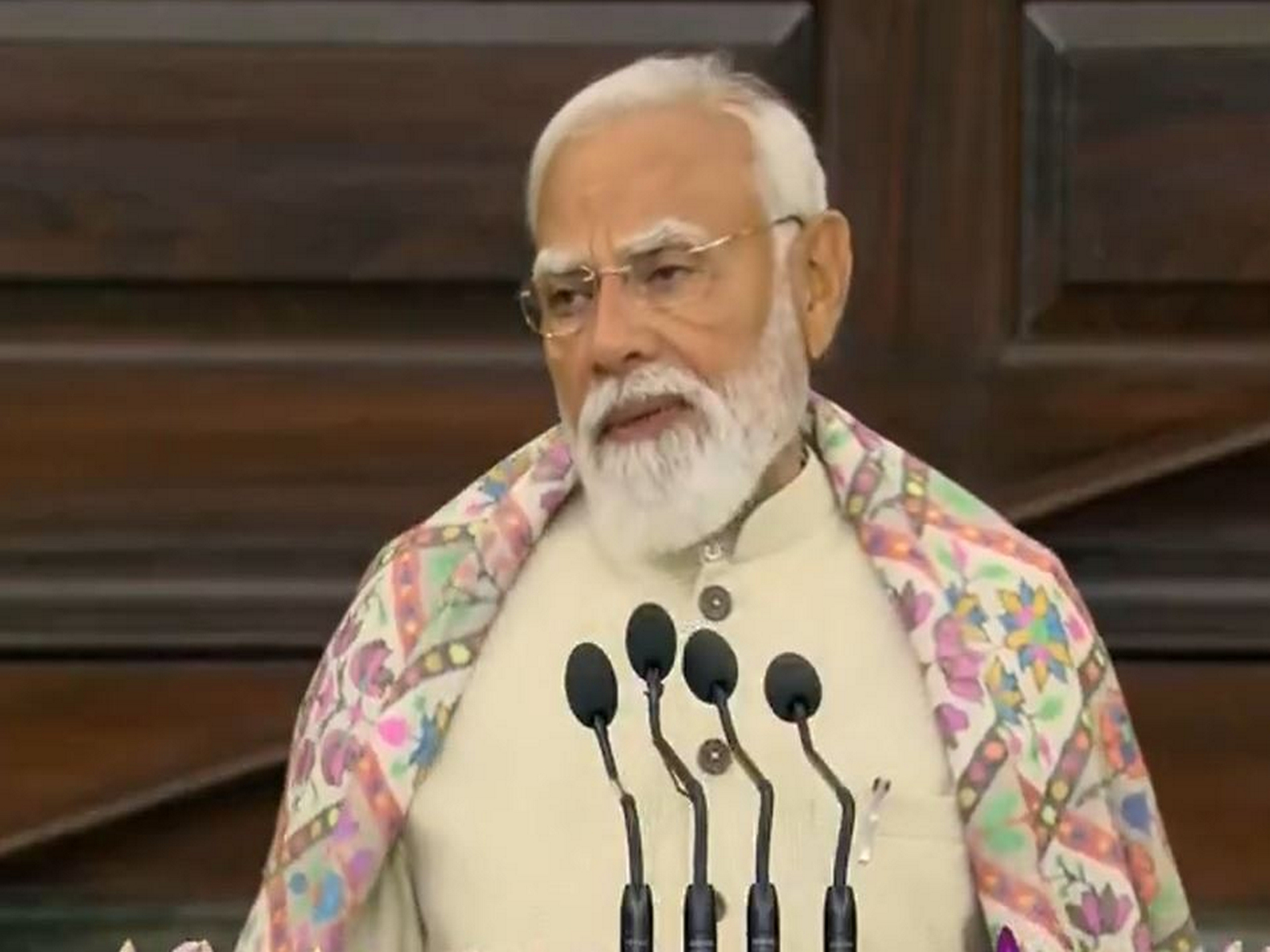
"India strongly advocating for interests of Global South": PM Modi at 28th CSPOC
Jan 15, 2026
New Delhi [India], January 15 : Prime Minister Narendra Modi on Thursday said that India is strongly advocating for the interests of the Global South on every global platform, highlighting the country's consistent placement of the region's concerns at the heart of the global agenda.
During his address at the 28th Conference of Speakers and Presiding Officers of the Commonwealth (CSPOC), 2026, at Parliament House, the Prime Minister highlighted India's efforts during its G20 presidency in pushing the agenda of the Global South.
He stated that the country was committed to ensuring its innovations benefit the entire Global South and Commonwealth countries, and also to developing open-source technology platforms for partner nations to build similar systems that are being implemented in India.
"India is strongly advocating for the interests of the Global South on every global platform. During its G20 presidency, India has also placed the concerns of the Global South at the heart of the global agenda. India's continuous effort is to ensure that whatever innovations we make benefit the entire Global South and benefit Commonwealth countries. We are also creating open-source tech platforms so that our partner countries in the Global South can also develop systems like those in India," the PM said.
The Prime Minister also emphasised the inclusive nature of Indian democracy, saying that it is being defined by "its commitment to delivering benefits to the very last mile."
"Driven by the spirit of public welfare, we are working inclusively, ensuring that no one is left behind. It is this commitment that has enabled India to lift approximately 25 crore people out of poverty in recent years. In India, democracy truly delivers. In India, democracy means last-mile delivery," PM Modi said.
"We are working for the welfare of every individual without any discrimination. And it is this spirit of public welfare that has lifted 250 million people out of poverty in India in the last few years," he added.
Highlighting the scale of Indian democracy, PM Modi recalled the 2024 general elections, describing them as the largest democratic exercise in human history.
He noted that nearly 980 million citizens were registered to vote, with more than 8,000 candidates and over 700 political parties participating.
"This number is larger than the population of some continents. There were more than 8000 candidates and more than 700 political parties," the PM said.
The Prime Minister also highlighted a record number of women voters, noting that women now hold key leadership positions, including the President of India and the Chief Minister of Delhi.
PM Modi further reflected on India's rich democratic traditions, calling democracy in India "like a large tree supported by deep roots."
He cited historical references in the Vedas and the teachings of the Buddha, where assemblies held debates and made collective decisions, underscoring India's centuries-old tradition of deliberative governance.
"Our democracy is like a large tree supported by deep roots. We have a long tradition of debates, dialogue and collective decision-making. India is called the mother of democracy. Our sacred text, the Vedas, is over 5000 years old. They refer to assemblies where people met to discuss issues, and decisions were taken after discussions and agreement," he said.
The Prime Minister also asserted that India's democratic model combines scale, inclusivity, and public welfare and remains committed to both national progress and advancing the interests of developing countries on the global stage.
The high-level conference, chaired by Lok Sabha Speaker Om Birla, features 61 Speakers and Presiding Officers from 42 Commonwealth countries, along with representatives from four semi-autonomous parliaments, underscoring the event's global scale and significance.
CSPOC will deliberate on a range of contemporary parliamentary issues to strengthen democratic institutions and modern legislative practices.
Key themes include the evolving role of Speakers and Presiding Officers, technological innovation in parliamentary functioning, and enhancing citizen engagement with democratic processes.
Among the major topics scheduled for discussion are "AI in Parliament: Balancing Innovation, Oversight and Adaptation", to be led by Malaysia; "Social Media and its Impact on Parliamentarians", to be presented by Sri Lanka; and "Innovative Strategies to Enhance Public Understanding of Parliament and Citizen Participation Beyond Voting", with contributions from Nigeria and South Africa.
Other sessions will focus on the security, health and well-being of Members of Parliament and parliamentary staff, as well as a special plenary discussion on the role of Speakers and Presiding Officers in maintaining strong democratic institutions.