India-US trade agreement triggers political face-off as Centre hails "future-defining deal", Opposition alleges compromise
Feb 03, 2026
New Delhi [India], February 3 : The India-US trade agreement has triggered an intense political debate, with the Centre projecting it as a landmark, future-defining deal that will accelerate India's growth trajectory, while opposition parties have raised sharp questions about transparency, national interests, and the impact on farmers and domestic industries.
As negotiations reached their final stages, Opposition leaders also questioned why the United States was making announcements about the deal rather than India.
Union Commerce and Industry Minister Piyush Goyal on Tuesday said the trade deal with the United States is in the final stages of detailing and will soon be formally inked by both countries.
Addressing a press conference in New Delhi, Goyal said the agreement is one that "every Indian can be proud of" and assured that full details would be shared once technical processes and the joint statement are finalised.
"Indians are celebrating a trade deal which is under the final stages of detailing between the negotiating teams of both countries. We will shortly issue a joint statement from both countries, along with the details, which we will be inking between the United States of America and India. As soon as the final understanding of the deal is inked and the joint statement is finalised, technical processes are completed, and full details will be shared," Goyal said.
He expressed confidence that the agreement would protect national interests, safeguard sensitive sectors, and unlock large-scale opportunities across the economy.
Highlighting sectoral benefits, the minister said the deal would create vast opportunities for labour-intensive industries, including textiles, apparel, leather and footwear, gems and jewellery, plastics, home decor, rubber goods, organic chemicals, machinery, aircraft components, and export-oriented manufacturing.
"This is truly a deal that every Indian can be proud of," he said, adding that it would strengthen India's position in global value chains.
Goyal stressed that agriculture and dairy, sectors often flagged as vulnerable in trade negotiations, have been fully protected. "Prime Minister Narendra Modi has always safeguarded the interests of agriculture and dairy farmers and has never allowed any compromise. Even in the deal with the US, India's national interests have been fully protected," he said.
Calling the agreement a "future-defining deal," Goyal said it would add immense value to India's growth prospects and offer Indian businesses an edge compared to competing economies. He also noted that the agreement with the US follows closely on the heels of a landmark trade deal signed with the European Union, signalling India's expanding footprint in global trade architecture.
However, the minister strongly criticised the opposition for disrupting Parliament, accusing them of preventing a discussion on the deal in the House. "I strongly condemn the opposition for not allowing Parliament to function, forcing me to share these important details through a press briefing instead of on the floor of Parliament," Goyal said, naming the Congress, DMK, TMC and Samajwadi Party.
Goyal also launched a direct attack on Congress leader Rahul Gandhi, accusing him of opposing India's progress and questioning national institutions. "Rahul Gandhi appears to be uncomfortable with the nation's development and does not want to see India move towards a bright future. Rahul Gandhi ko kya mirchi lagti hai?" Goyal asked, alleging that the Congress leader thrives on negativity and disruption.
The minister said the government had intended to make a statement in Parliament but was compelled to brief the media after the opposition members disrupted proceedings, approached the Speaker's chair, and resorted to sloganeering and paper-throwing during the debate on the President's address.
The controversy escalated further after Rahul Gandhi accused Prime Minister Modi of being "compromised" and "selling the country" through the trade agreement. Speaking to reporters outside Parliament, the Leader of the Opposition alleged that the deal was signed under pressure. "Narendra Modi ji has sold your hard work in this trade deal because he is compromised. He has sold the country," Gandhi said.
Gandhi cited what he described as pressure points, including alleged legal cases involving industrialist Gautam Adani in the United States and references to the Epstein files. "There is a case on Adani ji in the US, and it is actually a case on Modi ji. These are the pressure points," Gandhi claimed, demanding that the full details of the agreement be placed before Parliament.
The Congress has questioned claims that agriculture and dairy have been protected, sought clarity on tariff reductions to 18 per cent from 25 per cent, and raised concerns over reports that India may reduce tariffs to zero on certain American goods or pause purchases of Russian oil, claims the government has not officially confirmed.
Opposition criticism has also come from regional parties. Shiv Sena (UBT) MP Sanjay Raut alleged that the deal compromises national interest and farmers' welfare. "I feel that this trade deal has been signed to safeguard Gautam Adani, and we will protest against this from the streets to Parliament," Raut said, adding that the entire opposition walked out of the Rajya Sabha in protest.
Echoing these concerns, Shiv Sena (UBT) MP Arvind Sawant questioned the government's economic priorities, pointing to the Union Budget and tariff structures. "Have you seen your own budget? In that budget, you have imposed zero per cent duty. All items are coming from America. America imposes 10% tax on Pakistan; it used to impose 3% tax on us," he said.
Kerala Chief Minister Pinarayi Vijayan also raised objections, warning that slashing tariffs and non-tariff protections could hurt farmers, workers and domestic industries. "The reported US-India trade deal raises serious concerns. Slashing tariffs and non-tariff protections will hurt Indian farmers, workers and domestic industry, while pushing the country into an unequal, subordinate position. The full agreement must be placed before Parliament and the public. Any provision that compromises livelihoods, food security and economic sovereignty must be firmly resisted," Vijayan wrote on X.
Congress leader Sachin Pilot questioned why the United States was making announcements about the deal rather than India. "Why does the US make announcements regarding trade deals between India and the US? What is the need to celebrate if the tariffs have been reduced to 18 per cent? It seems that the agreement was made under pressure from the US," Pilot said.
Raising similar concerns over the announcement of the trade agreement, Congress leader Supriya Shrinate said, "As always, this time too, our trade deal was not announced by our Prime Minister, but by US President Donald Trump. The US has announced it will impose an 18% tariff on us. Previously, the US imposed a tariff of less than 3% on us; now it will be 18% instead of 3%. Trump said in a tweet that we will import $500 billion in goods. Why have the interests of farmers been sacrificed in this trade deal? What has changed in these four months? What benefit has India gained from the deal you have made?"
On the government side, senior leaders rallied behind the deal. Union Minister Amit Shah said the agreement would strengthen MSMEs, enhance global competitiveness, boost employment and secure India's place in new supply chains. "Gratitude to PM Modi for this initiative that directly benefits the country's small entrepreneurs," Shah wrote on X.
Defence Minister Rajnath Singh described the agreement as a decisive leap forward for India-US economic ties, saying it would set the stage for growth, jobs and strategic collaboration.
Uttar Pradesh Chief Minister Yogi Adityanath thanked Prime Minister Modi and US President Donald Trump for reducing tariffs on Indian goods and recognising India as a reliable partner. Addressing an investment conclave, Adityanath said the agreement reflected India's growing economic stature and policy strength.
Speaking to reporters, BJP MP Sudhanshu Trivedi expressed surprise at the opposition's question about the announcement of the trade deal. He welcomed the agreement, calling it a "way for job creation."
"The trade deal that India has signed with the United States is a positive initiative that will open up numerous opportunities for all Indians. It will pave the way for job creation in India. It will create opportunities for MSMEs and large industries in India. I am very surprised when opposition leaders ask why the tariff announcement came from there (the US)," he said.
US Secretary of Agriculture Brooke Rollins welcomed the deal, stating that it would allow the US to export more farm products to India and reduce America's agricultural trade deficit. Her remarks, however, added fuel to opposition concerns in India over market access and farmer protections.
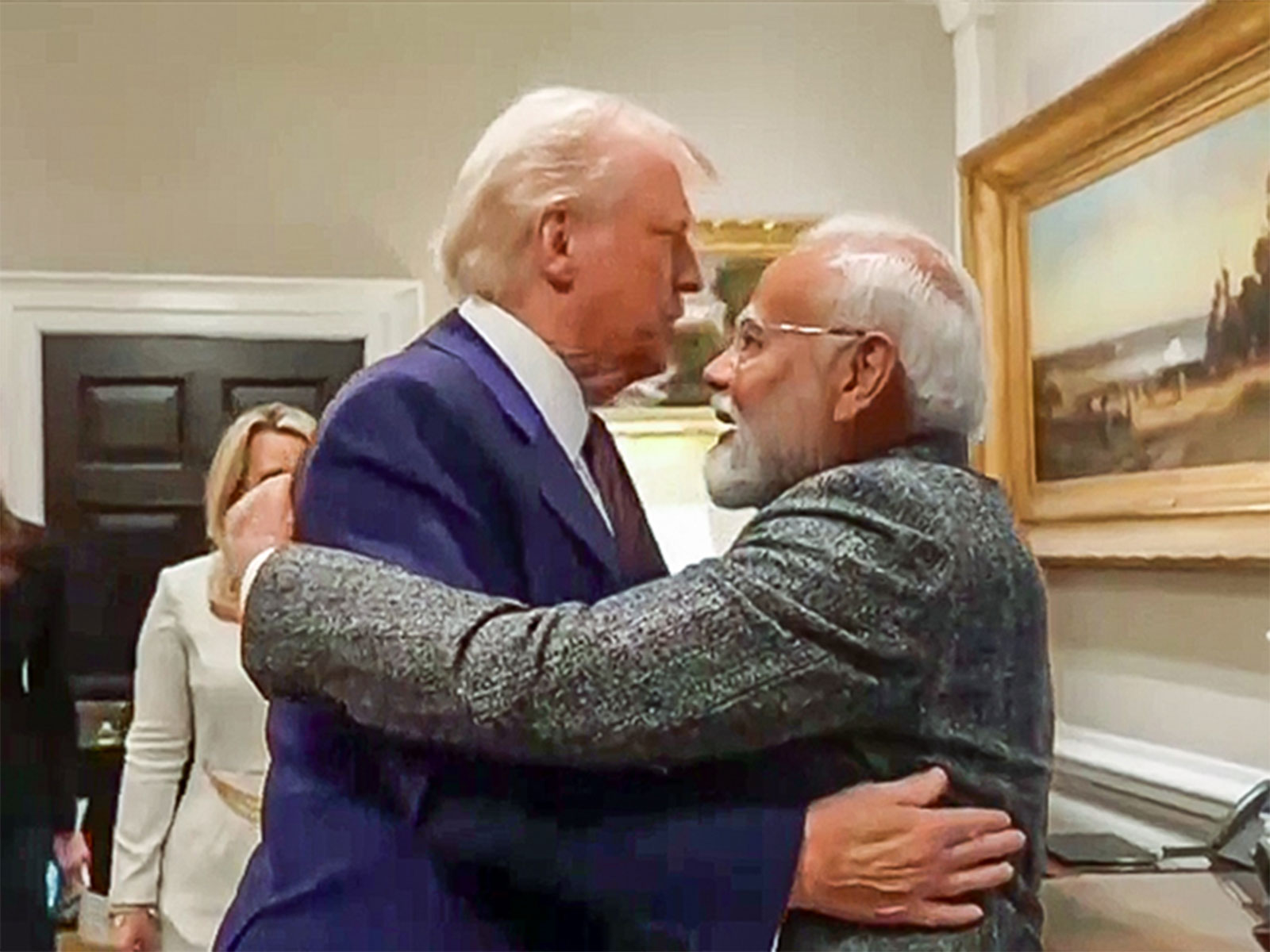
In a social media post, President Trump confirmed that reciprocal tariffs on Indian goods would be reduced to 18 per cent, while Prime Minister Modi thanked him on behalf of "1.4 billion Indians," calling it a boost for Made-in-India products.
As the political debate intensifies, the government maintains that the agreement will accelerate India's journey towards Viksit Bharat 2047, bringing advanced technology from the US, and create opportunities for farmers, MSMEs, entrepreneurs and skilled workers. The opposition, meanwhile, continues to demand transparency, parliamentary scrutiny, and assurances that national interests, economic sovereignty and livelihoods will not be compromised.