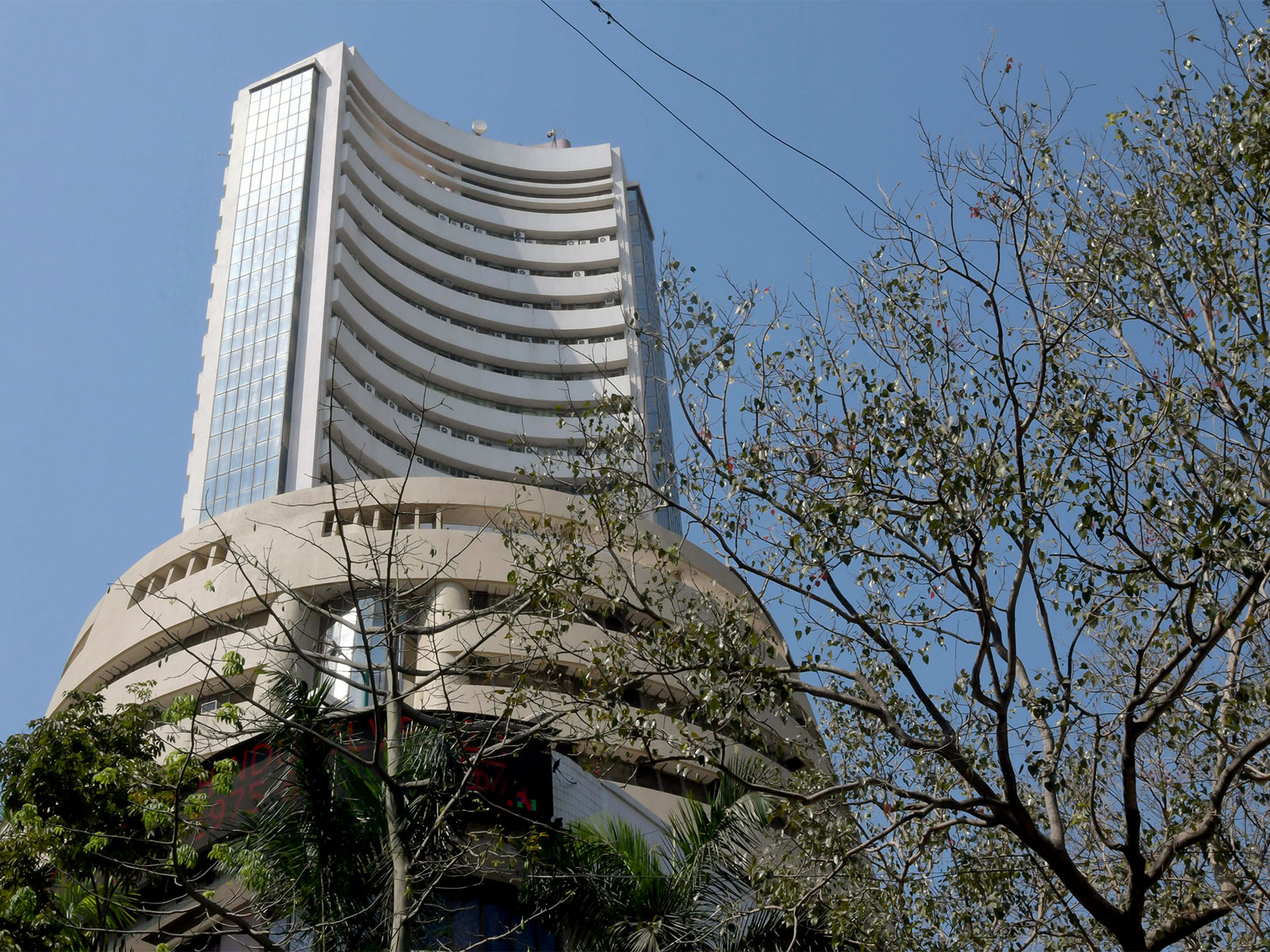
Indian markets fall for 3rd straight session amid Fed policy caution, foreign fund outflows
Dec 10, 2025
Mumbai (Mahrashtra) [India], December 10 : Indian stock markets declined for the third consecutive session on Wednesday, as investors remained cautious ahead of the US Federal Reserve's 2026 policy guidance, with ongoing foreign fund outflows further dampening sentiment.
At the end of the trading session today, the BSE Sensex declined 275.01 points or 0.32 per cent to 84,391.27, while the broader Nifty50 at the National Stock Exchange (NSE) fell to 25,758, down 81.65 points or 0.32 per cent.
On the sectoral front, Nifty Media ended the day as the top sectoral gainer, followed by Nifty Metal. On the other hand, Nifty IT and Nifty PSU Banks emerged as the top two sectoral losers. With regards to stocks, Eicher Motors and Hindalco emerged as the top stock gainers amongst the Nifty pack, while Indigo & Eternal emerged as the top two losers.
Market breadth remained weak, with the advance-decline ratio skewed in favour of bears, as 315 stocks out of the Nifty 500 universe ended in the red.
The e-commerce player Meesho made its long-awaited stock market debut today, listing on both the NSE and BSE, and opened trading at a 46 per cent premium to the issue price.
"Tonight, the market participants will await cues from U.S Federal Reserve Chair Jerome Powell's commentary on the likely path of interest rates in 2026," said Sudeep Shah, Head - Technical and Derivatives Research at SBI Securities.
The index opened steady and moved higher initially, hitting an intraday high of 25,948. However, selling pressure emerged at higher levels, pulling the index down to close near the previous day's low zone of 25,720-25,740.
The 20-day EMA, which earlier acted as support, is now acting as resistance, as today's high aligns with this moving average.
EMA, or Exponential Moving Average, is a popular technical analysis tool in finance that smooths price data, giving more weight to recent prices to identify trends more quickly than a Simple Moving Average (SMA).