Indian Railways announces five new reforms under 'Reform Express'; Cargo, Construction, and Passenger Convenience in focus
Mar 24, 2026
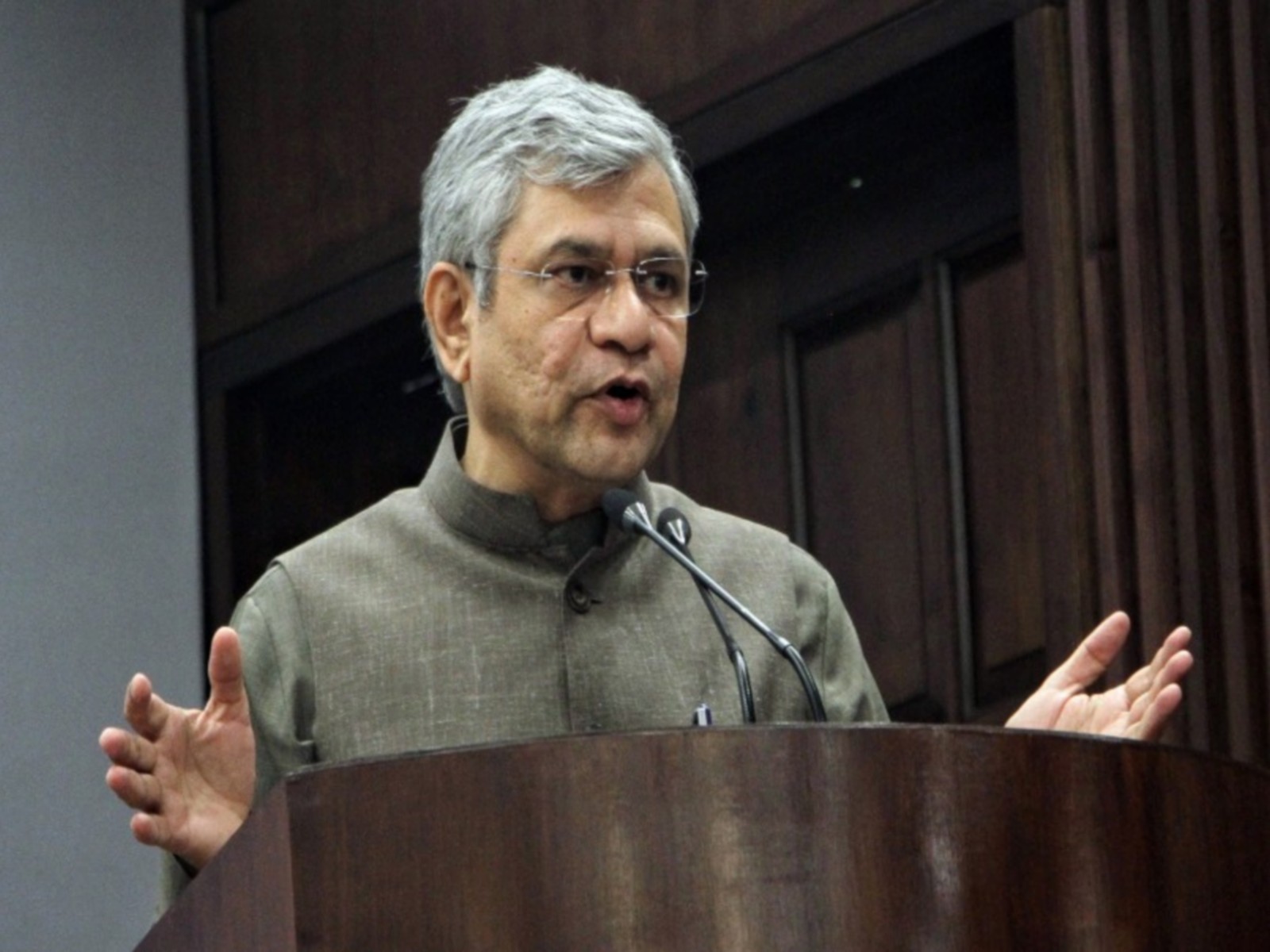
New Delhi [India], March 24 : Union Minister for Railways, Information and Broadcasting and Electronics and Information Technology, Ashwini Vaishnaw, on Tuesday announced that in line with Indian Railways' resolve to undertake reforms during 2026, five new reforms have been approved.
With the approval of these new reforms, the total number of reforms for the year 2026 has reached nine.
Ashwini Vaishnaw said that under the ongoing "Reform Express" initiative, four reforms had already been announced and five new reforms were being introduced.
Out of the five new reforms, two are related to cargo, one to construction, and two to passenger convenience.
Speaking on reform number five, which focuses on salt transportation, Vaishnaw said India is one of the largest producers and exporters of salt in the world. The three major producing states are Tamil Nadu, Gujarat, and Rajasthan. Out of nearly 35 million tonnes of salt produced annually in India, about 9.2 million tonnes per annum are transported by railways, reflecting a significant untapped opportunity.
The Union Minister noted that the modal share of railways in salt transportation varies by use - approximately 25 per cent for industrial salt and around 65 per cent for salt meant for human consumption. He added that 62 per cent of all rail-based salt traffic covers distances of 1,000 to 2,500 kilometres, making it a segment well-suited for rail movement.
He said detailed consultations were held with salt producers and transporters to understand the challenges. The study identified key issues, including unsuitable wagon design, corrosion of wagons caused by salt, water seepage in open wagons despite tarpaulin covers, and multiple handling stages leading to higher costs and losses.
To address these issues, a stainless steel, top-loading and side-discharge container system has now been successfully developed. The container is made of stainless steel to prevent corrosion and is equipped with top-loading flaps and a hydraulic side-discharge mechanism, allowing easy unloading into trucks at the destination.
The Union Minister explained that containers can be placed at salt production sites for direct loading. These containers can then be lifted and loaded onto container trains. At the destination, containers can be unloaded and placed at warehouses or godowns, with unloading done as per requirement.
He said this system provides greater flexibility, supports seamless multimodal movement, reduces handling losses, and has been well-received by the industry.
The Indian automobile market produces approximately 31 million units annually, of which passenger vehicles account for around 5 million units. The rail coefficient in passenger vehicle transport stands at about 24 per cent, indicating that a large share of automobile movement still happens by road.
He said feedback from the industry highlighted key design and operational constraints. The major automobile production hubs served by railways include Mahesana in Gujarat; Chinchwad and Bidadi in Maharashtra and Karnataka; Penukonda in Andhra Pradesh; Melpakkam and Walajabad in Tamil Nadu; and Farakhanagar in Gurugram, Haryana.
He stated that earlier initiatives included converting existing passenger coaches into automobile carrier wagons and introducing new solutions. However, further consultations revealed that the primary issue lay in the design of automobile carrier wagons.
The Union Minister said that the existing wagon designs were either suited for single-stack or double-stack configurations, limiting flexibility. He added that many routes face restrictions due to tunnels and bridges, where the Schedule of Dimensions (SOD) constraints prevent the movement of certain wagon types.
To address this, Vaishnaw said the Railways has introduced a reform allowing special wagon designs while giving flexibility to the industry. Manufacturers can now design wagons based on specific origin-destination routes with high-capacity.
Referring to the impact of the earlier bulk cement policy reform, he said that changes implemented led to an immediate increase in loading -- bulk cement tonnage transported by rail rose sharply from approximately 37,000 tonnes in September 2025 to nearly 95,000 tonnes by January 2026. He expressed similar expectations that the reforms in salt and automobile transportation will significantly improve rail freight share in those sectors.
Ashwini Vaishnaw said the next reform focuses on improving construction quality in railway projects, introducing seven major changes.
The Union Minister said the first change relates to eligibility criteria. The threshold for assessing contractor capability through a single project has been increased from 35 per cent to 50 per cent of the project value. This ensures that only firms with proven capacity to execute large projects can bid for similar works. Additionally, at least 20 per cent of prior experience must be in railway-related work, recognising that different sectors such as highways, ports, and airports have distinct complexities. Within railway works, complexity levels have been defined, signalling being the most complex, followed by overhead electrical and track works and relevant experience will be required accordingly.
The second change fixes bid security at 2 per cent of the project value. This is aimed at discouraging frivolous bids and ensuring only serious participants enter the tendering process.
The third change introduces mandatory assessment of bid capacity for all projects above Rs 10 crore, while the fourth enforces strict punitive provisions banning corrupt, fraudulent, and anti-competitive practices.
The fifth change mandates a detailed work plan before the start of any project, enabling improved monitoring and ensuring timely execution.
The sixth change reduces the permissible subcontracting limit from 70 per cent to 40 per cent. Contractors will now have to directly execute at least 60 per cent of the work under their own supervision, which will ensure accountability and reduce the practice of passing on contracts after securing bids.
The seventh change addresses predatory bidding. He said that if a bid is more than 5 per cent below the estimated project cost, the bidder will be required to provide an additional 5 per cent performance guarantee. This is aimed at discouraging unrealistic bids that later lead to disputes, arbitration, and project delays.
These changes collectively strengthen the railway project execution framework by enhancing transparency and integrity through strict ethical and punitive measures, ensuring quality assurance via stricter eligibility norms and reduced subcontracting, and promoting timely delivery with mechanisms like fixed bid security, bid capacity assessment, and additional performance guarantees. Together, these steps aim to build a more accountable, efficient, and robust infrastructure development system.
The Union Minister said reform number eight focuses on passenger convenience, with measures to curb misuse of ticketing systems and improve access for genuine travellers.
He said ticket black marketing and misuse of the Tatkal system had been a major concern. To address this, the Railways introduced technology to detect bots and fraudulent software. Further technological interventions curtailed the ability of agents and touts to book tickets immediately after the Tatkal window opens, alongside the introduction of Aadhaar-based OTP verification. A detailed data analysis led to the identification and removal of nearly 3 crore fake accounts from the IRCTC system, resulting in a significant improvement in ticket availability.
To address this, the earlier cancellation time windows of 48, 12, and 4 hours before departure have been revised to 72, 24, and 8 hours, aligned with the preparation of reservation charts which now happens 9-18 hours before departure instead of 4 hours. This will be done at no extra cost from passengers.
Reservation charts improve passenger convenience by reducing uncertainty, enabling better planning for waitlisted travellers, and supporting passengers from remote locations. Early charting allows alternative travel arrangements, optimizes vacant berth utilization, and boosts transparency. These changes are aimed at removing incentives for last-minute speculative bookings and ensuring tickets are available to genuine passengers.
The Union Minister also announced that soon counter tickets can now be cancelled from any railway station across the country, removing the earlier restriction of cancellation only at the originating station. He said the requirement of filing a Ticket Deposit Receipt (TDR) for e-tickets has been removed, and refunds will now be processed automatically upon cancellation.
In another passenger measure, passengers can now upgrade their travel class up to 30 minutes before departure, whereas earlier changes were restricted to before chart preparation.
He said these reforms are expected to further improve transparency, reduce misuse, and enhance passenger experience in railway ticketing.
The Union Minister said reform number nine enables passengers to change their boarding station digitally up to 30 minutes before departure of the train from its origin station. He explained that earlier, passengers could change the boarding point only before chart preparation. Under the new provision, if a passenger is unable to board from the original station, they can select the next convenient station and board the train without losing their confirmed seat.
Previous reforms have included Reforms for Better On-Board Services, expansion of Gati Shakti Cargo Terminals with better facilities to meet freight targets, the RailTech Policy and Portal, and digitisation of the Railway Claims Tribunal (e-RCT) for faster, paperless claims disposal.
The Union Minister said on-board cleaning services for general and unreserved coaches have been taken up as a mission. A total of 86 trains have been identified across zonal railways. Expression of Interest for empanelment has already been floated by 5 Zonal Railways.
On cargo reforms, he said changes in the Gati Shakti Cargo Terminal policy have been notified and new applications are being processed under the revised framework.
Referring to the recently launched Rail Tech policy, he said 123 proposals were received within a month, of which 94 have been shortlisted for the next stage.
These reforms are aimed at improving operational efficiency, enhancing passenger convenience, and encouraging innovation in the railway sector, the Union Minister concluded.