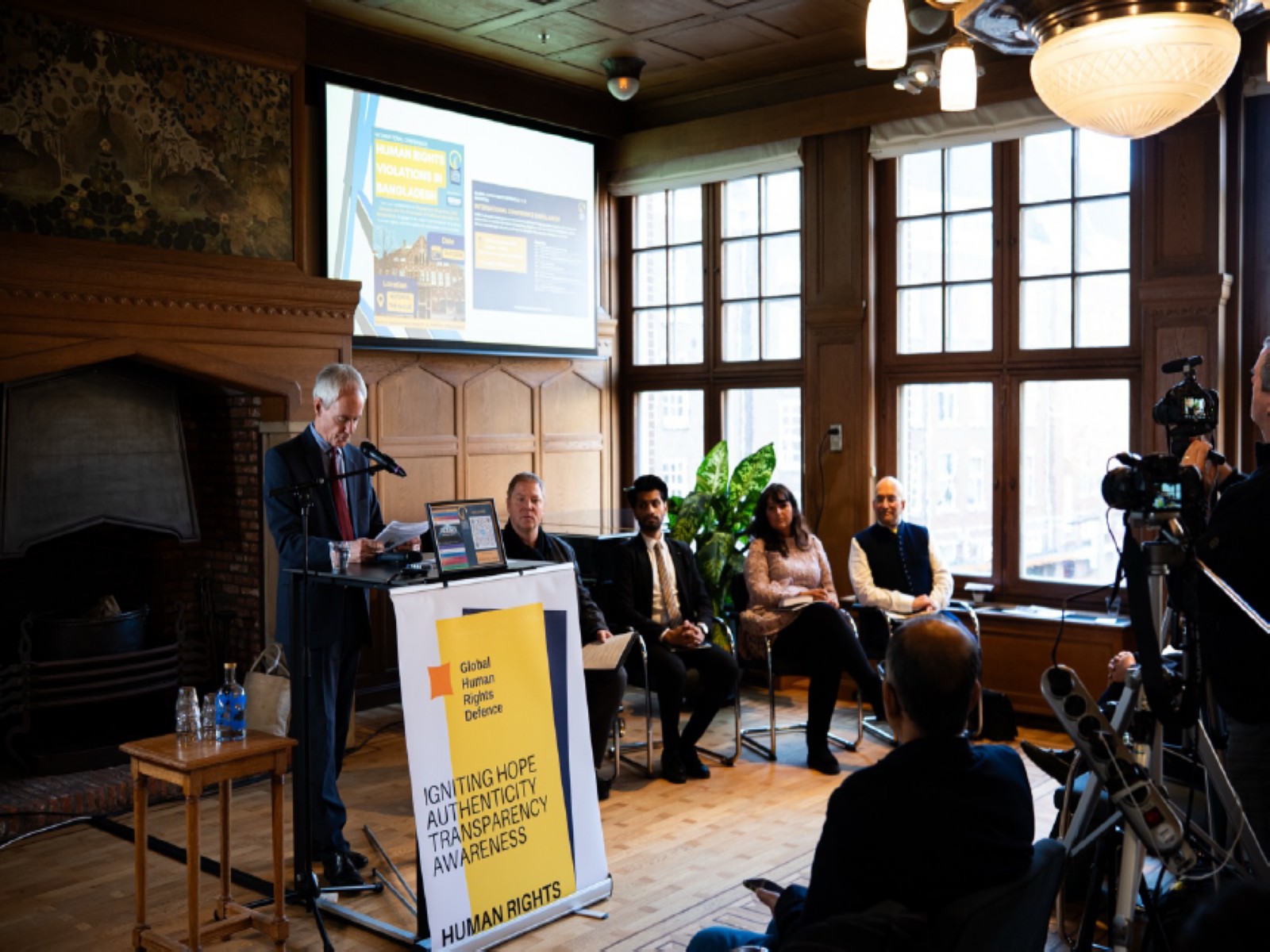
International Conference highlights rising mob violence and attacks on religious minorities in Bangladesh
Jan 27, 2026
The Hague [Netherlands], January 27 : Escalating incidents of mob violence, blasphemy-related allegations, and targeted attacks on religious minorities in Bangladesh have drawn growing international concern, with policymakers, academics, journalists, and civil society representatives convening at a Global Human Rights Defence (GHRD) conference in The Hague.
Titled "Blasphemy Allegations, Mob Violence and the Protection of Religious Minorities in Bangladesh," the event spotlighted recurring patterns of violence and explored urgent legal and policy measures to strengthen accountability and protect vulnerable communities.
Participants warned that repeated outbreaks of mob violence -- often triggered by unverified blasphemy allegations -- have resulted in killings, arson, forced displacement, and the destruction of homes and places of worship, raising serious concerns under international human rights law, including violations of the rights to life, security, property, and freedom of religion or belief.
Delivering the keynote, Dr. Anthonie Holslag highlighted the link between blasphemy laws and communal violence, describing it as a form of "creeping genocide."
He argued that weak legal safeguards and institutional inaction have fostered a culture of impunity, allowing violence against minorities to recur with little accountability.
Holslag cautioned that ignoring early warning signs -- such as the normalization of mob violence and selective law enforcement -- could entrench long-term patterns of persecution, drawing on historical and comparative examples.
Other panels examined gaps between Bangladesh's constitutional commitments to secularism and equality and the lived reality of minority communities, noting how blasphemy-related laws and provisions governing property, security, and public order are often misused to justify arbitrary detention, dispossession, and legal harassment.
Concerns were also raised about weakened national accountability mechanisms, including ineffective human rights oversight and the absence of independent investigations into communal violence.
Experts warned that without credible judicial follow-through, cycles of fear, displacement, and violence are likely to continue.
The conference also highlighted the role of media and social platforms in fuelling violence, with misinformation and rapid spread of unverified allegations frequently preceding attacks on minority communities.
Participants emphasised that independent journalism, civil society documentation, and diaspora advocacy are critical to countering denial and preserving evidence of abuses.
In a press statement, the Global Human Rights Defence said that international responses and accountability measures were also discussed, with participants linking patterns of mob violence and displacement to obligations under the Universal Declaration of Human Rights and other core international human rights treaties. The challenges posed by competing political and economic interests were acknowledged, underscoring the need for sustained global engagement.
Wiktoria Walczyk, Head Coordinator of Global Human Rights Defence, emphasized the growing disconnect between Bangladesh's constitutional guarantees and the lived experiences of religious minorities, calling for evidence-based international attention and accountability.
The conference concluded with a clear message: attacks on religious minorities in Bangladesh are not merely a domestic concern, but a pressing matter of international human rights responsibility requiring coordinated global action.
According to the Dhaka Tribune, citing human rights organization Ain o Salish Kendra (ASK), at least 197 people were killed in mob violence in 2025, up from 128 in 2024 -- an increase of 69 deaths in a single year.
During the interim government's tenure, at least 293 citizens were victims of mob attacks, including women, men, religious minorities, and marginalized groups, while media outlets and key institutions also faced assaults and vandalism.