Iraq shuts down oil ports after attack on marine vessels in its waters
Mar 12, 2026
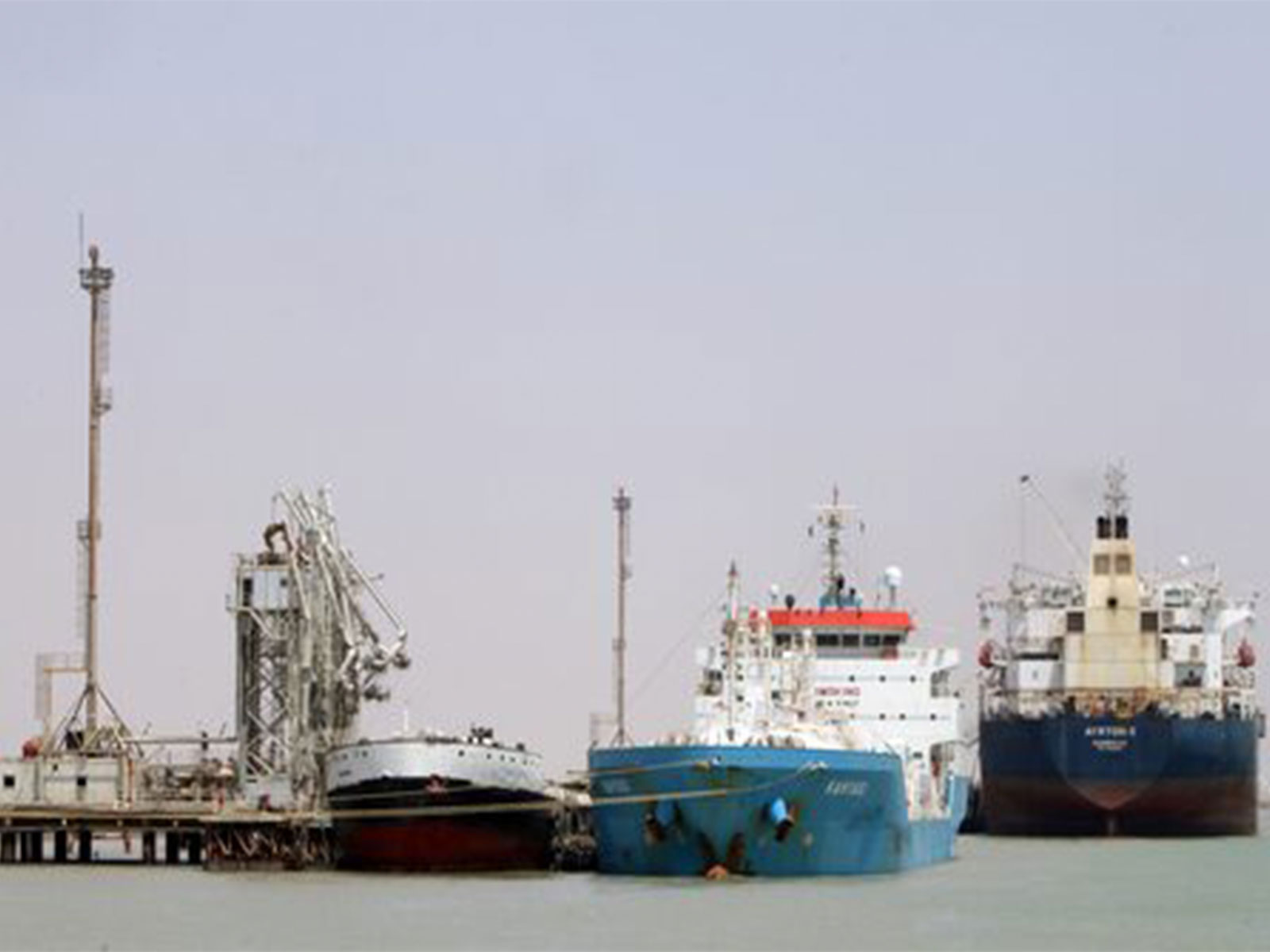
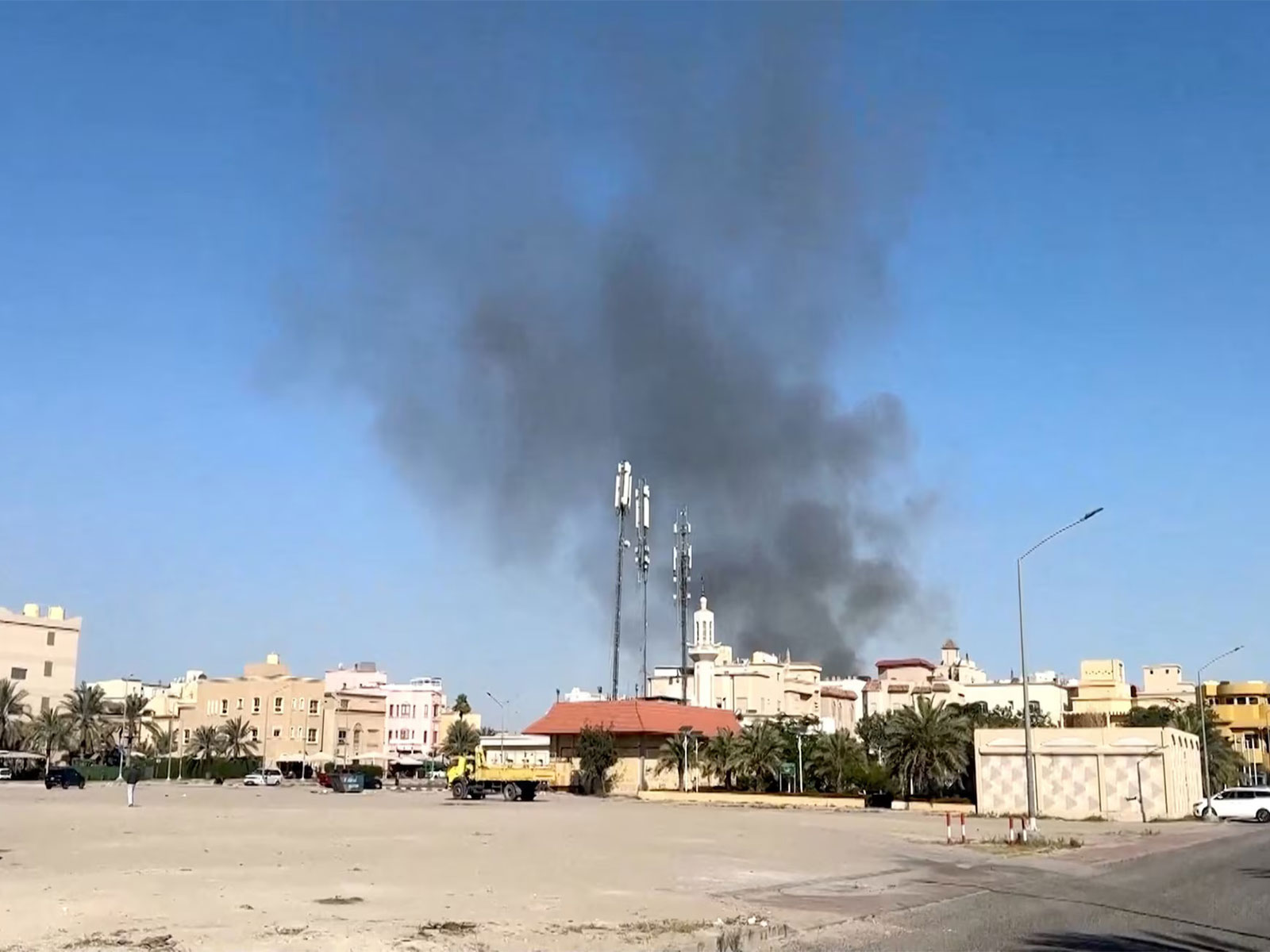
Baghdad [Iraq], March 12 : With the West Asia crisis entering its 13th day, oil terminals at Iraqi ports on Thursday said they have suspended operations following attacks on tankers near its waters, according to Iraqi authorities cited by state media.
Farhan al-Fartousi, director general of the state-owned General Company for Ports of Iraq (GCPI), said was quoted by the Iraqi News Agency (INA) as saying, "The operation of oil ports has been suspended, commercial ports continue operations."
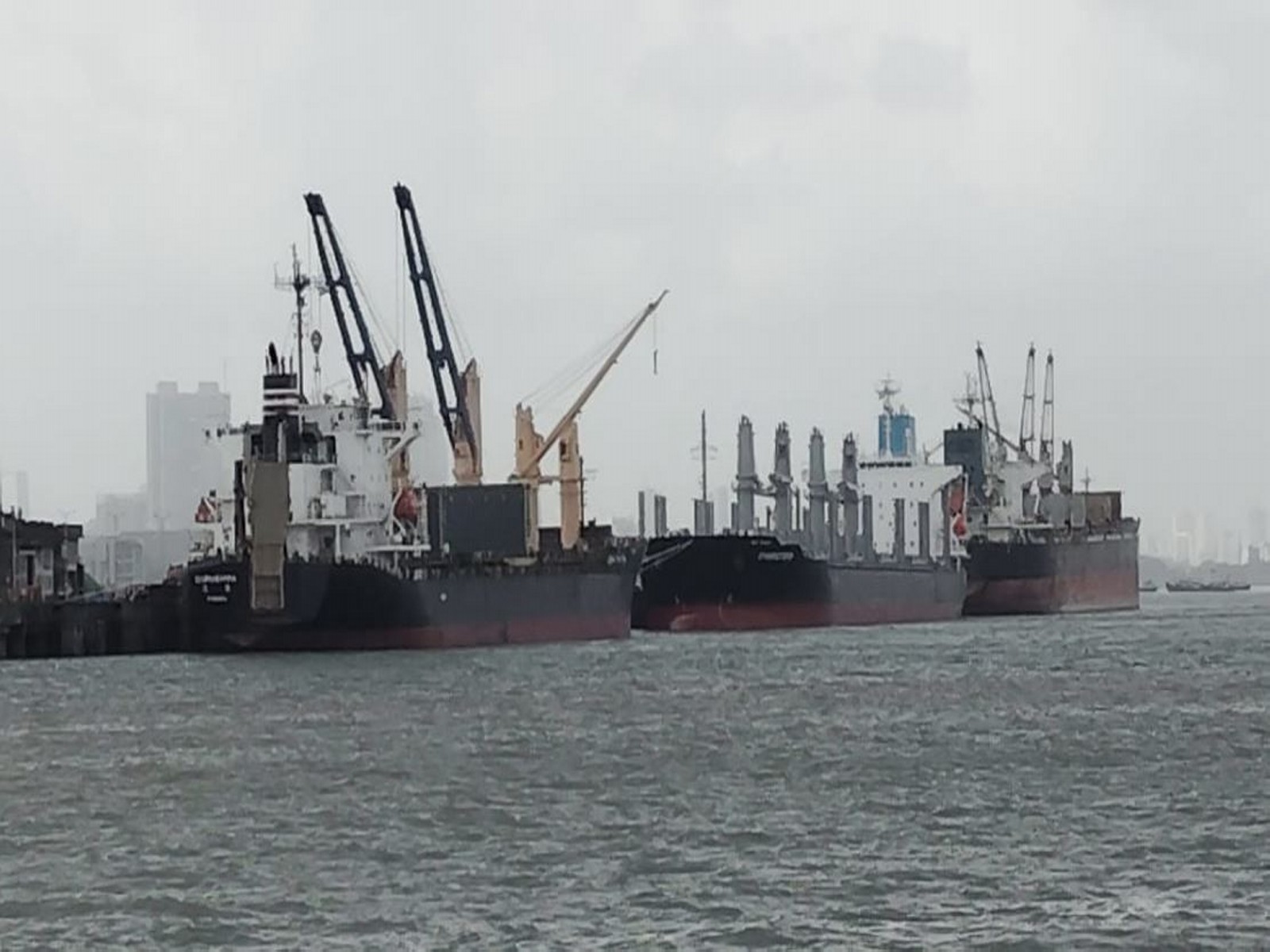
Ships remain in the waiting area, and loading and unloading are ongoing at the North and South Um Qasr ports, the INA reported.
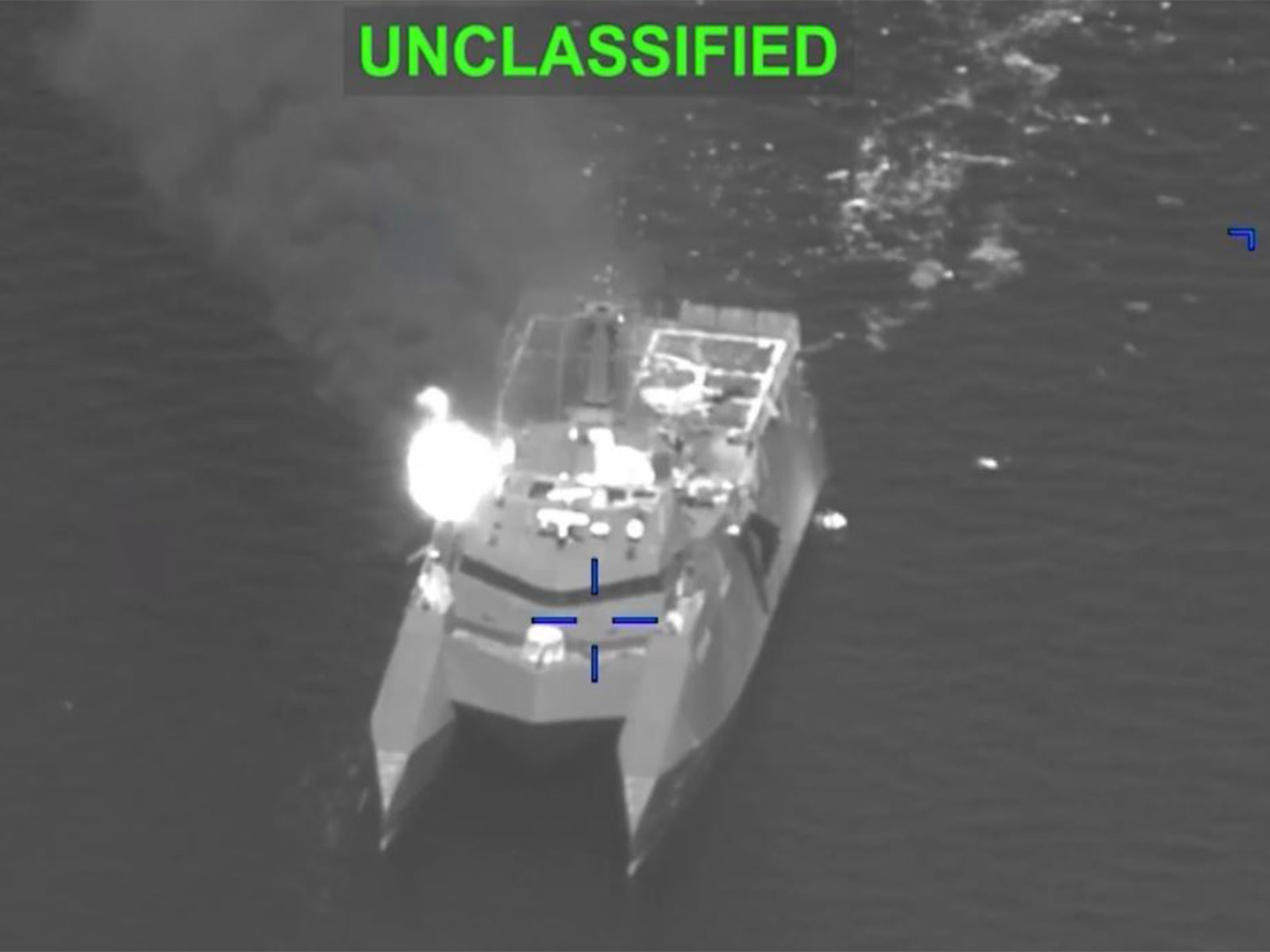
This decision, the news outlet reported, was taken after a tanker loaded with petroleum products - supplied by the Iraqi State Organization for Marketing of Oil (SOMO) to the Iraqi Oil Tankers Company, "was involved in an incident".
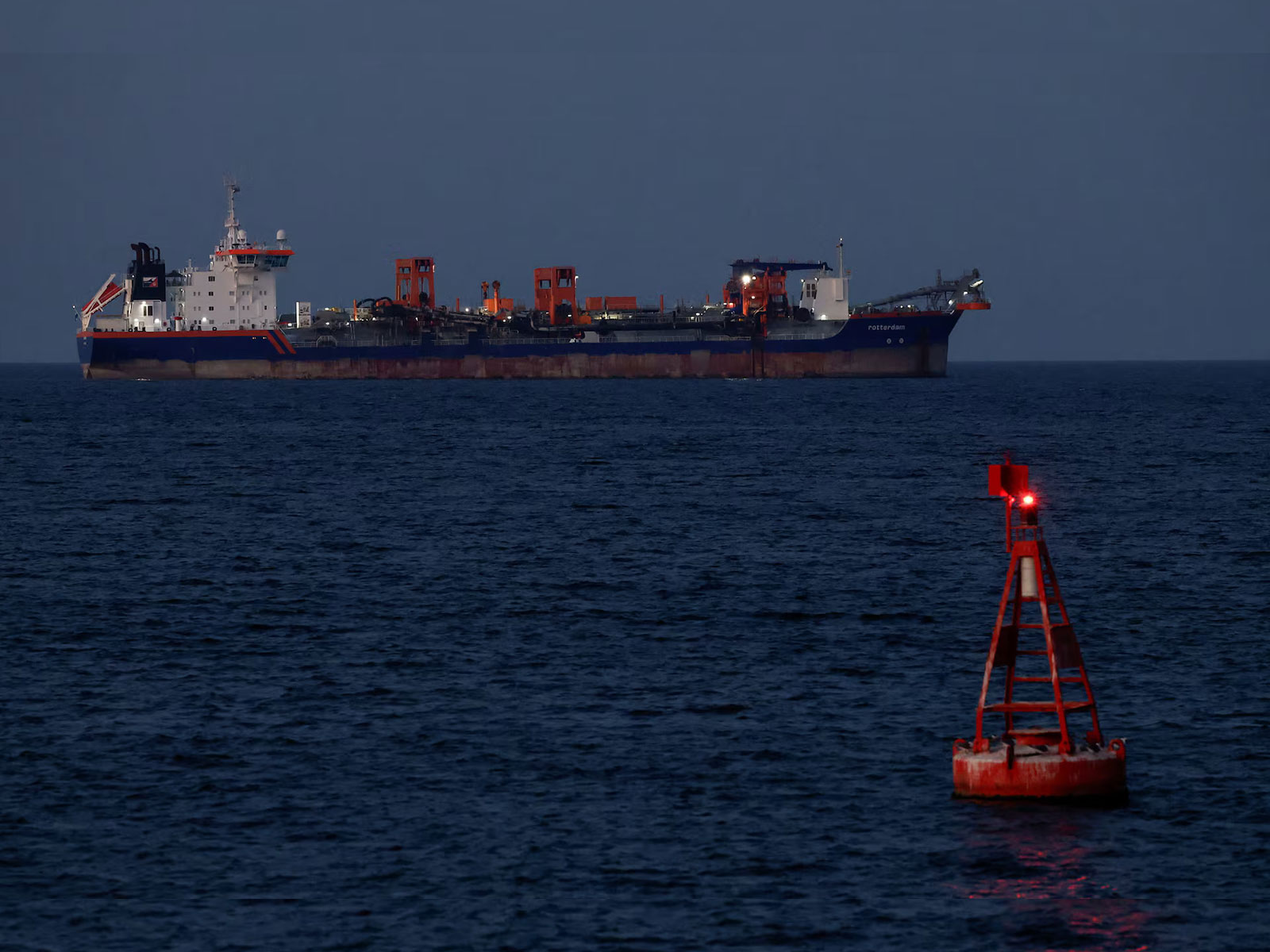
Al-Fartousi said that the vessel was carrying a fuel supply tank in the Ship-to-Ship (STS) transfer area and was in the process of loading when it was hit by an explosion. He added that "one of the smaller tankers involved flies the Maltese flag."
SOMO is Iraq's national company responsible for marketing and exporting the country's crude oil and fuel oil. Headquartered in Baghdad, it manages sales to international buyers.
As per the Iraqi News Agency, rescue teams from the company, in coordination with naval units in the SDS area, recovered 38 people, including one confirmed dead. Specialized firefighting tugs from Basra Oil Port were deployed to extinguish fires on both vessels, while search-and-rescue teams continue to look for missing crew members.
Earlier, the United Kingdom Maritime Trade Operations (UKMTO) issued an urgent "ATTACK" warning following a "serious maritime incident in the northern Gulf" involving multiple commercial vessels.
According to a series of updates posted to X, the UKMTO said it had received reports of an incident occurring "5 Nautical Miles south of Al Basrah, in Iraq TTW."
The information, sourced from a "Company Security Officer" and a "Third Party," initially indicated that "two tankers have been struck by an unknown projectile. "The scale of the situation intensified as the Company Security Officer (CSO) of one affected vessel "confirmed the attack had caused a fire onboard."
Despite the damage, the CSO further reported that "the crew have been evacuated and safe."
In a subsequent update, officials confirmed that a second tanker involved had also sustained significant hits. The CSO of the second vessel "confirmed the vessel was struck and the attack has caused a fire onboard. "Regarding the safety of those on the second ship, the UKMTO stated that "all members of the crew have been evacuated."
While the vessels sustained damage, the agency noted that "no environmental impact has been reported at this time."Investigations to "identify the second vessel affected continue" as authorities monitor the situation.
In the meantime, the UKMTO has issued a safety directive, stating that "vessels are advised to transit with caution and report any suspicious activity to UKMTO."
The UKMTO further reported UKMTO an incident 35 Nautical Miles north of Jebel Ali, United Arab Emirates. The report said that the Ship Master had reported the container ship was struck by unknown projectile causing a small fire onboard. All crew were reported as safe.
The GCPI manages and operates five major ports in Iraq. These include the Umm Qasr North Port, the Umm Qasr South Port, the Khur Al-Zubair Port, the Abu Floos Port, the Maqil Port and the . Al-Faw Grand Port which is under construction. Besides, it has two offshore ports for oil export. and four single-point mooring (SPM) ports.
Iraq operates two main offshore oil terminals--the Al Basrah Oil Terminal (ABOT) and the Khor Al Amaya Oil Terminal (KAAOT)--supported by four single-point moorings (SPMs) to export the vast majority of its crude oil. These, along with other commercial ports like Umm Qasr and Khor Al Zubair, manage the country's maritime oil industry.
Tensions in West Asia have escalated further following reports that an oil tanker in the Persian Gulf was targeted and caught fire on Wednesday. According to Turkey's state-run Anadolu Agency, the vessel was allegedly attacked by Iran, with footage of the incident circulating extensively across social media platforms.
Sharing the video via Instagram, Anadolu Agency reported that a "Foreign oil tanker catches fire in territorial waters near Basra, Iraq, after attack near Umm Qasr port in Persian Gulf".The footage depicted a large blaze from a distance before showing the vessel completely engulfed in flames
A significant fireball was seen rising into the sky during the incident.This latest strike occurs against the backdrop of an ongoing conflict involving Iran, the United States, and Israel, following joint military operations that resulted in the death of Iran's former Supreme Leader Ayatollah Khamenei.The region has seen a surge in maritime hostilities recently.
On March 1, Iran launched its first sea-based drone strike against the MKD VYOM, a crude oil tanker.The vessel was targeted approximately 44 nautical miles off the coast of Oman, resulting in the death of one crew member. At the time, the UKMTO issued a public advisory stating that an "unmanned surface vessel had struck the Marshall Islands-flagged tanker just above the waterline, which set off an explosion and fire in the engine room."
In a separate incident, a small craft reportedly struck the Bahamas-flagged tanker Sonangol Namibe while it was anchored near Iraq's Khor al Zubair port.
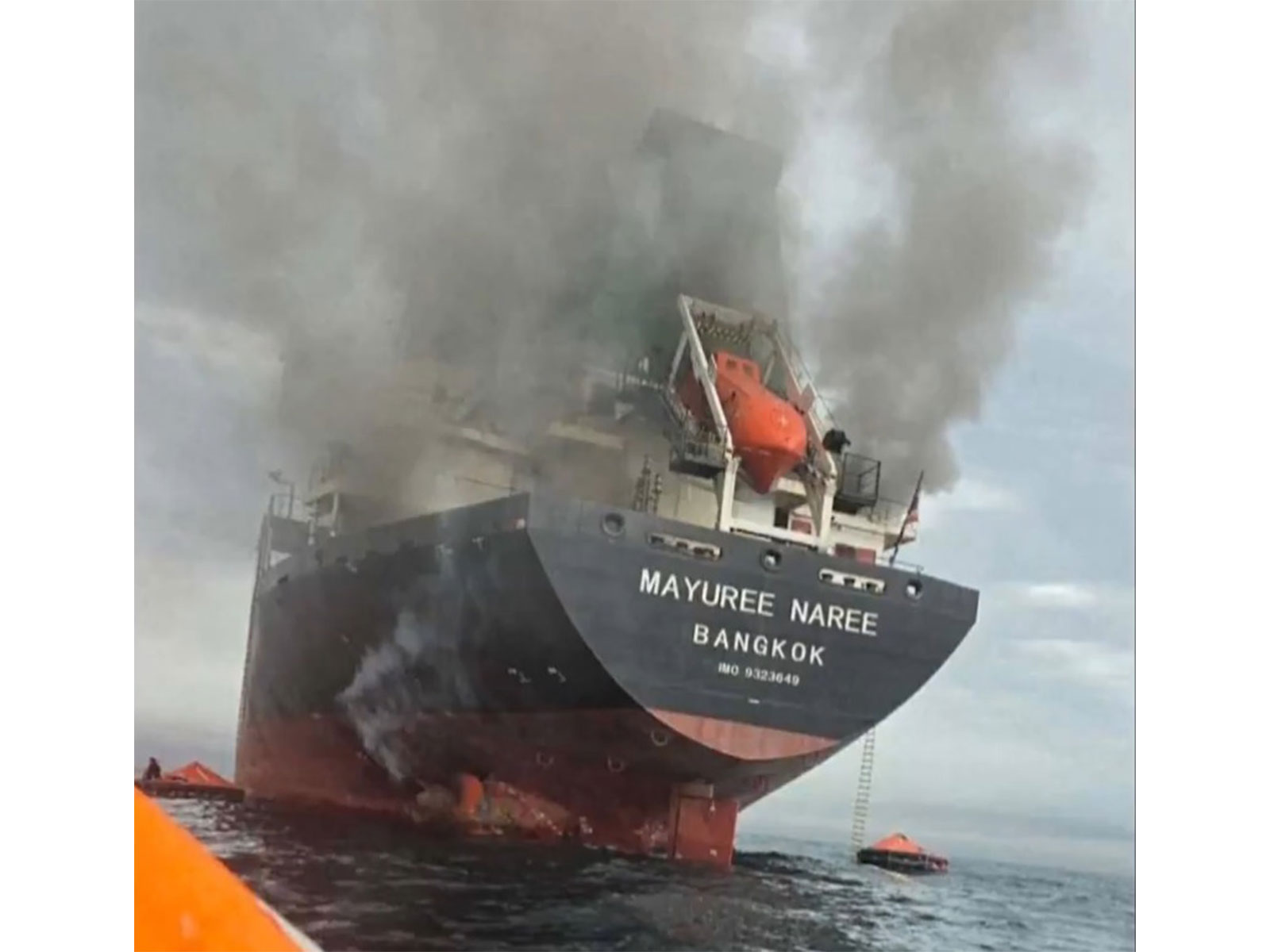
India has also expressed grave concern after the Thai vessel Mayuree Naree, which was bound for India, was hit by "two projectiles of unknown origin" while navigating the Strait of Hormuz.
The Ministry of External Affairs (MEA) issued a sharp rebuke, stating, "India deplores the fact that commercial shipping is being made a target of military attacks in the ongoing conflict in West Asia. Precious lives, including of Indian citizens, have already been lost in multiple such attacks in the earlier phase of this conflict, and the intensity and lethality of the attacks only seems to be increasing."
In response to the growing maritime threat, US President Donald Trump and the US military have discussed the potential destruction of Iranian mine-laying vessels to prevent the placement of mines within the strategic Strait of Hormuz.