Jairam Ramesh says Tribunal Reforms Bill seeks to implement SC's directions; demands NGT to make Great Nicobar Project report public
Aug 09, 2026
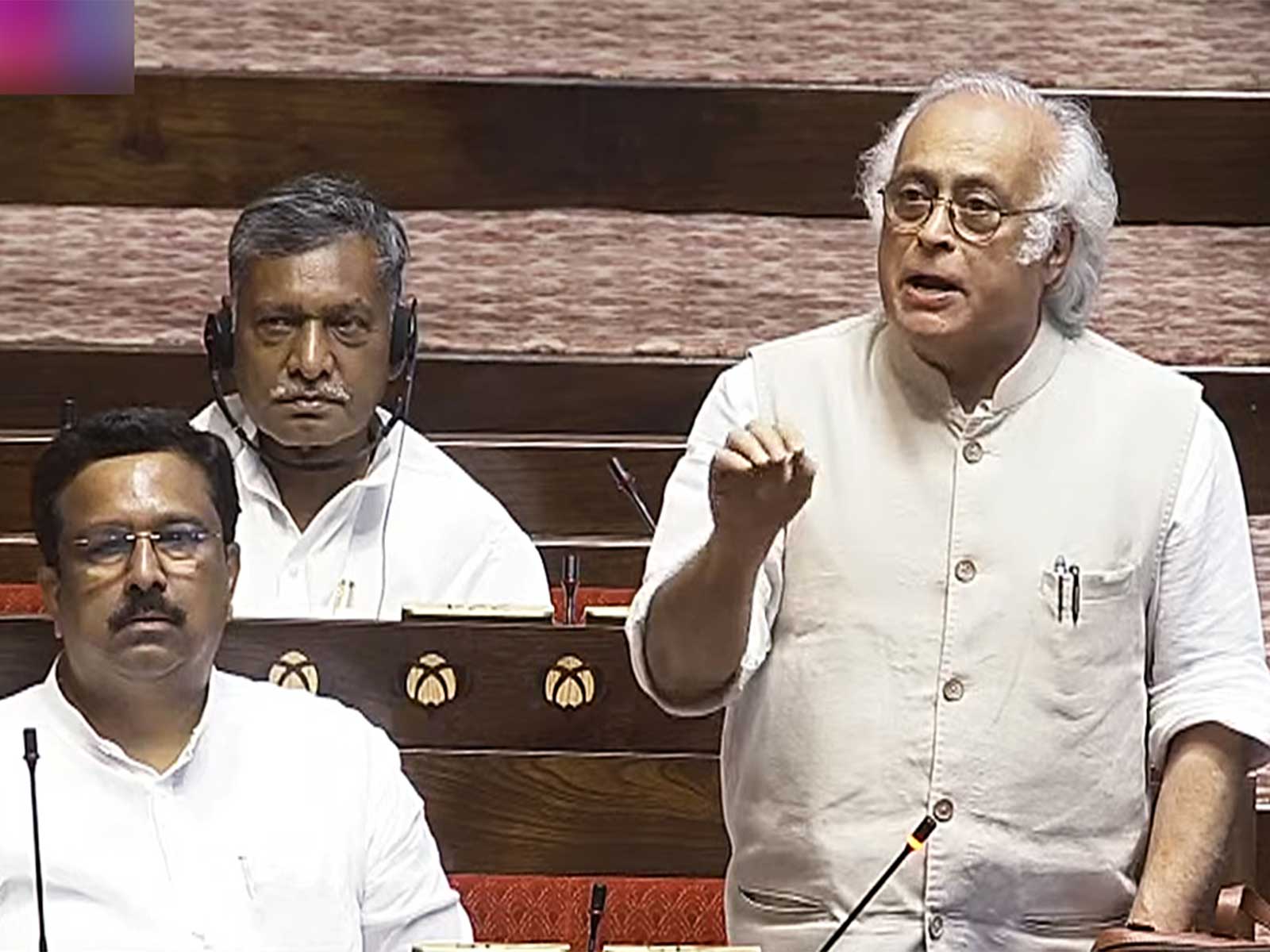
New Delhi [India], August 9 : Senior Congress leader Jairam Ramesh on Sunday welcomed the Centre's bid to introduce the Tribunal Reforms Bill, 2026, stating that the proposed legislation will be consistent with the Supreme Court's Madras Bar Association judgment in 2025.
In an X post, Jairam Ramesh argued that with the Bill, the Tribunals, especially the National Green Tribunal, will "rediscover their voice" and demanded NGT make public the High-Powered Committee report on clearance for the Great Nicobar Project.
The 2025 judgement struck down certain provisions of the Tribunals Reforms Act, 2021, which brought in the 50-year age limit and four-year tenure for the Chairperson of a Tribunal. The 2021 Act also proposed a Search-cum-Selection Committee for the appointment of the Chairperson.
The then Chief Justice of India (CJI) said that the Act included the provisions of the 2021 Ordinance, which was struck down by the top court. Jairam Ramesh was among the petitioners challenging the constitutional validity of the law.
The Congress leader said, "Tomorrow the Lok Sabha is scheduled to take up The Tribunal Reforms Bill, 2026 that may well chart a new future for 16 semi-judicial Tribunals set up over the years, including the very important National Green Tribunal (NGT) that came into being in October 2010 by an Act of Parliament itself."
"This Bill seeks to implement the Supreme Court's directions in the landmark Madras Bar Association judgment of November 19, 2025, that had struck down key provisions of the Tribunals Reforms Act, 2021 and called for an independent National Tribunals Commission for appointments," he added.
Further, Jairam Ramesh alleged that the NGT was the "main target" of the Centre when it brought the 2021 law.
The Congress MP said, "Since the very existence of an independent NGT was at stake, I had also joined the challenge to the 2021 Act in the Supreme Court. Earlier I had challenged even the provisions of the Finance Act, 2017 which had sought to emasculate the Tribunals by resorting to the subterfuge of having the amendments declared as part of a Money Bill to escape full and proper legislative scrutiny in both Houses of Parliament, especially the Rajya Sabha."
"Much has already been lost because of the Modi Govt's refusal to heed reasoned criticism or even judicial precedent. No doubt the NGT was the main target because the Modi Govt was finding it inconvenient. Having defended the untenable 2021 law all the way to the Supreme Court, it now finds itself compelled to enact many of the very reforms it had stoutly resisted, and which were so badly needed. Confrontation has finally yielded to concurrence," he added.
He asked for the Great Nicobar Project report to be made public, which he argued would be "deeply flawed."
"Hopefully the various Tribunals, and more particularly the NGT, will rediscover their voice and authority and fulfil their legal mandate in letter and spirit. To signal this revival, the NGT should make public the report of the High-Powered Committee it had directed to be set up to review the environmental approvals for the ecologically disastrous Great Nicobar Island Project and on the basis of which it had been forced to give the go-ahead for the project. The Committee's report had been submitted in a 'sealed cover' to the NGT on July 8, 2025. If made public, it will be shown to be demonstrably and deeply flawed," the X post read.
According to the Centre, the Great Nicobar Project seeks to leverage the island's proximity--around 40 nautical miles--to the East-West shipping route and reduce India's dependence on foreign transhipment ports while serving defence and national security objectives.
The project includes a 14.2 million twenty-foot equivalent unit (MTEU) International Container Transhipment Terminal, a Greenfield International Airport with a capacity of 4,000 peak-hour passengers, a 450 MVA gas-solar power plant and a planned township.
However, the Congress has staunchly opposed the project, calling it an "environmental disaster."