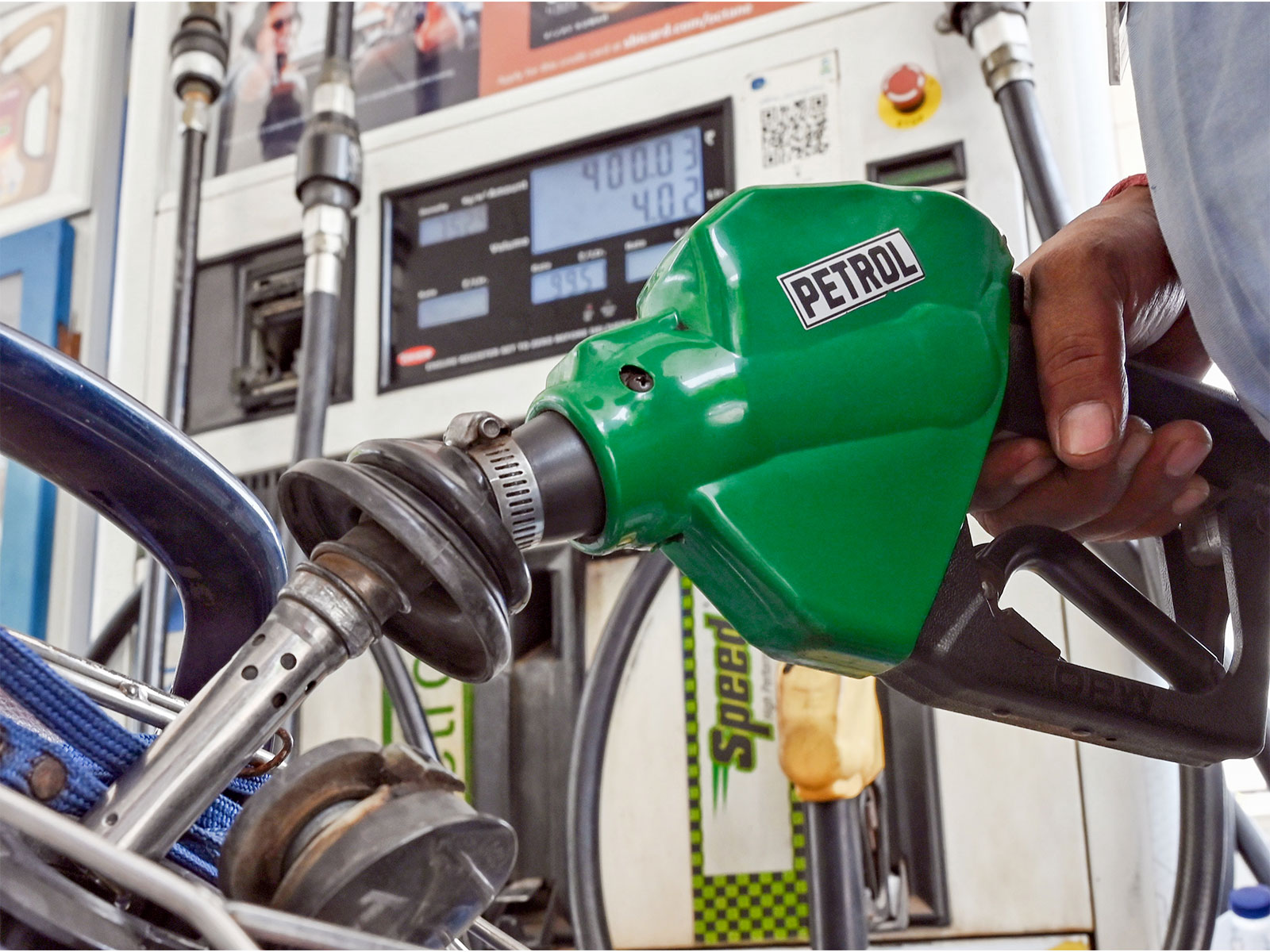
Karnataka stands by E20 test findings, accuses oil companies of hiding ethanol content in petrol
Nov 09, 2026
Bengaluru (Karnataka) [India], November 9 : The Karnataka government led by DK Shivakumar on Monday stood by its findings on ethanol-blended petrol (E20), rejecting a joint statement issued by Oil Marketing Companies (OMCs) Indian Oil Corporation Limited (IOCL), Bharat Petroleum Corporation Limited (BPCL) and Hindustan Petroleum Corporation Limited (HPCL), and questioned their failure to disclose the exact ethanol content in petrol being sold at fuel stations.
In a detailed rebuttal issued by the Department of Food, Civil Supplies, Consumer Affairs and Legal Metrology, the state government said the OMCs' statement was "long on technicalities and silent on the one question that matters: how much ethanol is in the petrol at our pumps?"
The rebuttal was issued under the leadership of Minister for Food, Civil Supplies, Consumer Affairs and Legal Metrology Rizwan Arshad.
The Karnataka government also alleged that concerns raised by various industry bodies and companies over E20 fuel had repeatedly been withdrawn or softened following pressure.
Citing a letter written by the Society of Indian Automobile Manufacturers (SIAM) to the Union Petroleum Ministry on July 28, 2026, the government said the industry body had flagged the presence of chloride and sulphur in E20 fuel and the damage caused to vehicle parts. However, the letter was withdrawn within a week, allegedly amid pressure from the Centre.
The state government further cited an instance involving ACKO insurance, which had told a customer that engine damage caused by "incorrect fuel usage" would not be covered. It also referred to Toyota customer care informing a customer that using fuel other than what was recommended in the owner's manual would void the vehicle's warranty.
According to the government, both statements were subsequently softened or reversed, while the report by the Automotive Research Association of India (ARAI) remained unavailable to the public.
The government also referred to the Attorney General's submission before the Supreme Court that E20 was still an experiment, followed by a clarification issued by his office.
"The pattern is clear: question the policy, and you are silenced. Industry bodies and companies may step back under pressure, but the Government of Karnataka will not," the press note said.
Point-wise rebuttal to OMC claims
Responding to the OMCs' contention that the sampling was not conducted in accordance with the Motor Spirit and High Speed Diesel Order, 2005, the Karnataka government rejected the allegation as "completely false".
It said every sample was collected by officers authorised under Clause 7 of the Motor Spirit and High Speed Diesel (Regulation of Supply, Distribution and Prevention of Malpractices) Order, 2005, as notified by the Karnataka government through Notification No. FCS 67 FPP 2008, dated April 15, 2009.
The government said the procedure under Clause 8(3) was also followed, with every sample label jointly signed by the authorised officer and the dealer or their representative. The prescribed proforma, including the density recorded at the time of collection, was filled in at the spot.
It maintained that all provisions had been followed "in letter and spirit" with the objective of protecting consumers.
On the testing methodology and laboratories, the OMCs had claimed that the prescribed technical procedures were not followed and that the laboratories used by the state were not those specified under the order.
Rejecting the allegation, the state government said the initial 63 samples were first sent to the OMCs' own laboratories at IOCL, BPCL and HPCL. However, none of the test reports provided the ethanol percentage in the fuel.
Citing IS 17021:2018, the standard referred to by the OMCs themselves, the government said the prescribed procedures for testing ethanol content were clearly laid down under the standard.
"Yet not a single OMC report gave that figure. It was the OMC laboratories' failure to provide the required result that raised suspicion. On no grounds can the State's tests be discredited for this," the press note said.
The state government said the samples were subsequently sent to NABL-accredited and ISO-certified laboratories to ensure consumer protection.
Explaining the credibility of the accreditation system, the government said the National Accreditation Board for Testing and Calibration Laboratories (NABL) is a constituent board of the Quality Council of India (QCI), which was established through a Cabinet decision in 1996 as the country's national accreditation body.
It said QCI is an independent and autonomous body backed by the Government of India and industry associations, including ASSOCHAM, CII and FICCI. Its nodal department is the Department for Promotion of Industry and Internal Trade (DPIIT), under the Ministry of Commerce and Industry.
"To dispute the findings of an NABL-accredited laboratory is to say that laboratories approved under the Government of India's own accreditation system are not authentic," the government said.
On the OMCs' claim that their internal quality monitoring confirmed compliance, Karnataka said testing 56 samples in their own laboratories amounted to the companies monitoring their own quality.
It argued that compliance could only be established through independent third-party testing and said the state government's exercise, conducted by following the prescribed procedures, had exposed shortcomings in the OMCs' quality monitoring system.
"The Government of Karnataka will not get lost in technicalities. It will always hold the OMCs accountable to the people of Karnataka," the note said.
Addressing the OMCs' objections to density readings in the test certificates, the government said petrol density was recorded in the prescribed proforma at the time of sample collection under the Motor Spirit and High Speed Diesel (Regulation of Supply, Distribution and Prevention of Malpractices) Order, 2005.
It said the proforma was signed by all authorised persons under Section 8 of the order and that laboratory results showed density readings similar to those recorded and signed at the time of collection.
The government also questioned the OMCs' explanation that ethanol blending was a "controlled and automated process" undertaken at refineries and depots.
It said if blending was controlled at the source, the ethanol content in every litre of petrol was determined at the OMCs' six terminals supplying fuel to Karnataka and not at individual petrol pumps.
According to the state government, dealers only sell the fuel delivered through tankers and have no role in determining the ethanol blend.
"The excess ethanol found is a failure at the source, and the responsibility lies with the OMCs," the note said.
The government claimed that its exercise had exposed gaps in the OMCs' systems and created a sense of deterrence across the country.
Criticising the existing testing mechanism, it said oil companies testing their own fuel in their own laboratories and declaring themselves compliant amounted to a conflict of interest.
"When the oil companies test their own fuel in their own laboratories and declare themselves compliant, they are acting as both the accused and the judge. That is a clear conflict of interest, and no consumer can be asked to trust it. The Government of Karnataka demands that fuel testing be taken out of the OMCs' hands and moved to an independent, transparent system that answers to the public," the press note said.
The government further said Minister Rizwan Arshad would soon convene a meeting with all oil marketing companies to discuss the matter and steps required to safeguard consumers.
"The Government of Karnataka will strive to ensure consumers get what they pay for," the note added.