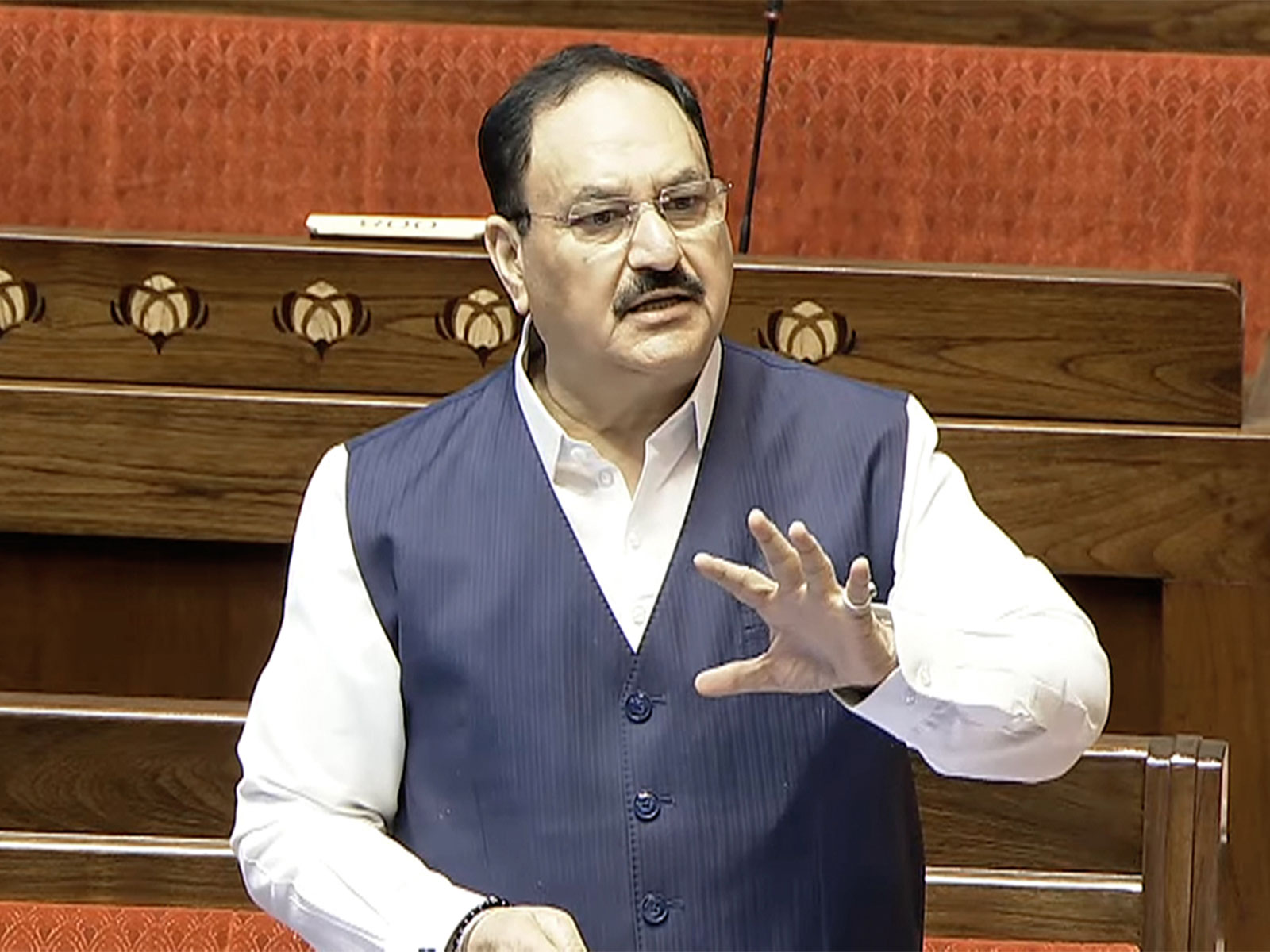
Minister JP Nadda assures Lok Sabha that govt has ensured adequate availability of fertiliser, no need for panic
Mar 27, 2026
New Delhi [India], March 27 : Union Minister for Chemicals and Fertilizers JP Nadda on Friday assured consumers that there was adequate supply of fetiliser in the country even as the West Asia conflict continues. Answering queries in the Lok Sabha over impact of West Asia crisis on fertilizer availability the Minister said the government has ensured adequate availability, there is no need of panic.
The Minister further said that the government is also looking for diversification of raw material in terms of imports, has signed long-term import agreements with several countries. The Minister said that the government is making efforts to reduce active pharmaceutical ingredients (API) import dependence.
Earlier on Tuesday, a meeting of the Group of Ministers (GoM) on the evolving West Asia situation was held at Parliament focusing on its potential impact on essential supplies, particularly fertilisers.
According to sources, the ministers reviewed the current availability and supply of fertilisers and concluded that there is no immediate shortage for the upcoming Kharif season, assuring that farmers' requirements will be met. However, the ongoing crisis in the region is likely to impact fertiliser production by an estimated 0.6 to 0.9 million tonnes.
The GoM also discussed contingency measures to address any potential shortfall. Sources said the government is planning to bridge the gap through imports from countries such as Morocco and other global suppliers.
The meeting was attended by Union Home Minister Amit Shah, External Affairs Minister S Jaishankar, Petroleum Minister Hardeep Singh Puri, and Health and Fertilisers Minister JP Nadda, among others.
Meanwhile, Suresh Kumar Chaudhari, Director General of the Fertiliser Association of India said that shipping disruptions in West Asia and rising input costs are adding pressure to global fertiliser production and pricing, but India is managing the impact through close government-industry coordination and monitoring by empowered groups.
"The ongoing developments in West Asia have introduced significant volatility in global energy and fertiliser markets, given the region's critical role in supplying both natural gas and key crop nutrients," Chaudhari said, adding "Disruptions in shipping routes, particularly through the Strait of Hormuz, and tightening global LNG availability are exerting pressure on input costs and supply chains worldwide."
The conflict involving the United States and Israel on one side and Iran on the other has been ongoing for nearly a month, disrupting shipments through the Strait of Hormuz and tightening global supplies of crude oil and other commodities, including fertilisers. This has begun to impact availability at the grassroots level, pushing up prices in recent weeks.
Chadhari added that, for India, "While these challenges are real, the impact on the fertilizer sector is being carefully managed through close coordination between the industry and the Government. We are in continuous dialogue with concerned ministries, and the recent constitution of Empowered Groups reflects a proactive and structured approach to monitor disruptions, secure supplies, and address emerging risks in a time-bound manner."
India remains the second-largest consumer and third-largest producer of fertilizers globally and the country is particularly exposed to global price movements in natural gas and imported nutrients such as phosphates and potash. Higher LNG prices directly affect urea production costs, while logistical bottlenecks can delay shipments of finished fertilisers and raw materials, adding uncertainty for both producers and farmers during key agricultural cycles.