"Modern, infrastructure-focused, digitally governed system": Viksit Bharat - G RAM G Act, 2025 to replace MNREGA
Dec 15, 2025
New Delhi [India], December 15 : In a major overhaul of India's rural employment framework, the Centre has introduced the Viksit Bharat - Guarantee for Rozgar and Ajeevika Mission (Gramin): VB-G RAM G Act, 2025, replacing the two-decade-old Mahatma Gandhi National Rural Employment Guarantee Act (MGNREGA) with a modern, infrastructure-focused and digitally governed statutory system aligned with the vision of Viksit Bharat 2047.
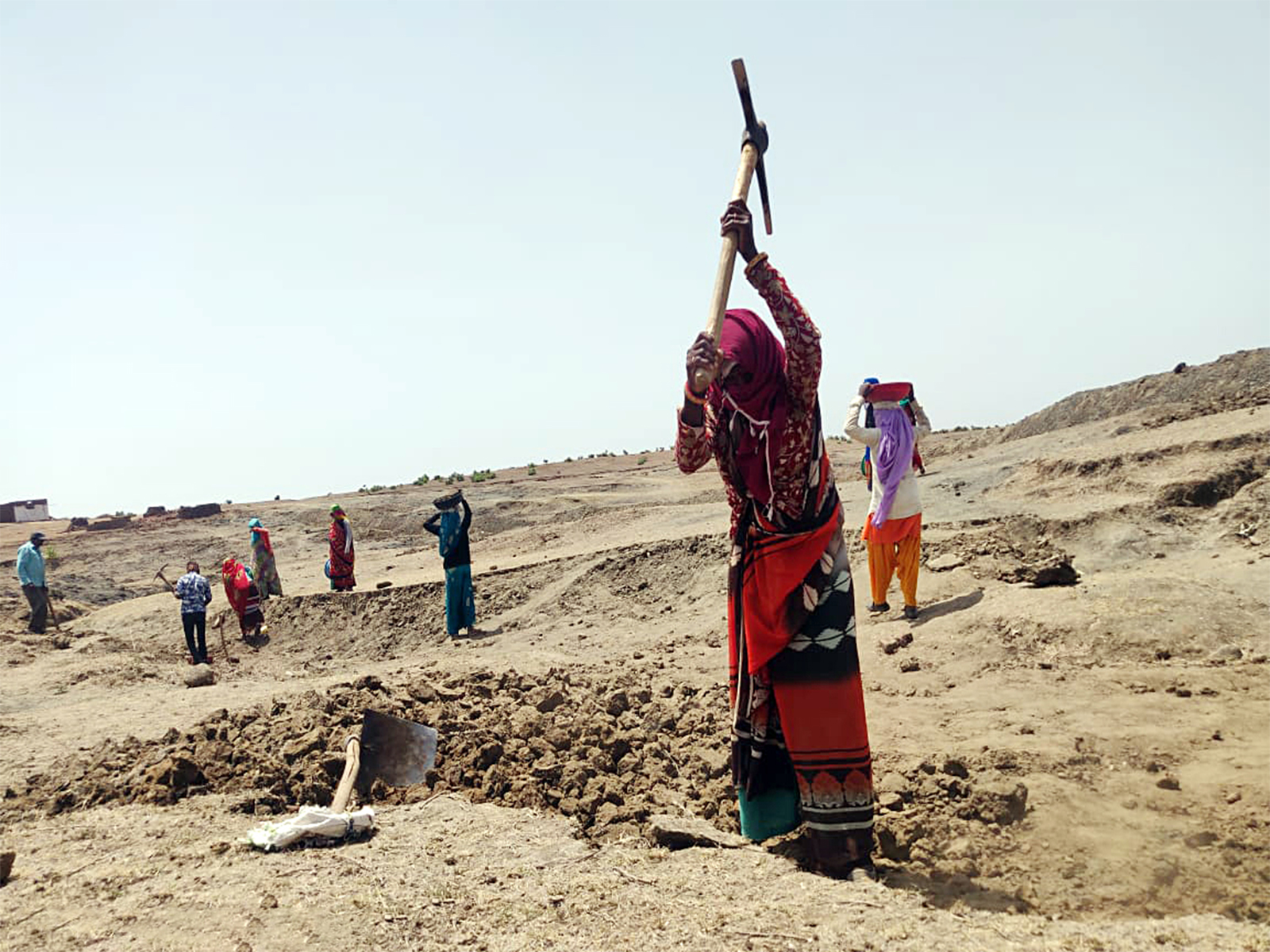
The new Act guarantees 125 days of wage employment per rural household, up from the existing 100 days, for adult members willing to undertake unskilled manual work. It seeks to simultaneously provide income security and create durable, productivity-enhancing rural assets through a nationally coordinated development strategy.
Under the legislation, all works will be organised across four priority verticals--water security through water-related works, core rural infrastructure, livelihood-related infrastructure, and special works to mitigate the impact of extreme weather events.
Assets created under the programme will be aggregated into the Viksit Bharat National Rural Infrastructure Stack, enabling unified planning, monitoring and integration with national spatial platforms such as PM Gati-Shakti.
Officials said the new framework addresses long-standing structural weaknesses in MGNREGA while strengthening transparency, accountability and outcomes. Unlike the earlier system, where works were spread across multiple categories without a cohesive national strategy, the VB-G RAM G Act focuses on targeted infrastructure creation that directly supports agriculture, livelihoods and climate resilience.
The Act also mandates Viksit Gram Panchayat Plans, prepared locally but integrated with national spatial and digital systems to ensure better planning and execution.
The government said the Act will have a broad-based impact on the rural economy. Priority to water-related works is expected to strengthen irrigation and groundwater recharge, building on initiatives such as Mission Amrit Sarovar, which has already led to the creation or rejuvenation of over 68,000 water bodies.
Core rural infrastructure, such as roads and connectivity, is designed to improve market access, while livelihood infrastructure, such as storage facilities and local markets, is expected to support income diversification. Climate-resilient assets, including flood drainage and soil conservation works, are designed to protect rural livelihoods from extreme weather events.
With 125 guaranteed days of work, rural households are expected to see higher incomes and consumption, stimulating village-level economic activity and reducing distress-driven migration. Digital attendance systems, electronic wage payments, and data-driven planning are expected to improve efficiency and formalisation further.
Farmers are also expected to benefit directly. The Act allows states to notify up to 60 days in aggregate during peak sowing and harvesting periods when public works will be paused, ensuring adequate labour availability for agriculture and preventing artificial wage inflation.
Officials said this provision will help stabilise food production costs while encouraging workers to shift to higher-paying seasonal farm work. Enhanced water, irrigation, storage and connectivity assets are expected to support agricultural productivity and market access further.
For labourers, the government said the new Act strengthens both income security and worker protections. The increase to 125 guaranteed days translates into 25 per cent higher potential earnings. Hyperlocal planning through Gram Panchayat Plans is expected to ensure predictable availability of work.
At the same time, biometric and Aadhaar-based verification will continue to underpin electronic wage payments, which stood at nearly 100 per cent in 2024-25. Under the prior law, states were required to pay unemployment benefits when work was not available.
The government explained the rationale for replacing MGNREGA, noting that rural India has undergone significant structural change since 2005. Poverty levels have declined sharply--from 25.7 per cent in 2011-12 to 4.86 per cent in 2023-24--supported by rising consumption, improved financial access and diversified livelihoods, as reflected in MPCE and NABARD surveys.
In this context, the open-ended, demand-based model of MGNREGA was increasingly misaligned with current realities.
The new Act shifts to a normative funding model, aligning rural employment with the budgeting framework used for most central schemes. Officials clarified that this does not weaken the legal guarantee of employment. Forecasting accuracy in 2024-25, mandatory unemployment allowance, shared Centre-State responsibility and special relaxations during disasters are intended to ensure that the 125-day guarantee remains fully protected.
The government acknowledged that several reforms were undertaken under MGNREGA over the years, including higher women's participation, near-universal electronic payments, Aadhaar seeding, geo-tagging of assets and increased creation of individual assets. However, investigations and monitoring reports continued to flag serious issues, including non-existent works, misuse of funds, the use of machines in labour-intensive projects, bypassing of digital attendance systems, and large-scale misappropriation.
In 2024-25 alone, misappropriation across states amounted to Rs 193.67 crore, while only a small proportion of households completed 100 days of work in the post-pandemic period.
Citing these persistent challenges, officials said the scale of the problem required a new statutory framework rather than incremental fixes.
The VB-G RAM G Act incorporates AI-based fraud detection, real-time dashboards, GPS and mobile-based monitoring, weekly public disclosures, twice-yearly social audits for every Gram Panchayat, and enhanced oversight through central and state steering committees.
The Act also transitions the programme from a central sector scheme to a centrally sponsored scheme, with a standard 60:40 Centre-State funding ratio, a 90:10 ratio for North-Eastern and Himalayan states, and full central funding for Union Territories without legislatures.
Officials said the shift recognises that rural employment is inherently local, while ensuring that national standards are maintained. Predictable normative allocations are expected to aid state budgeting, while stronger oversight is intended to reduce long-term losses from misuse of funds.
The government maintained that the redesigned framework balances the interests of farmers, labourers and states, positioning rural employment as a driver of durable infrastructure, climate resilience and inclusive growth in the run-up to Viksit Bharat 2047.